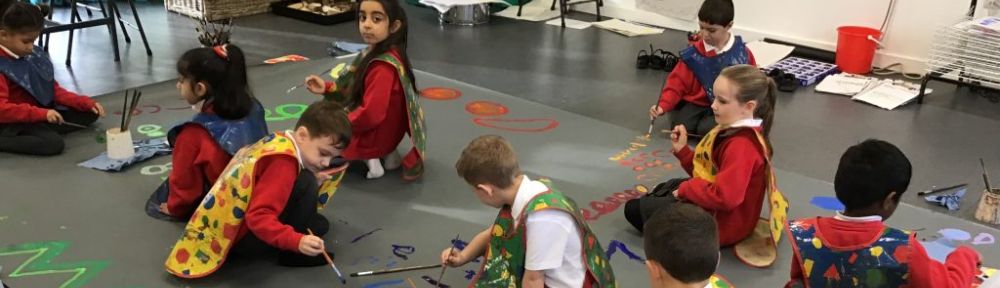
Work it harder, make it better, do it faster, makes us stronger – 3H

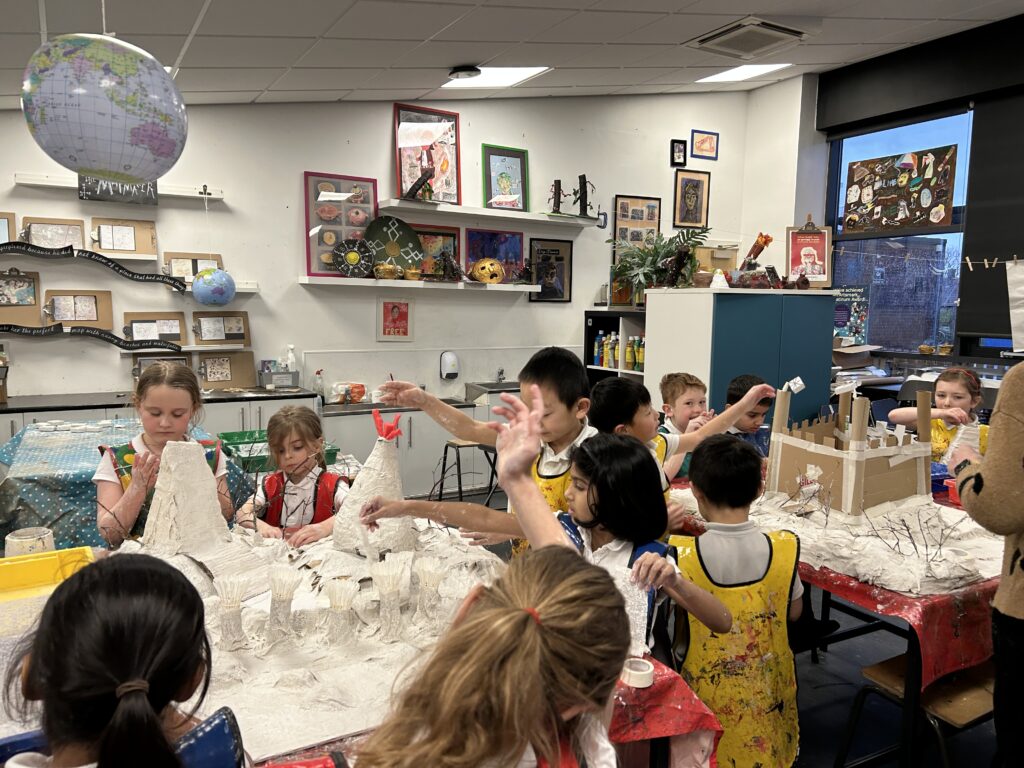
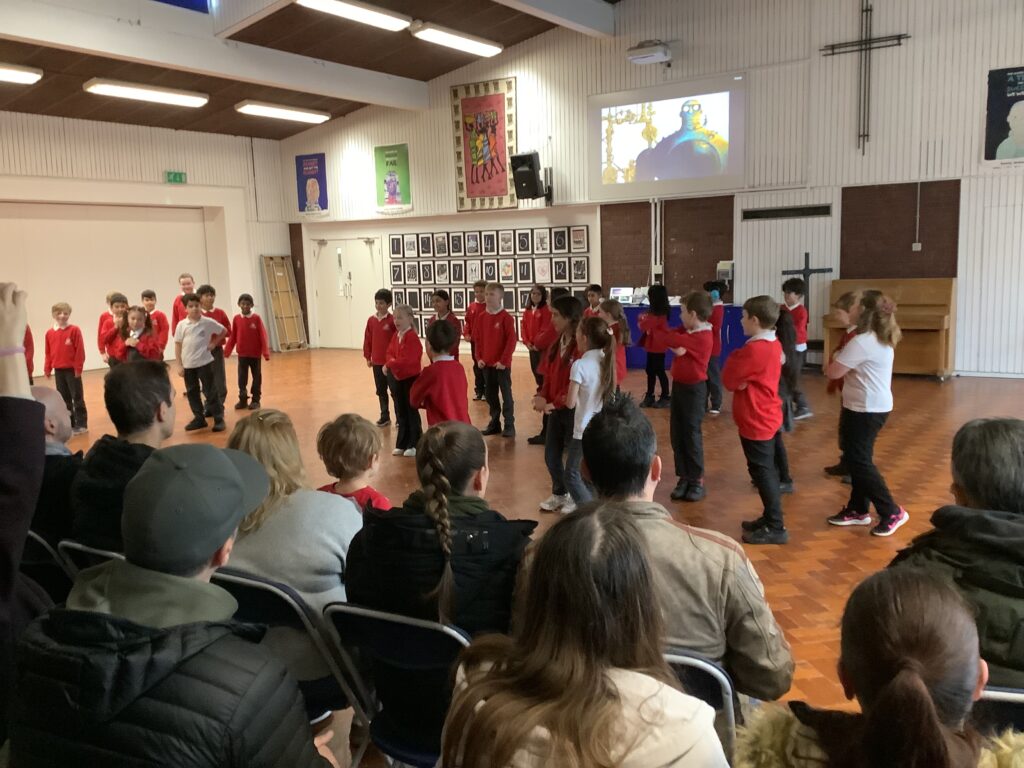
Year 3H have been so incredibly engaged over their Arts Fortnight, diving into the world of Victorian architecture with a real sense of curiosity and purpose. We chose to focus not only on the visual features of the Victorian era but also on its spirit of invention, linking this to our local context here in Leeds and the technical side of creating. This led us into architectural technical drawing and product design, where we also developed an appreciation for Victorian typography and layout, combining creativity with precision in a truly engaging way. To add to this, Mrs Fox choreographed a fantastic dance, piecing together three Daft Punk songs with a focus on ‘factories’ and the Industrial Revolution.

To begin, the children explored the key features that define a Victorian building, asking themselves: what makes it Victorian and how can we tell? They carefully sketched individual features in their sketchbooks, building up a bank of visual references. We then took our learning beyond the classroom, using Google Maps Street View to go on a Victorian architecture “treasure hunt” around Leeds City Centre. The children loved spotting details on real buildings and debating whether they were original or later recreations in the Victorian style. The level of discussion was fantastic, with children using impressive vocabulary and demonstrating real ACE Historian thinking as they worked collaboratively with their partners.
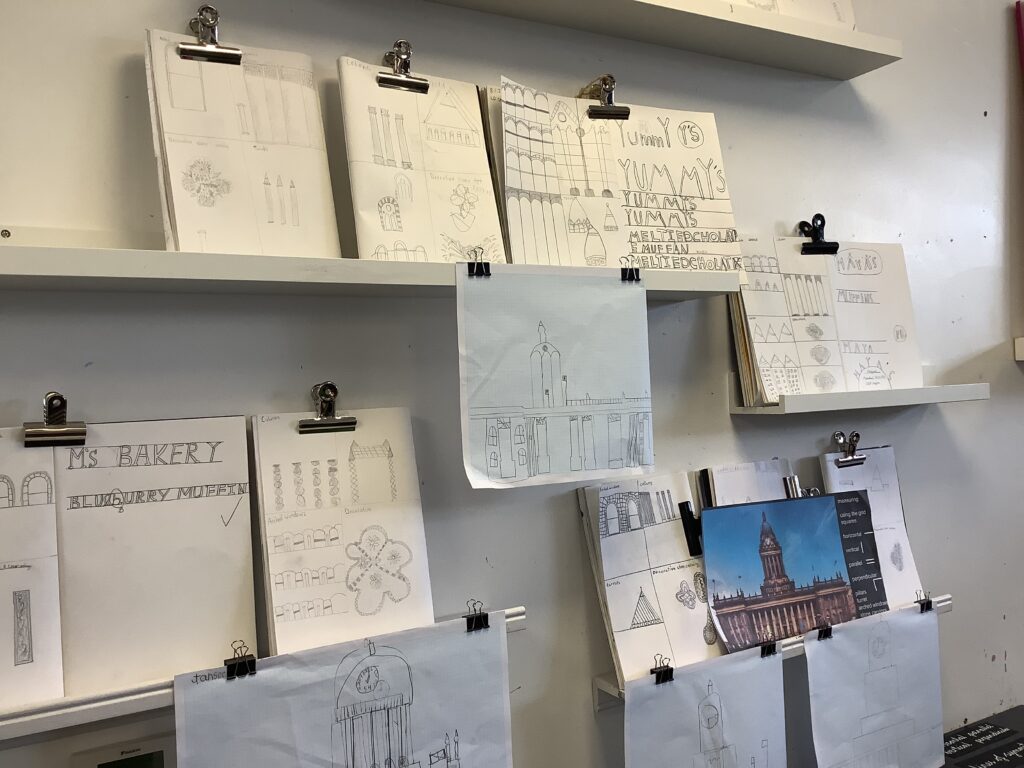
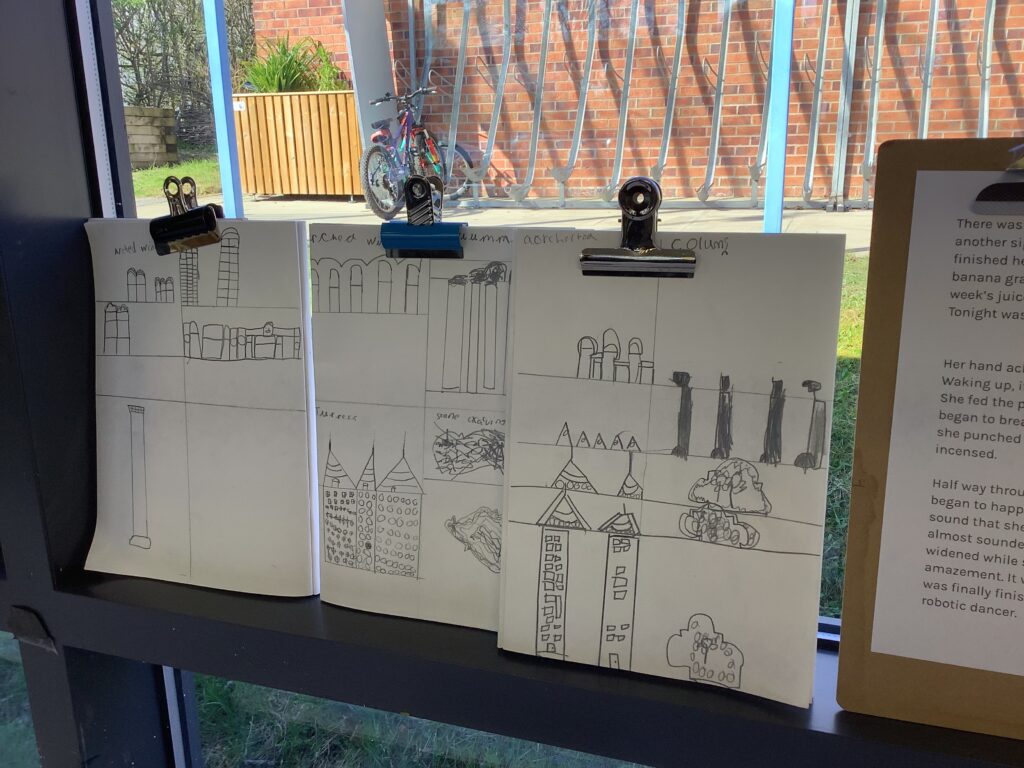
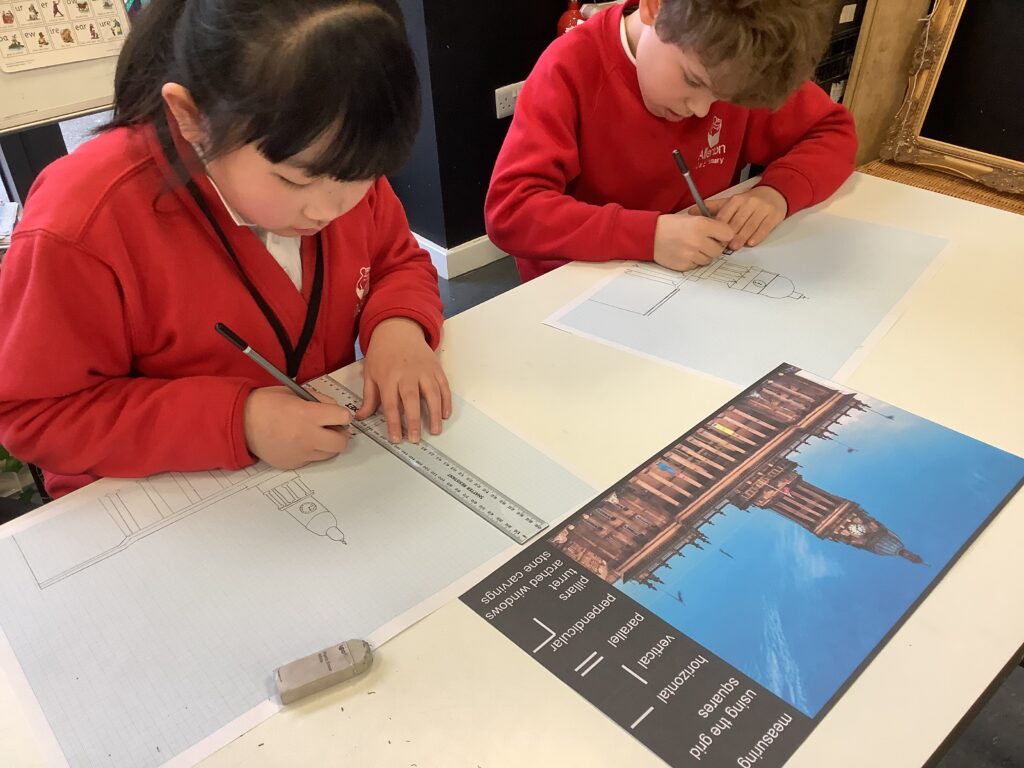
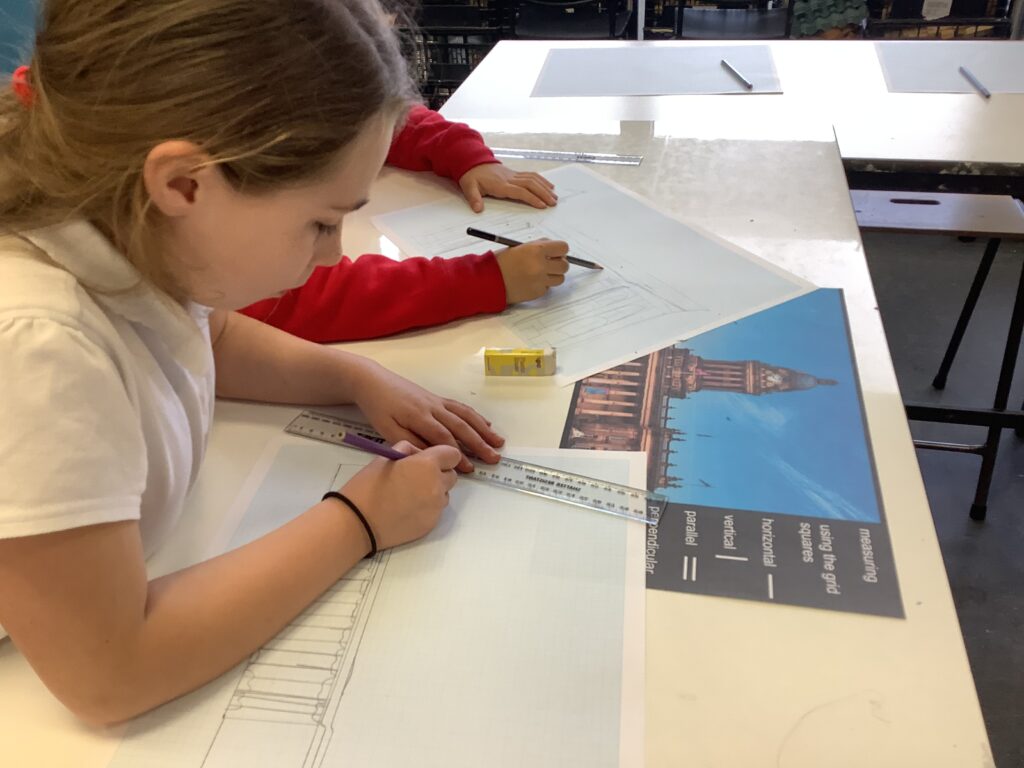
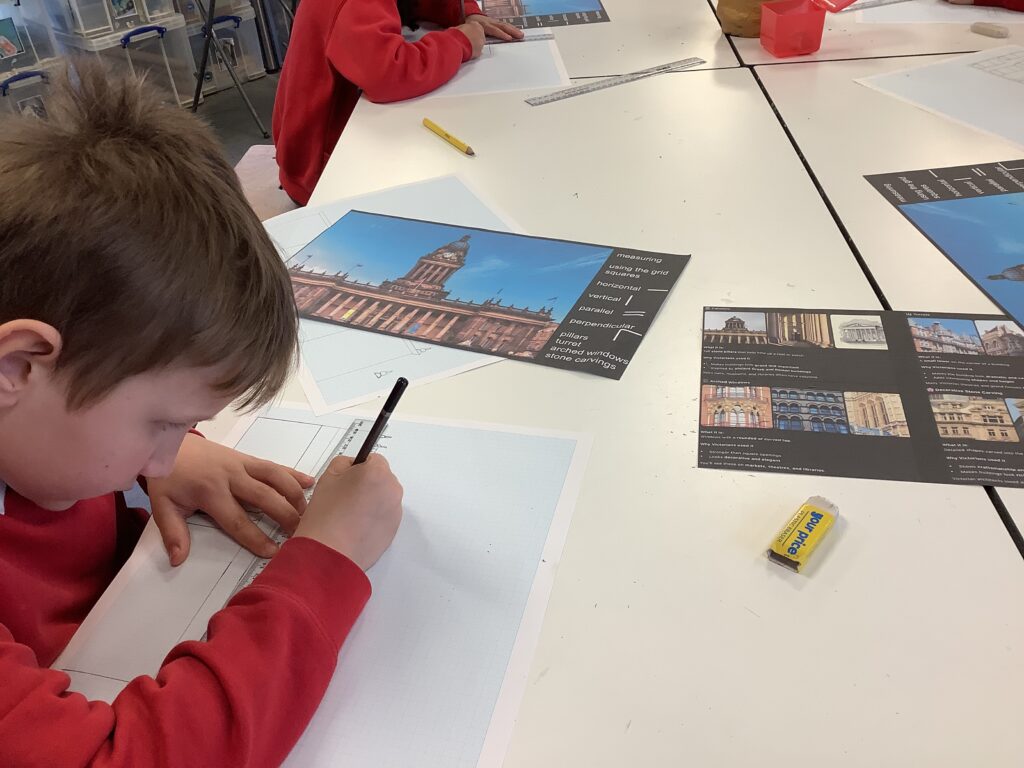
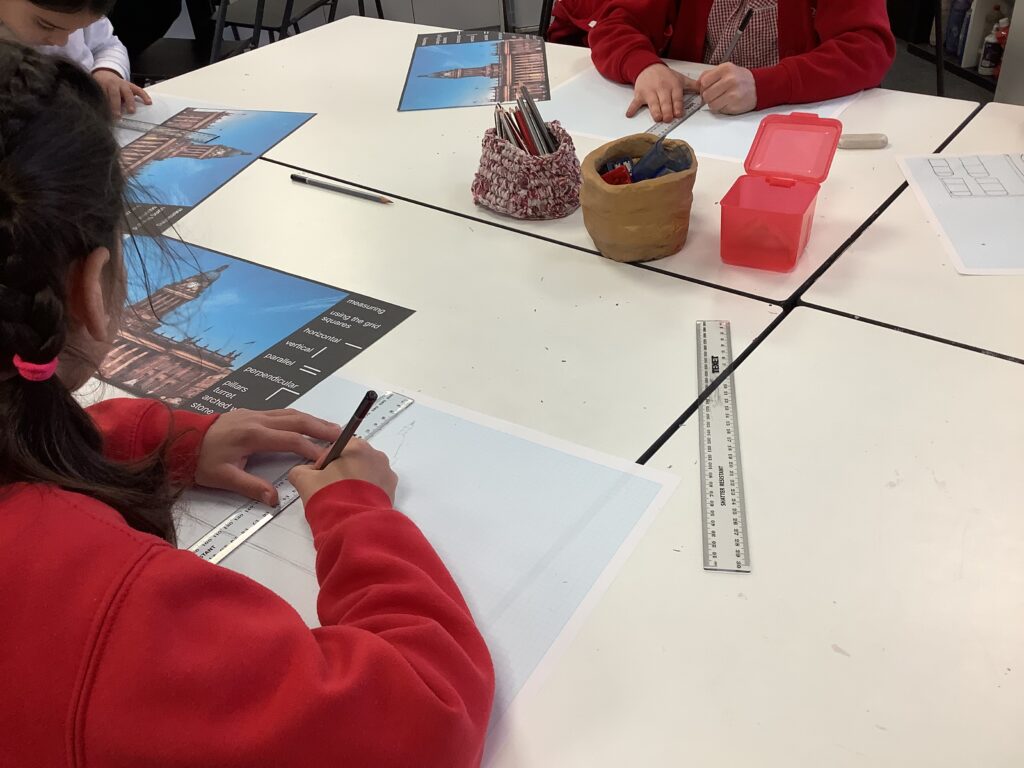
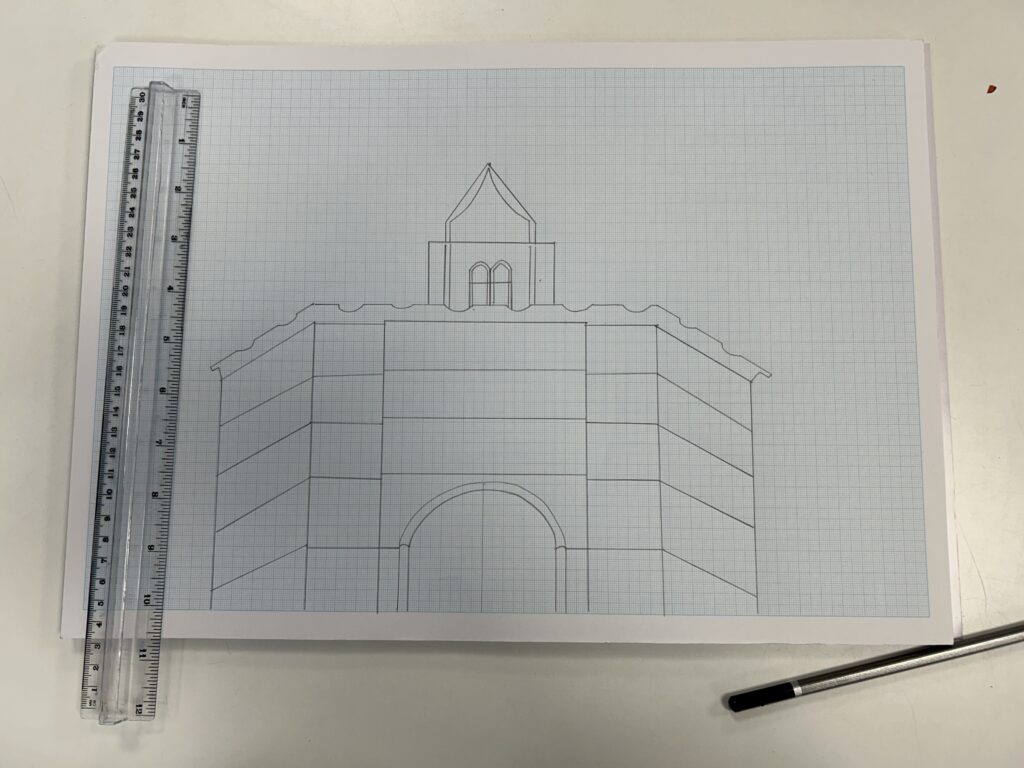
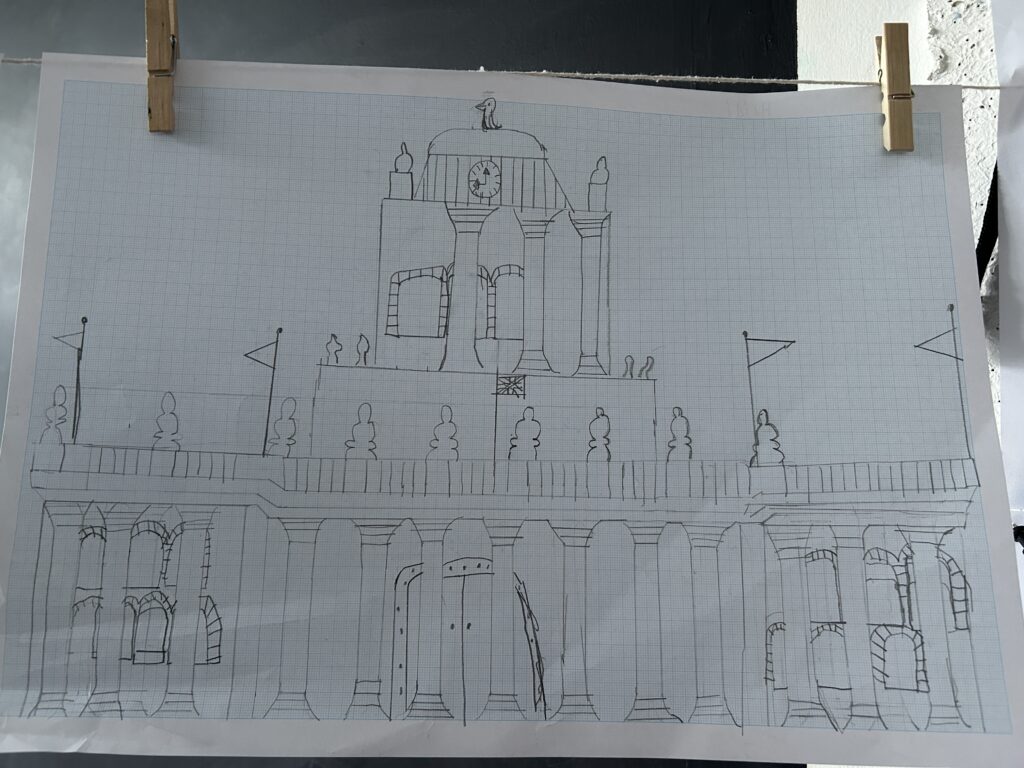
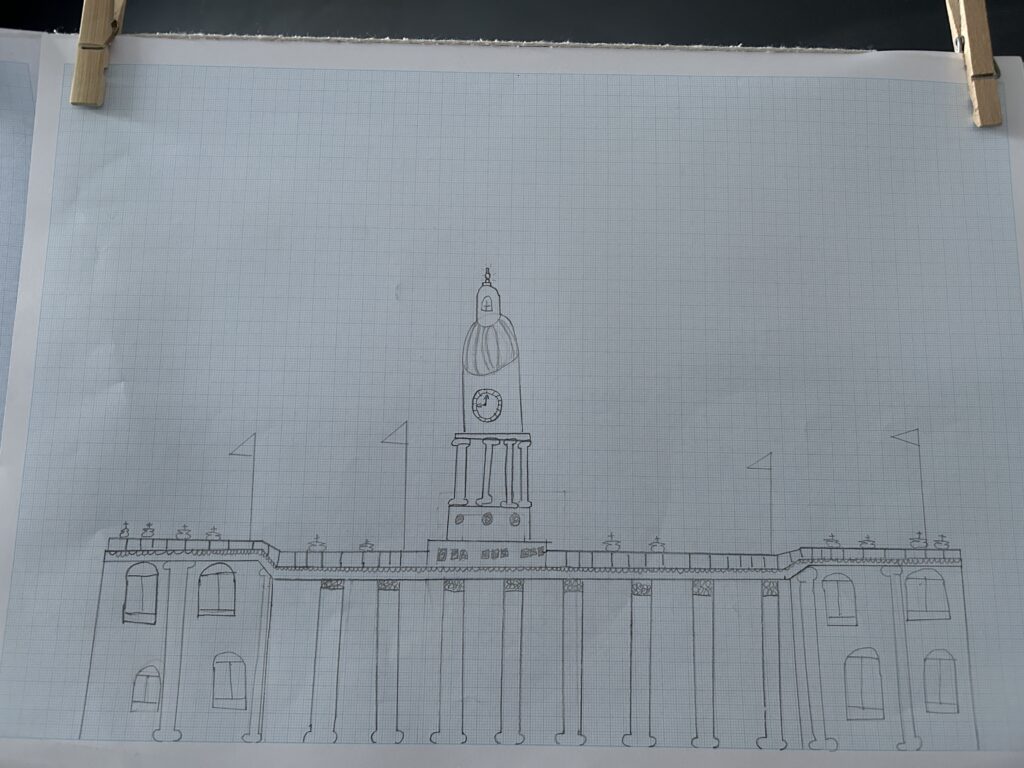
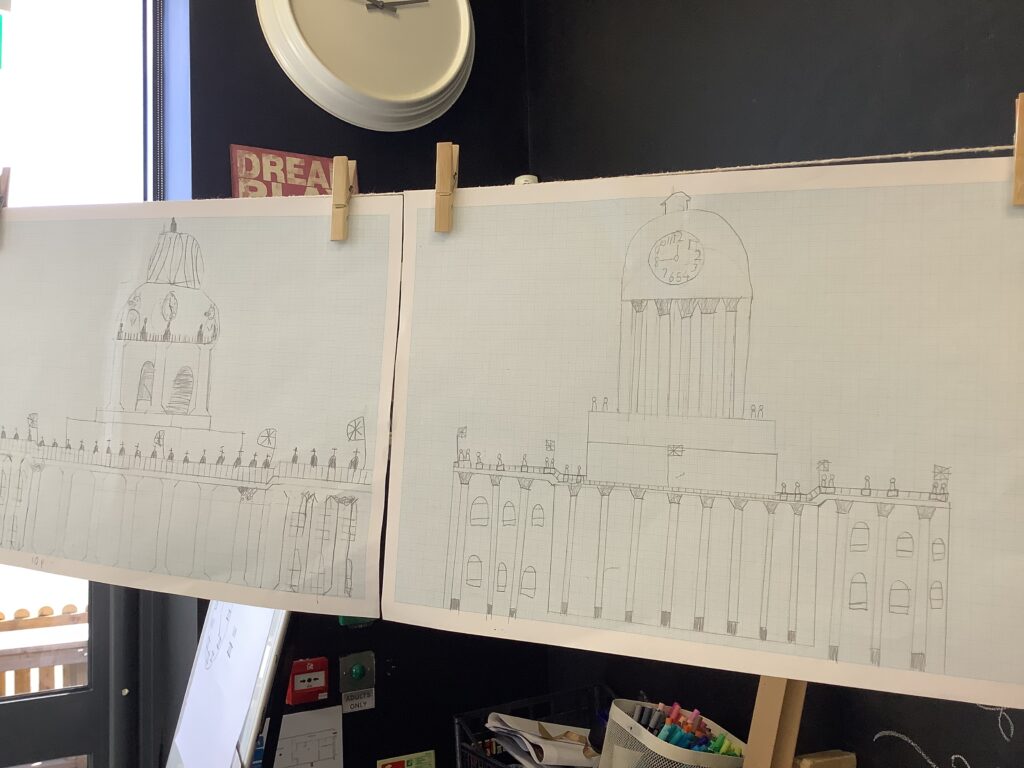
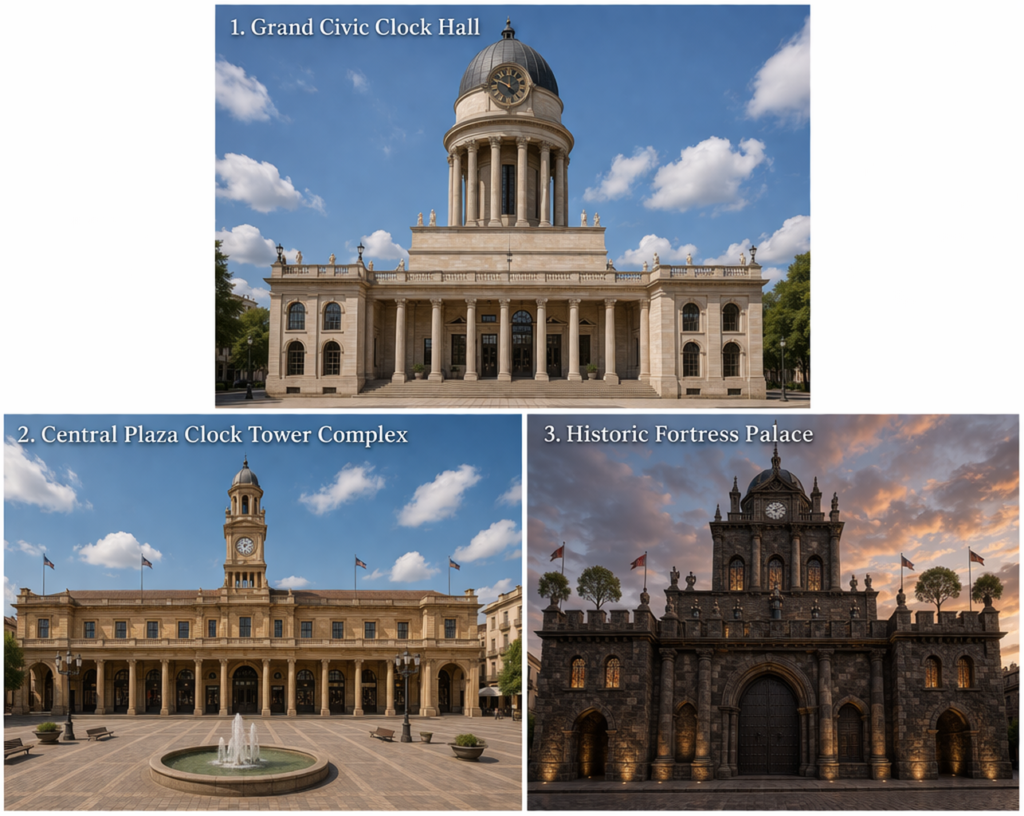
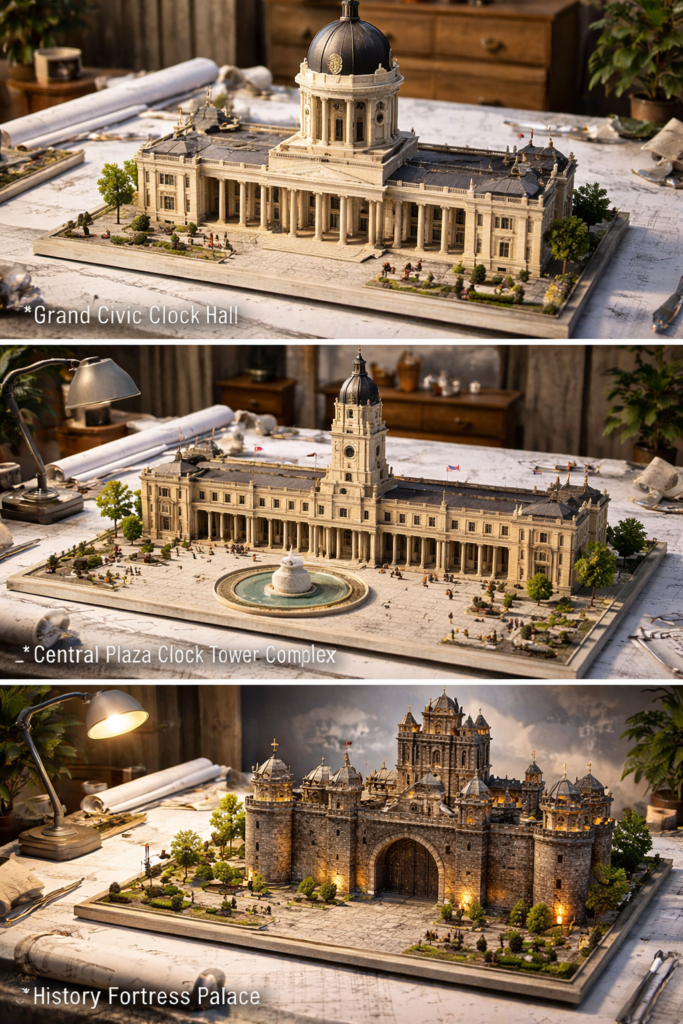
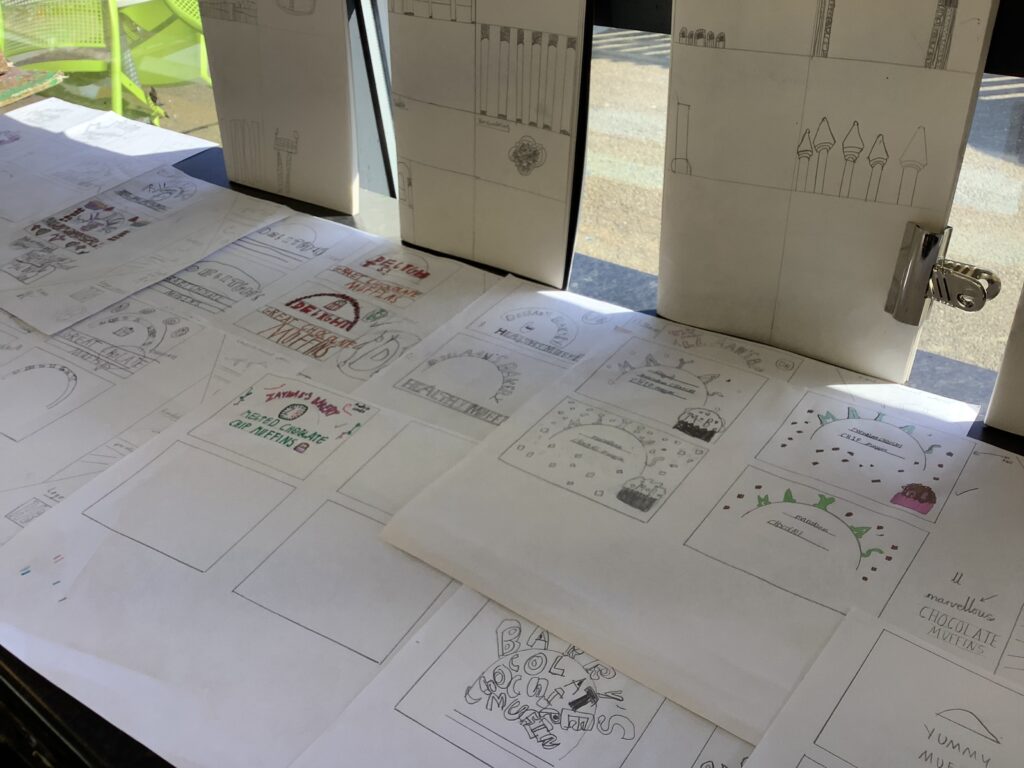
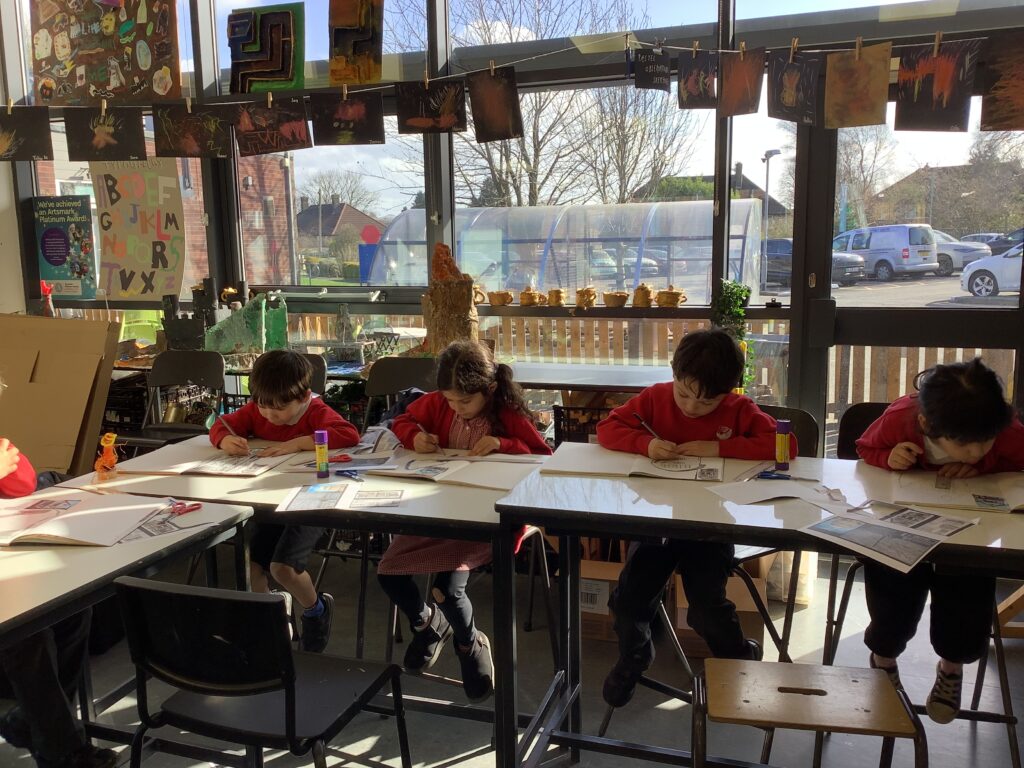
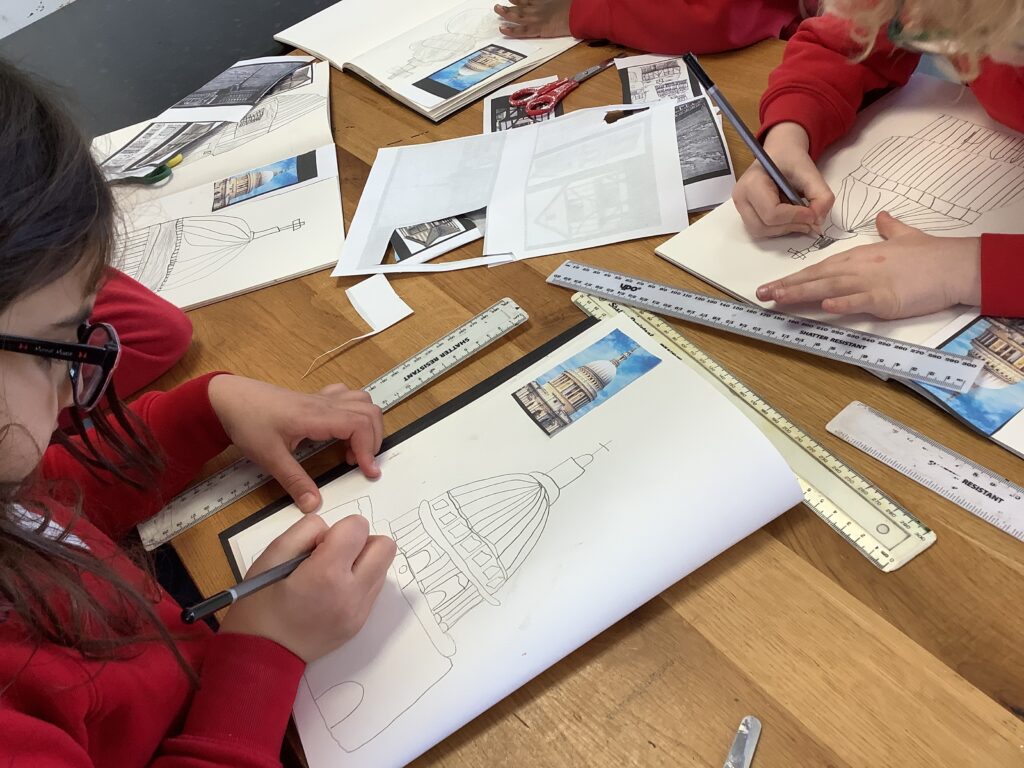
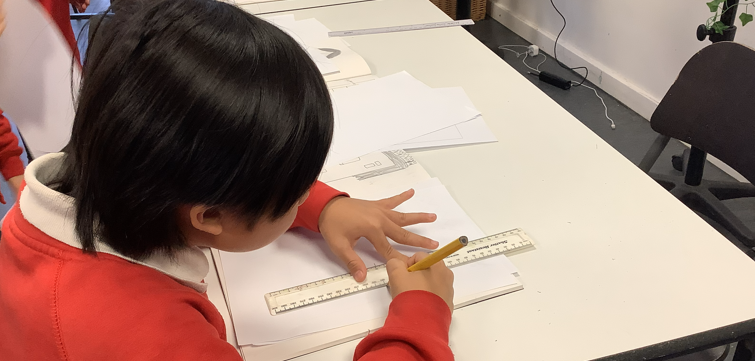
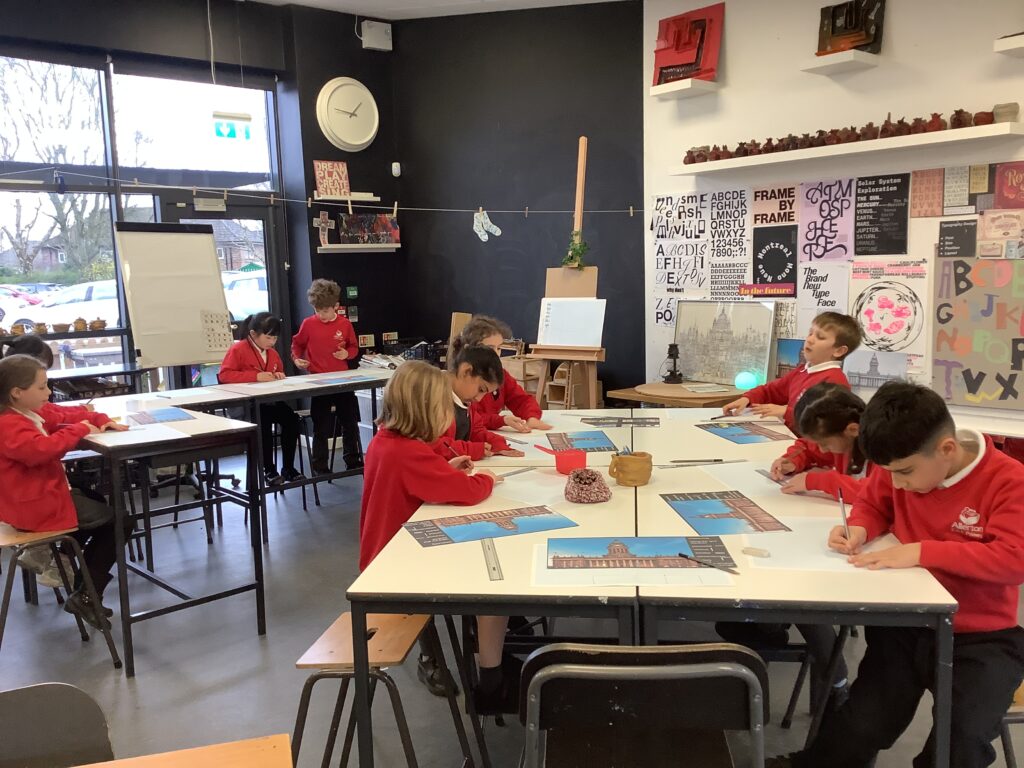
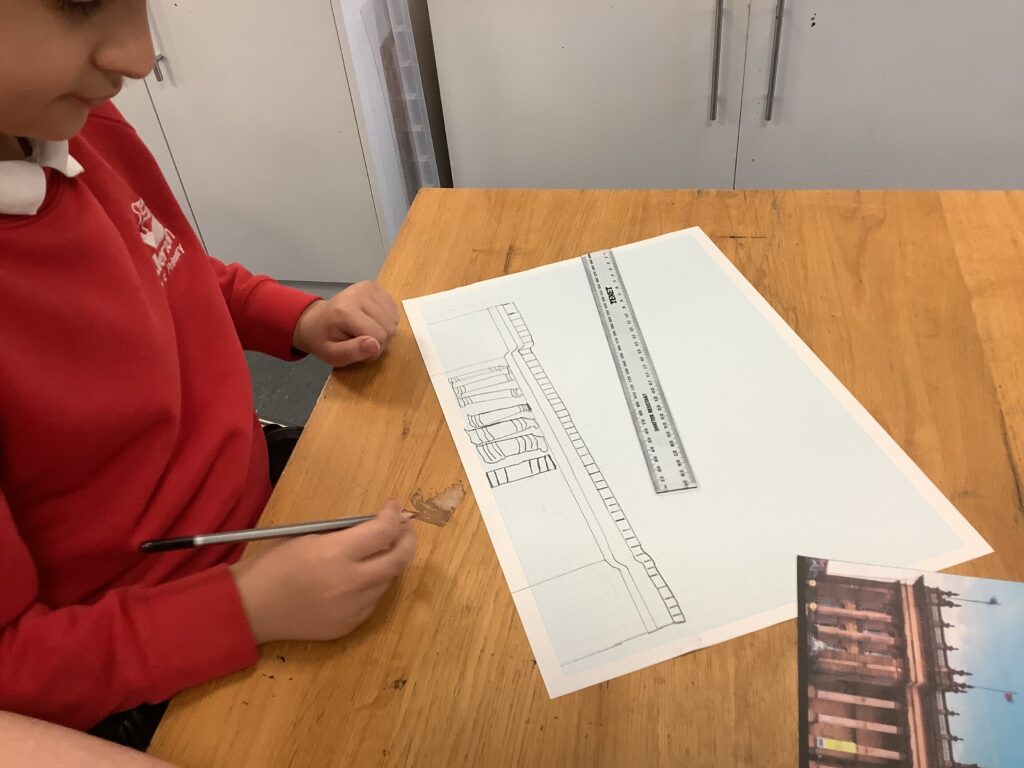
We were also lucky enough to watch an inspiring video from a parent in our school community who runs her own architecture business. This gave the children a real insight into what it takes to be an architect and where to begin with technical drawing. Back in the classroom, we modelled how to use rulers and technical drawing paper, focusing on symmetry and key mathematical concepts such as parallel, perpendicular, horizontal, vertical and diagonal lines. It was a highly focused and thoughtful afternoon, with children carefully observing, adjusting and refining their work to produce detailed drawings of Leeds Town Hall. The final pieces were truly impressive; many adults couldn’t believe they were created by Year 3 pupils! We also used a closed AI system to demonstrate how designs can be developed further using technology, bringing their ideas to life in new ways.
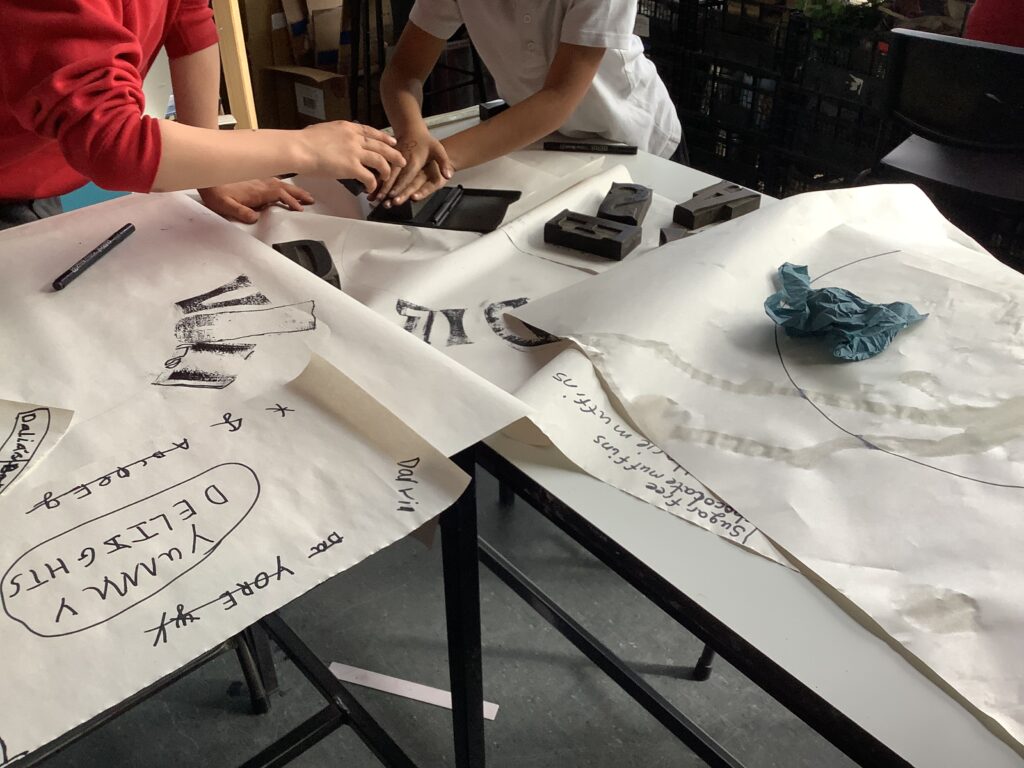
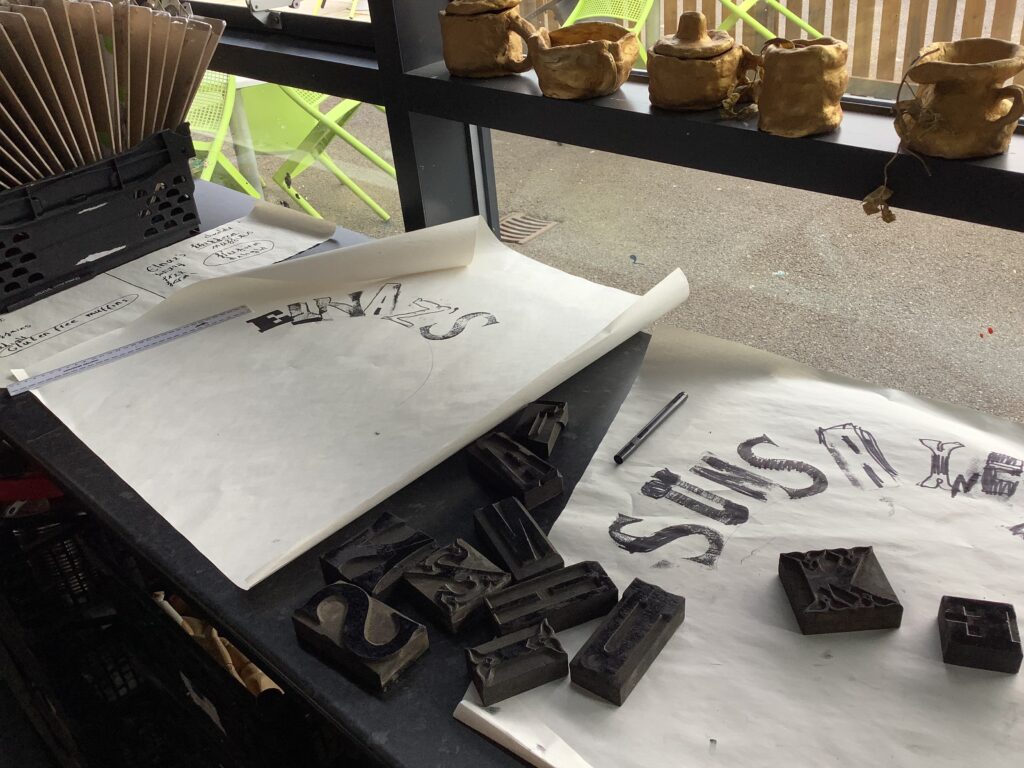
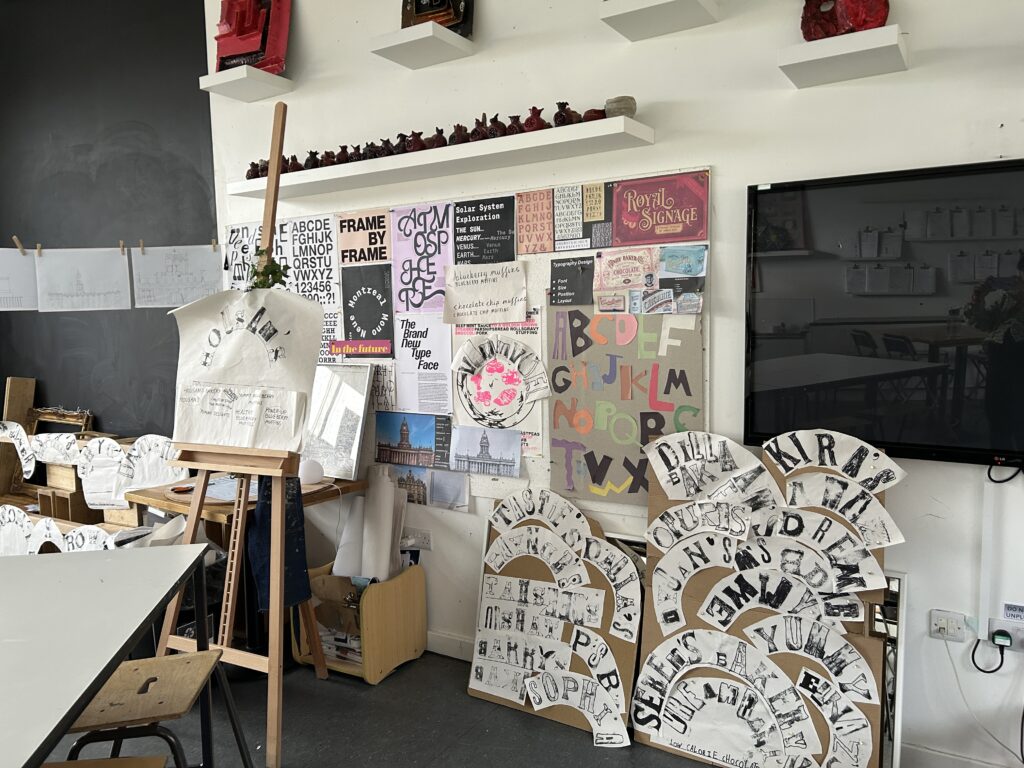
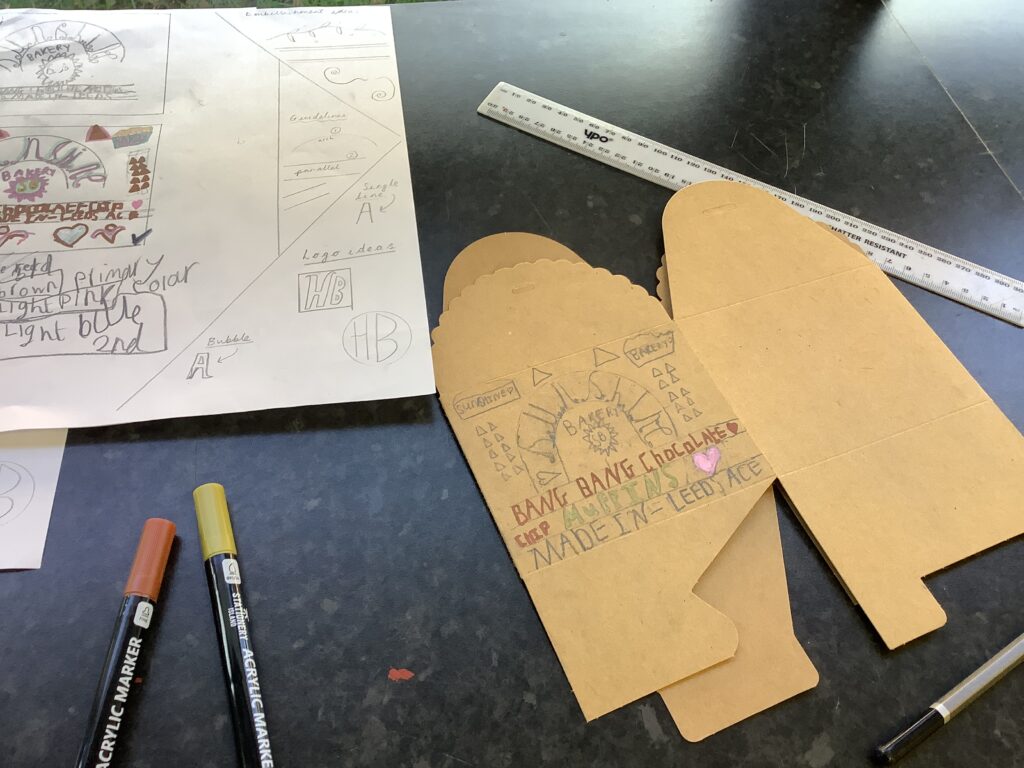
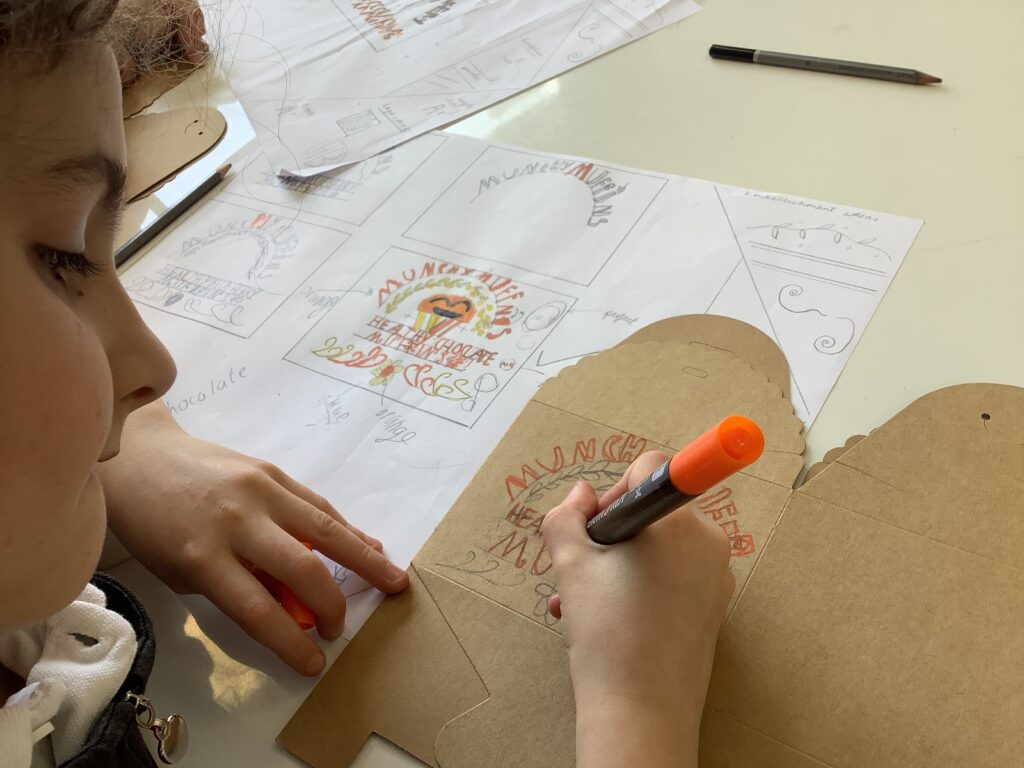
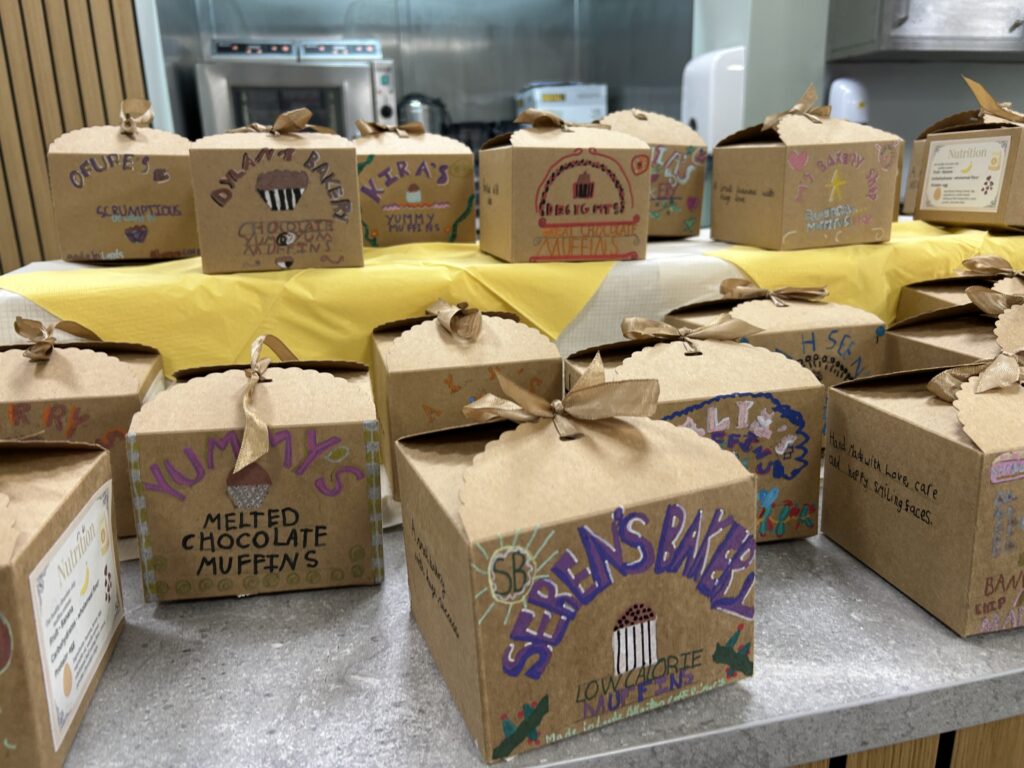
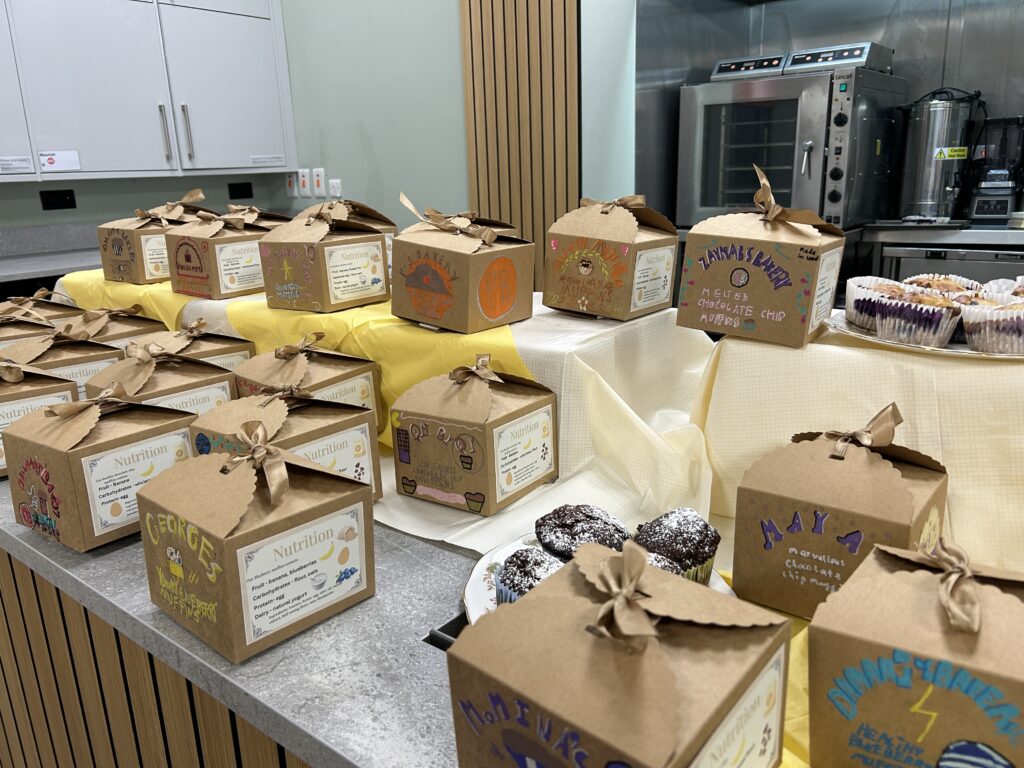
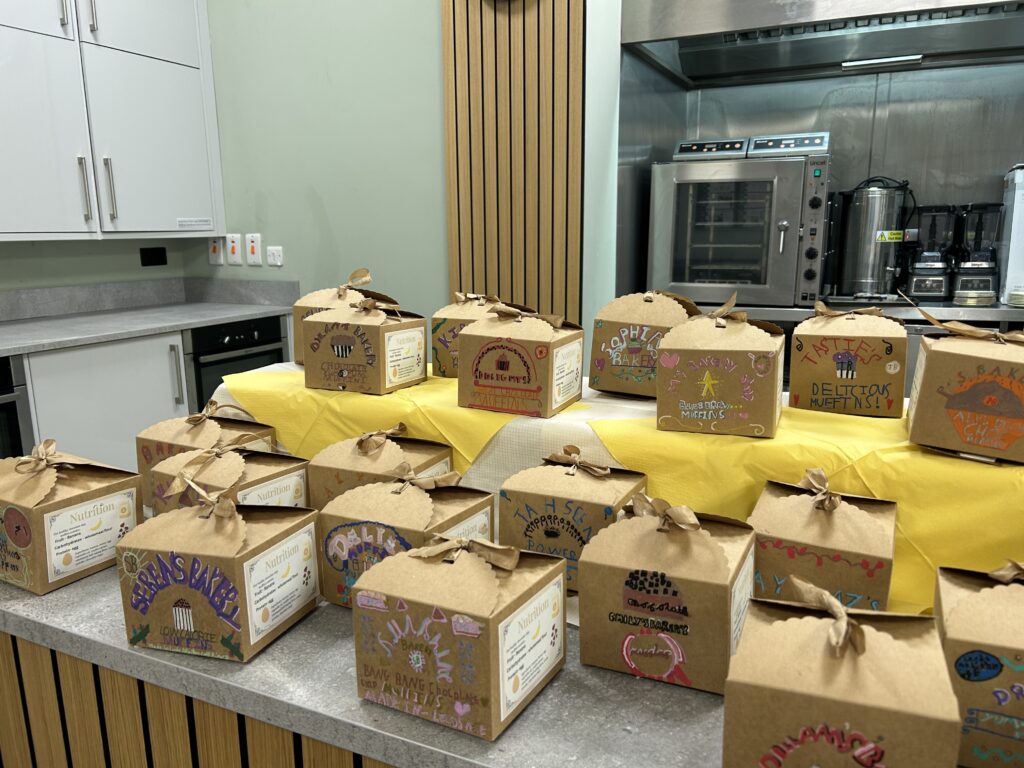
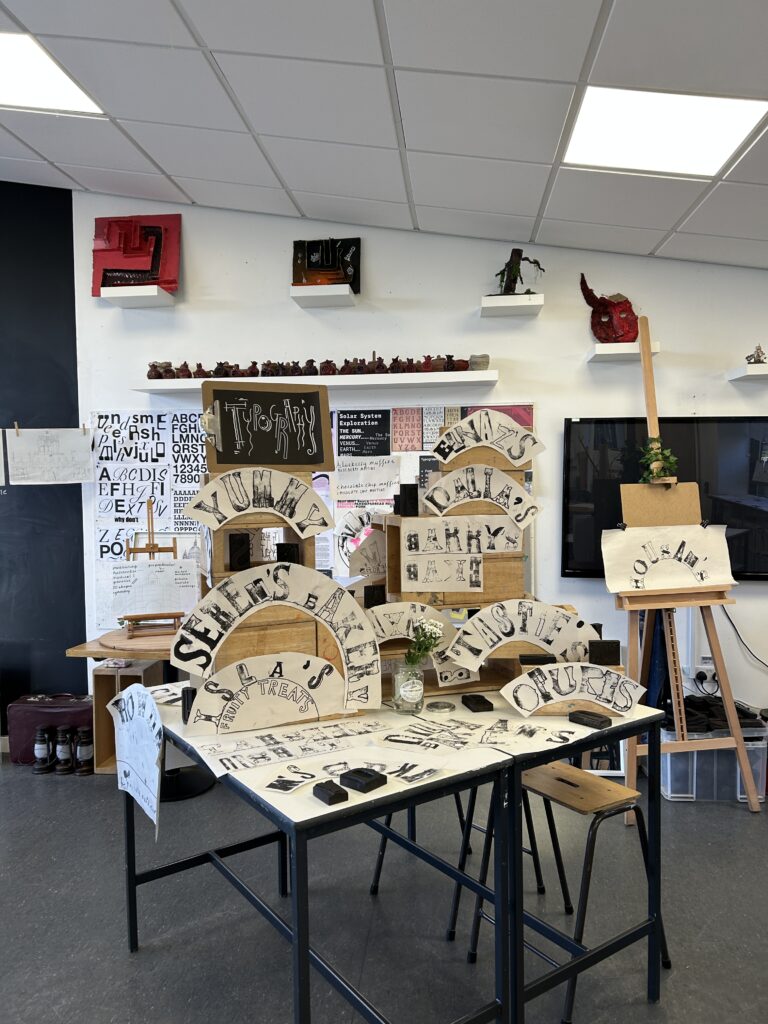
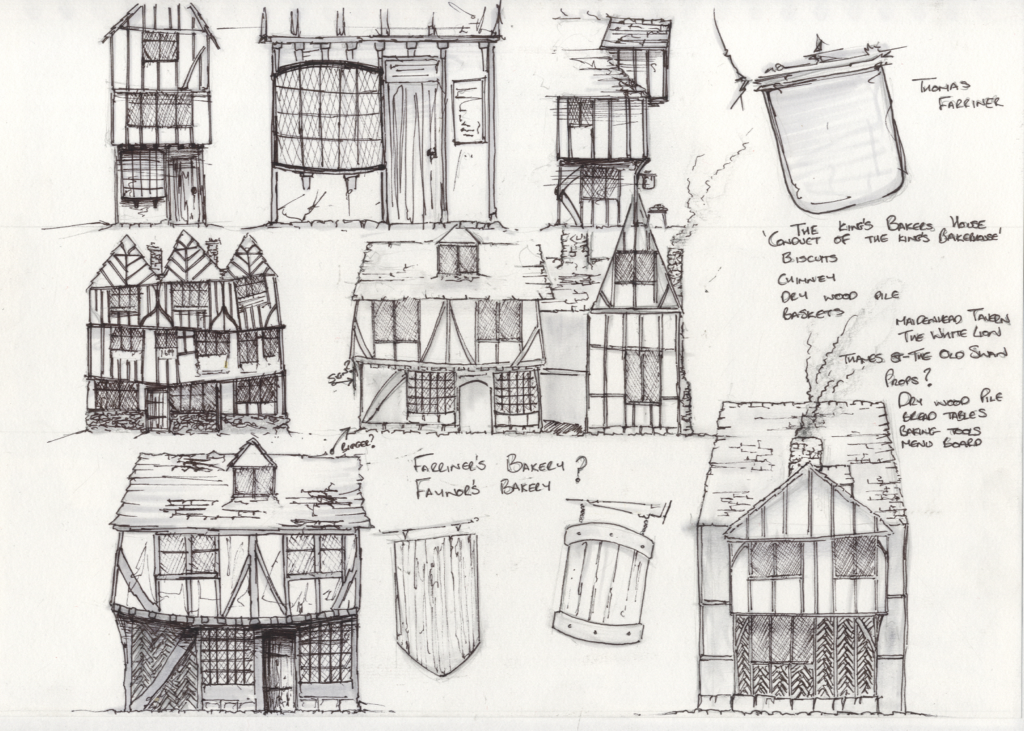
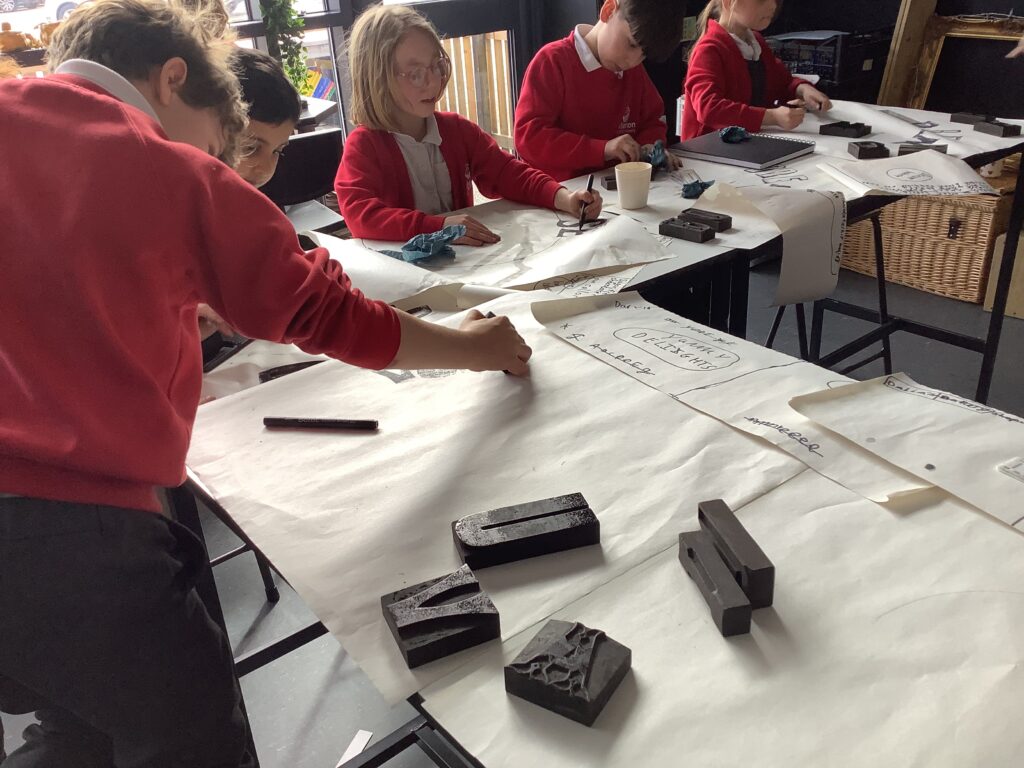
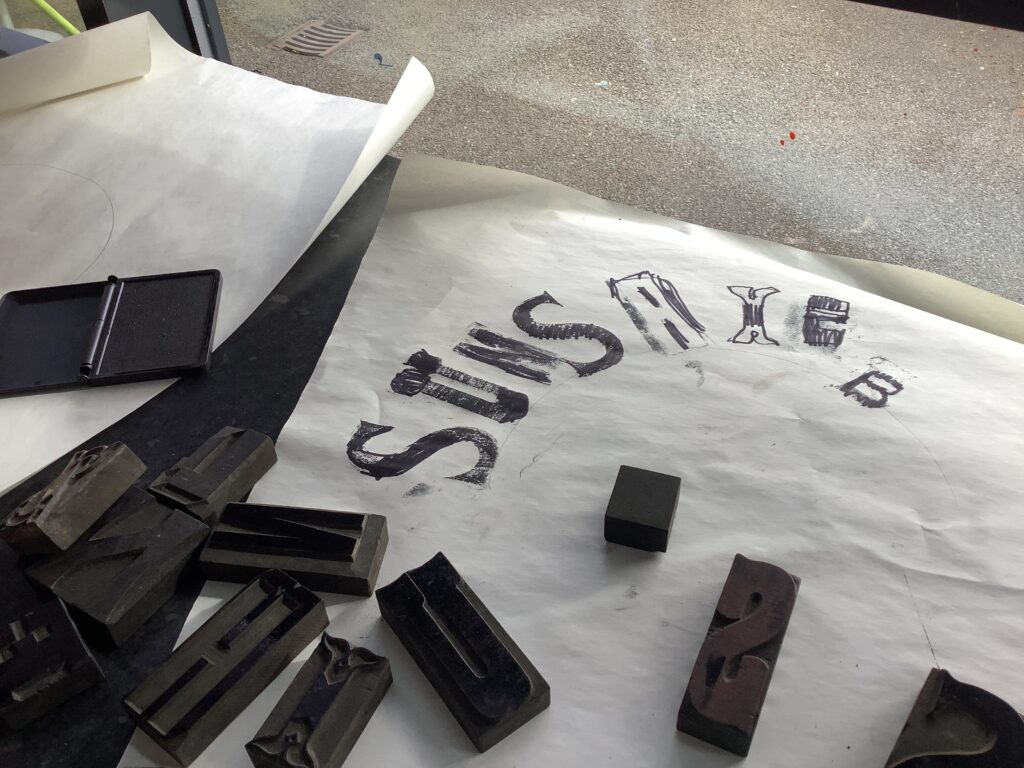
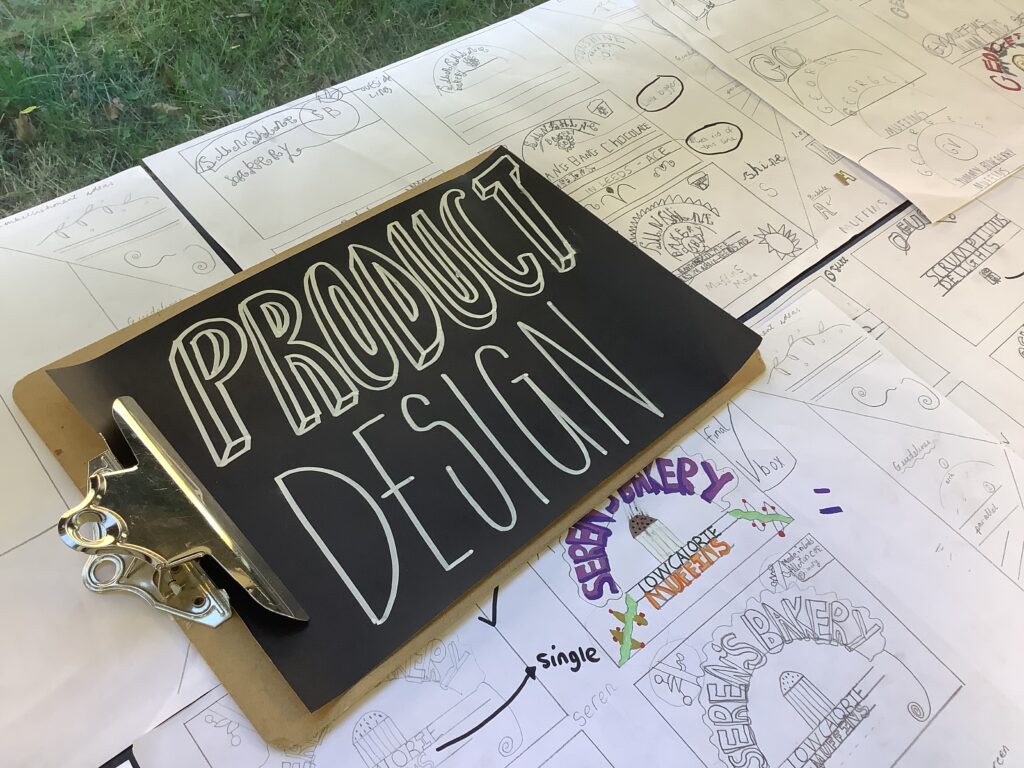
From architecture, we moved into product design and typography. In the café, the children worked with Mrs Elliott to bake either healthy blueberry or chocolate chip muffins, which became the perfect springboard for launching their own bakery businesses. They began by creating a business name and product name, before exploring existing bakeries and discussing what makes branding effective. As a first step into design, the children experimented with letterpress blocks, considering layout techniques such as arcs and parallel lines to present their business names in visually appealing ways.
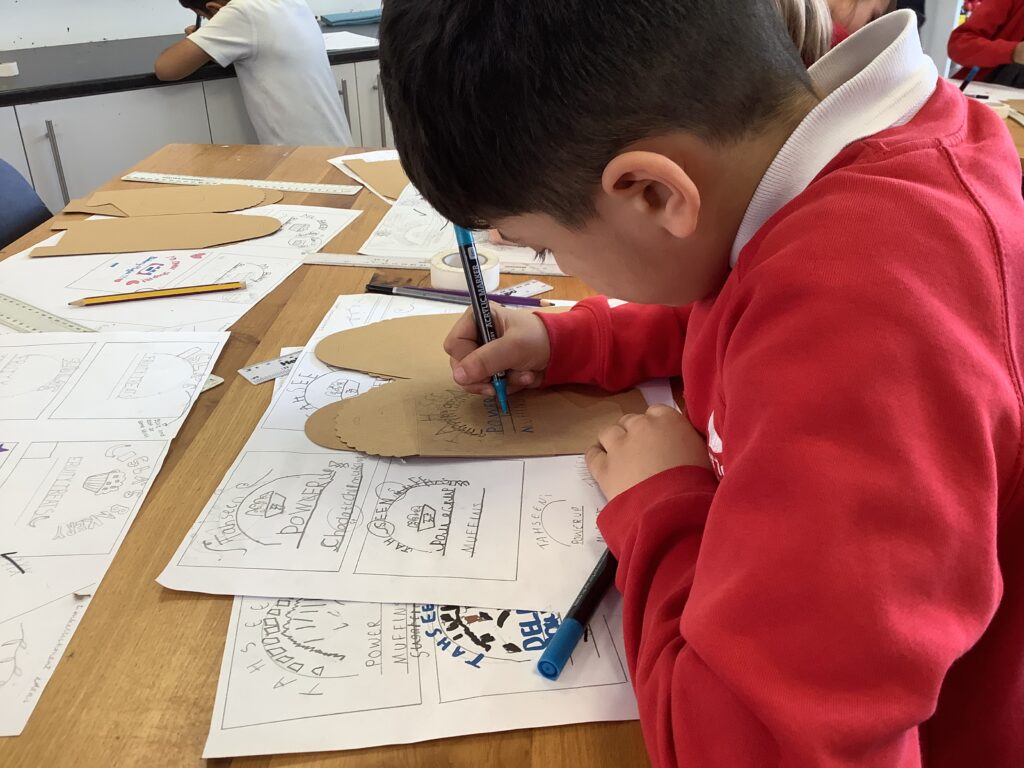
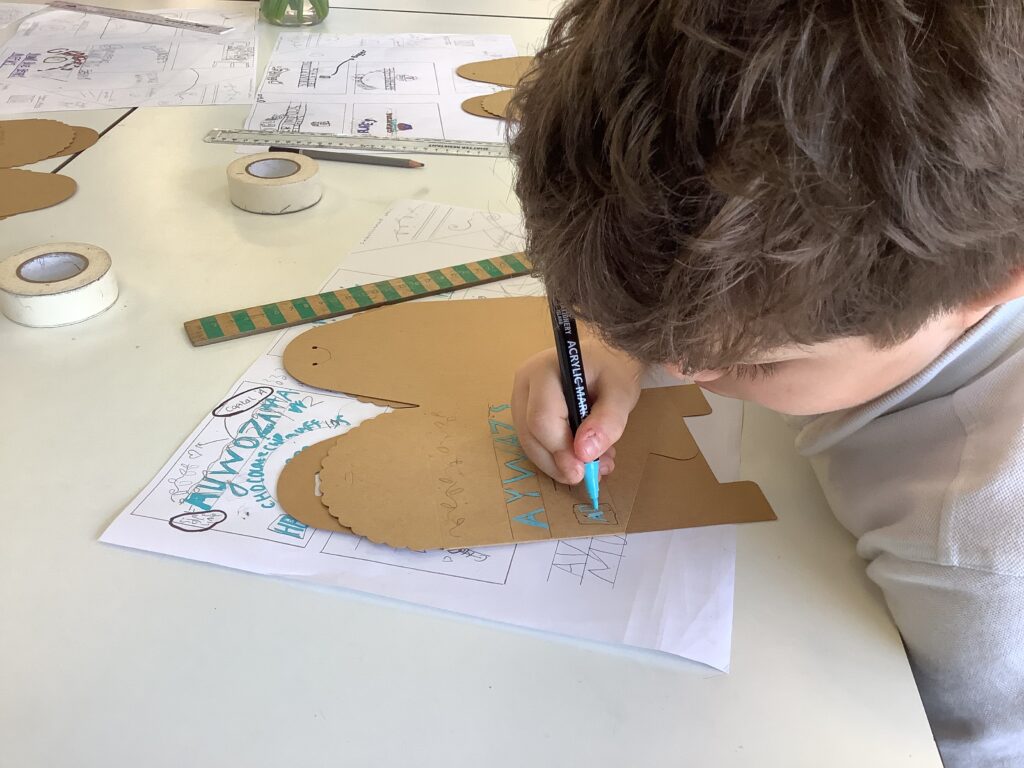
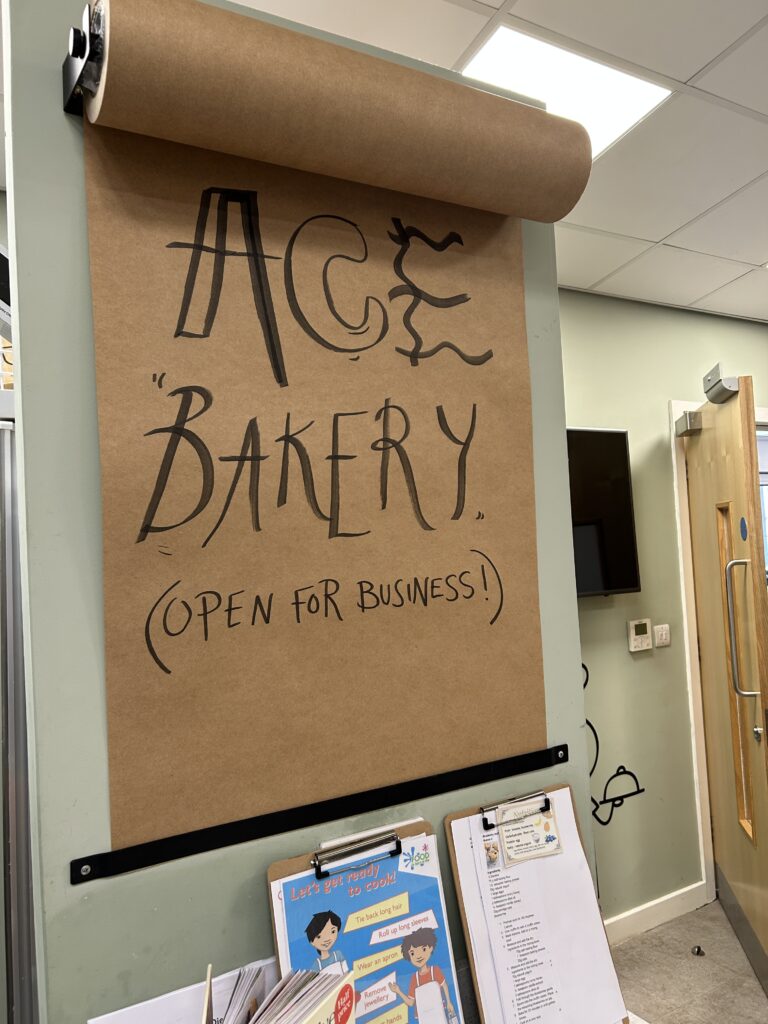
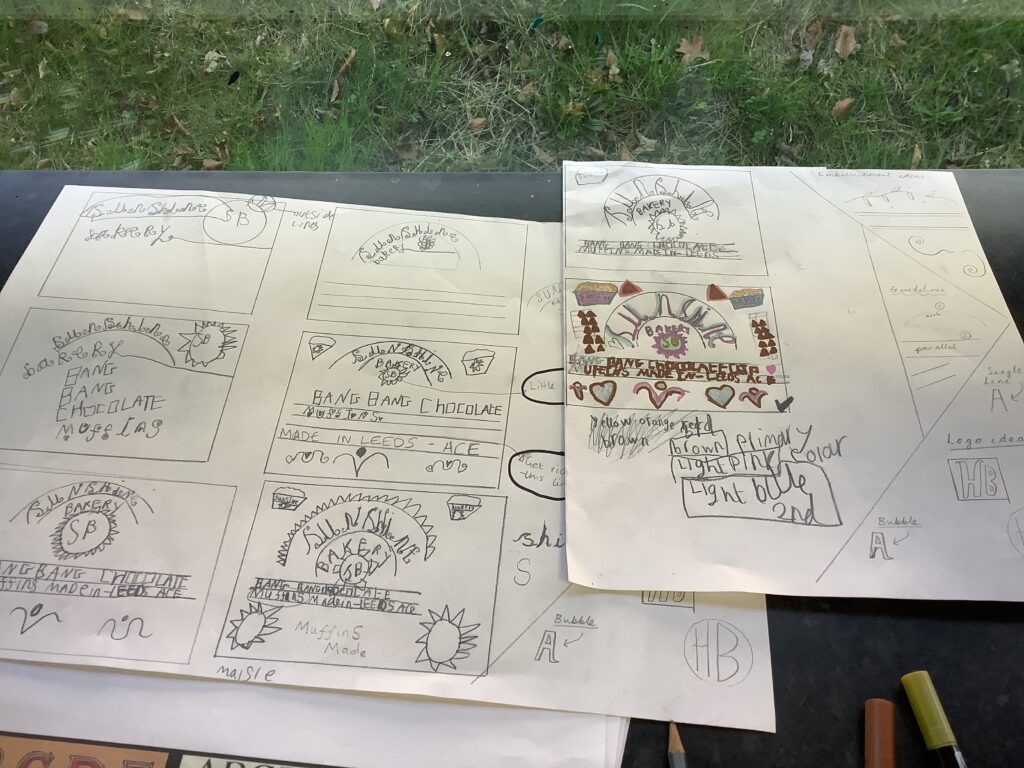
We then explored a range of Victorian and modern typography styles, kindly provided by our Leeds Beckett art department partners – thank you again! This stage was all about perseverance, reflection and improvement. The children carefully considered lettering style, size, layout and colour choices, receiving lots of individual feedback and using it to refine their work. It was wonderful to see how confidently they could articulate their design choices and next steps. Once they were happy, they used acrylic pens to create their final designs on Kraft boxes. The finished products were fantastic; they were complete with logos, nutritional information and a persuasive slogan ready to be displayed in the café for our Arts Celebration. Parents were incredibly proud and the children were thrilled to see (and taste!) their finished products. ACE Bakery was well and truly open for business!
London’s Burning! – 1D and 1C

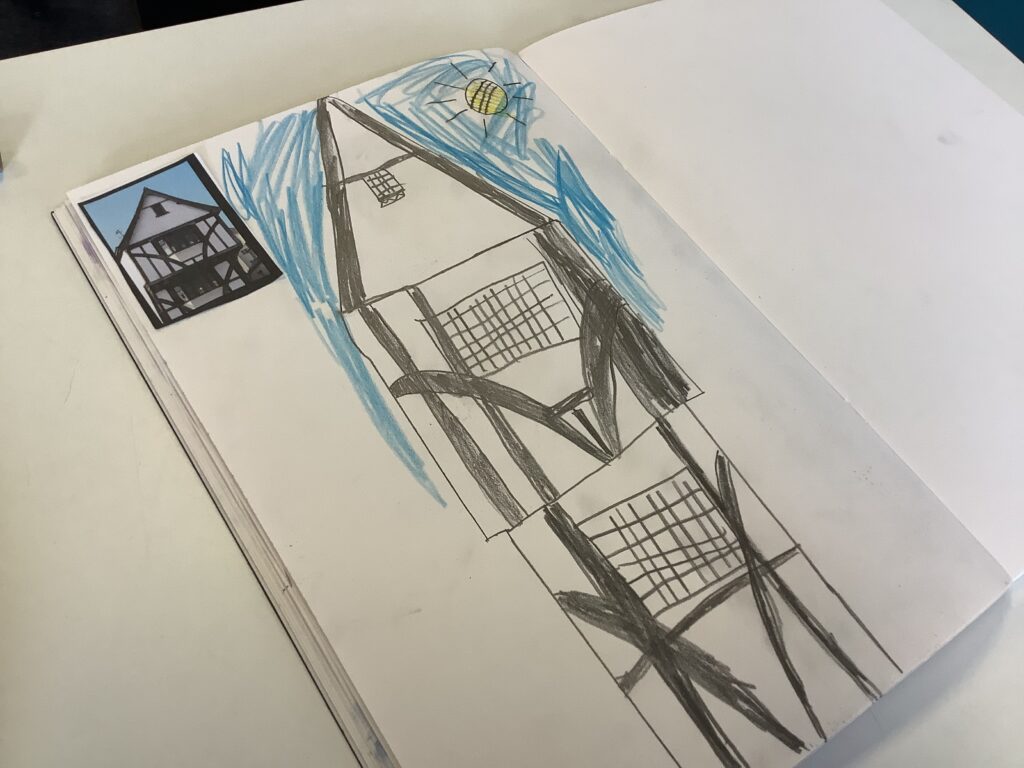
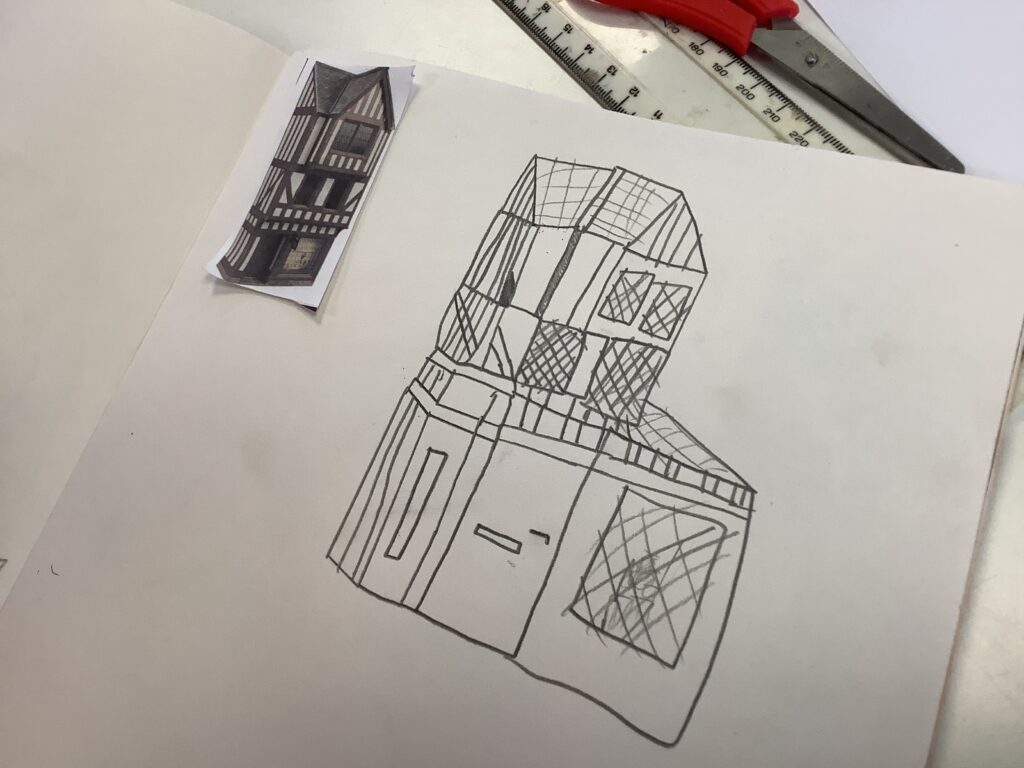
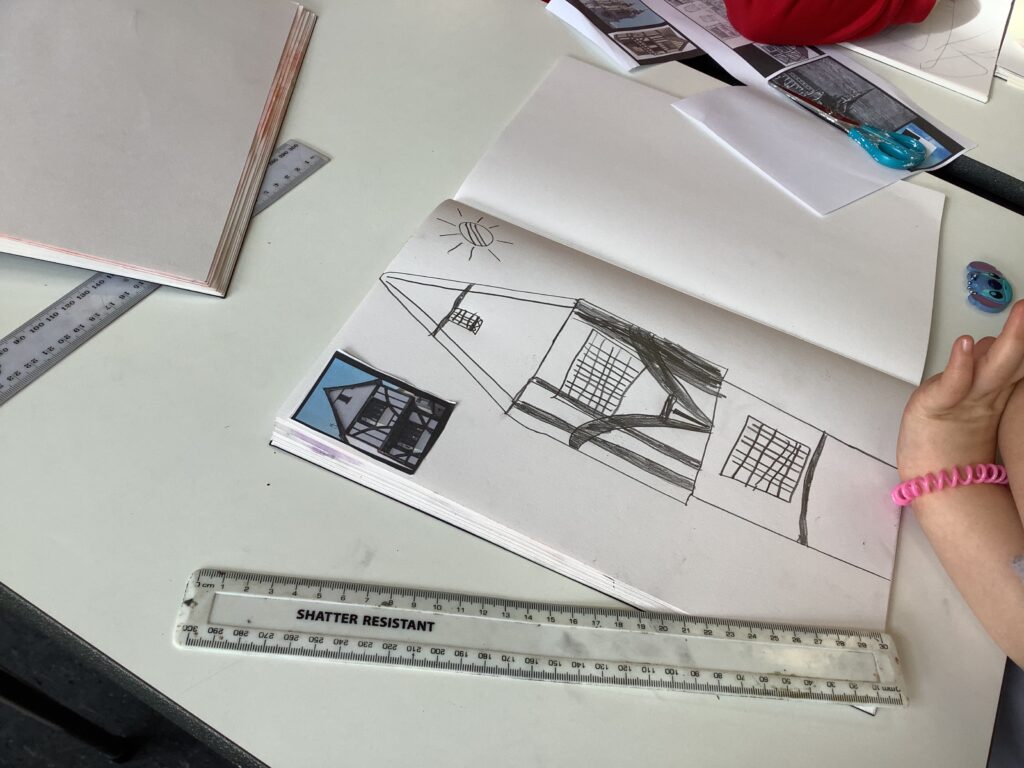
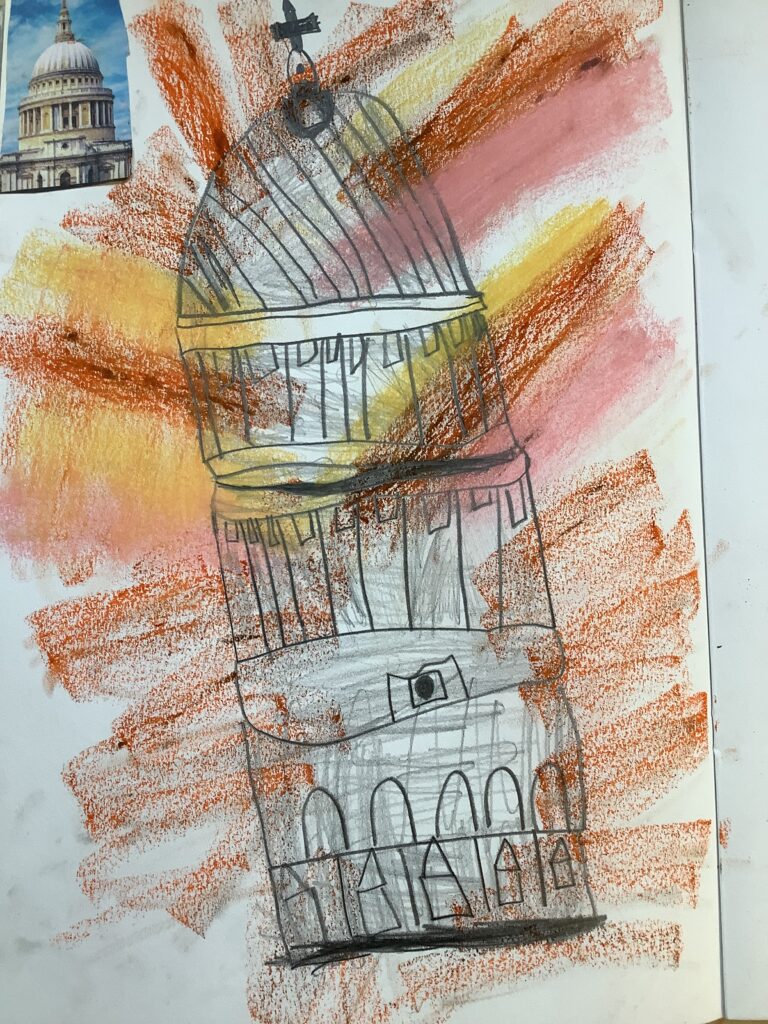
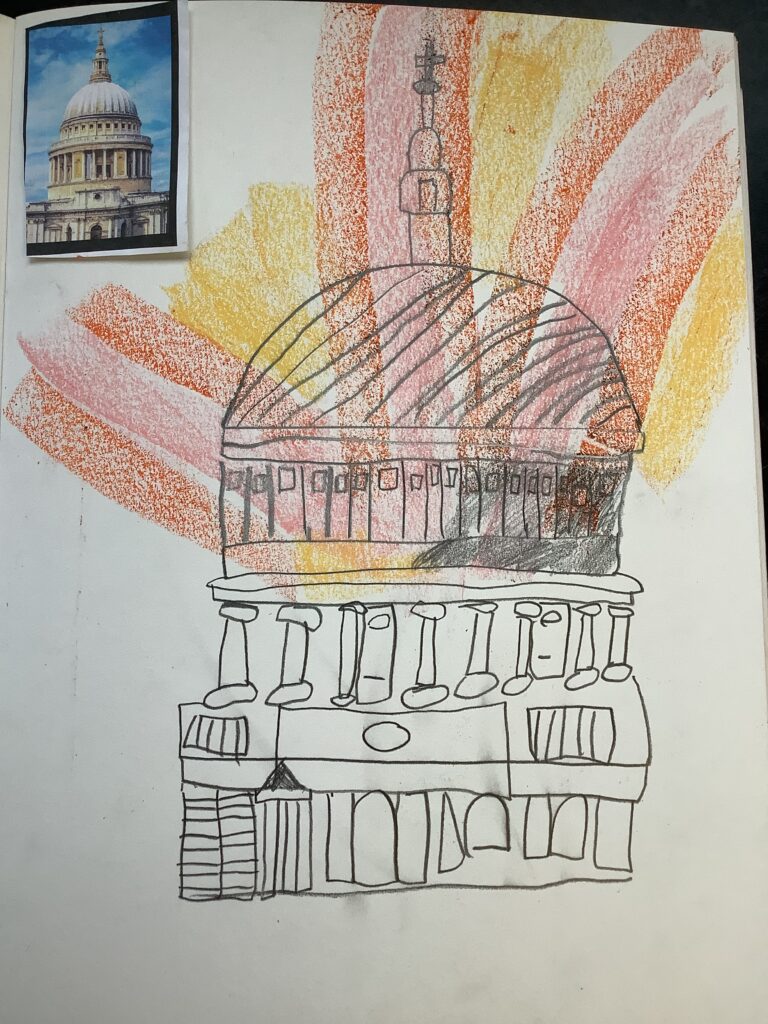
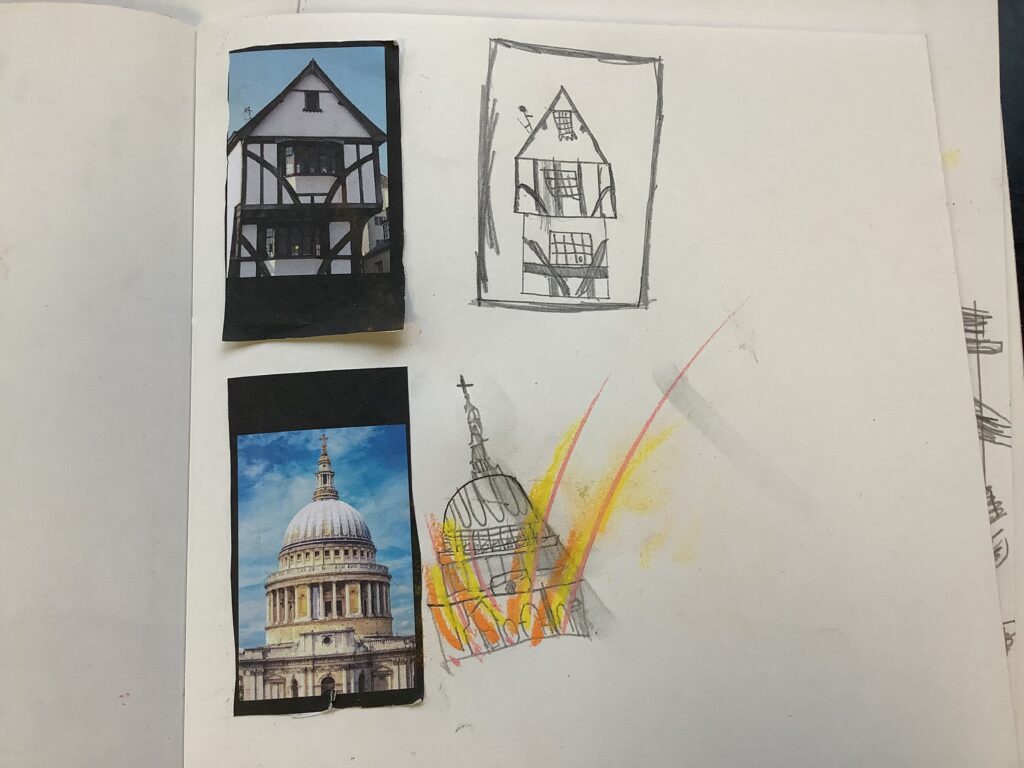
Over their Arts Fortnights, Year 1 immersed themselves in a vibrant and creative Arts Fortnight, and what a fantastic start we had. We began by exploring the history of the Great Fire of London, learning about how the city looked before and after this significant event. The children carefully identified key features of Tudor architecture, noticing the distinctive timber frames and overhanging upper floors. They then had the opportunity to sketch their own Tudor houses, as well as St Paul’s Cathedral, choosing whether to depict them before or after the fire. To bring a sense of drama and storytelling to their work, the children added a touch of peril using oil pastels, experimenting with expressive, gestural movements to capture the energy and danger of the flames. We used graphite pencil, sketching pencil, rulers and pastel.

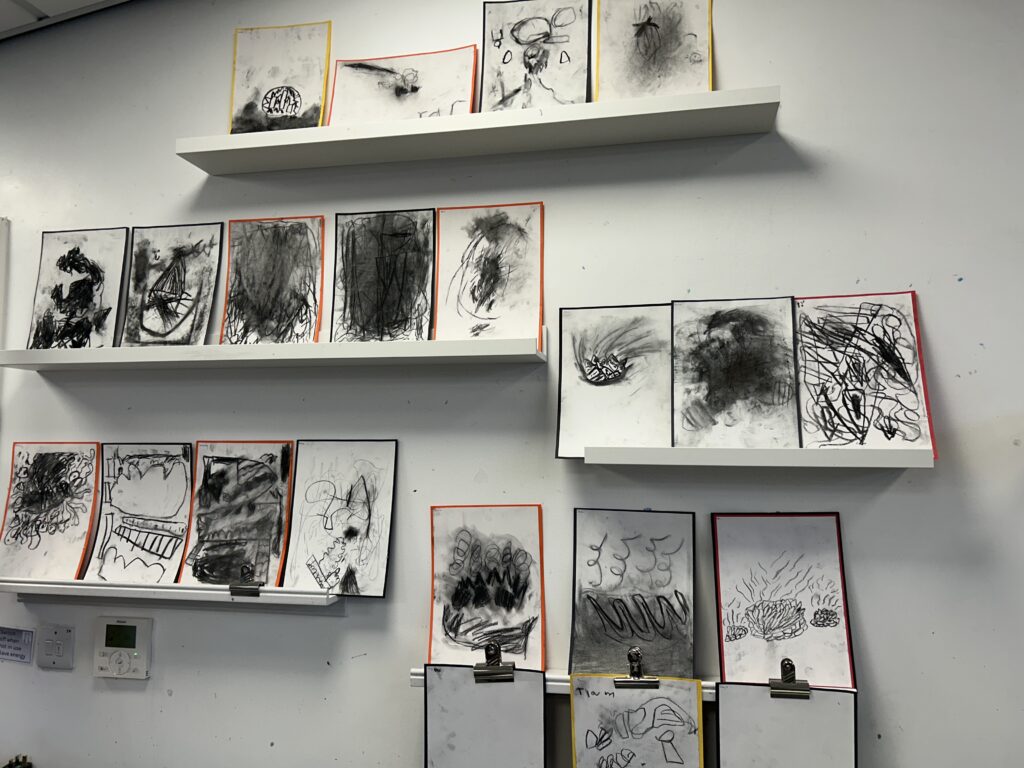
Outside, we also had the opportunity to carry out some observational pastel and charcoal sketches of flames, using the fire pit with the help of Mrs Whittaker! It was really interesting to see how the children smudged and blended to represent the smoke and movement of the flames. I love how some look so abstract and others follow continuous lines through the observational focus.

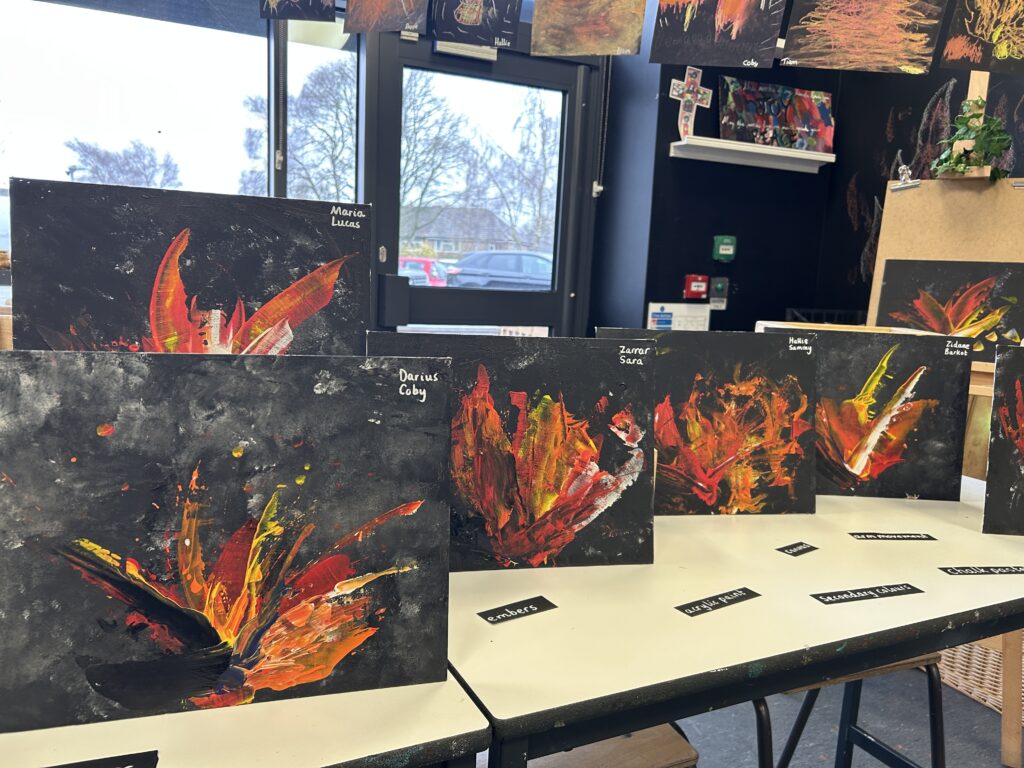
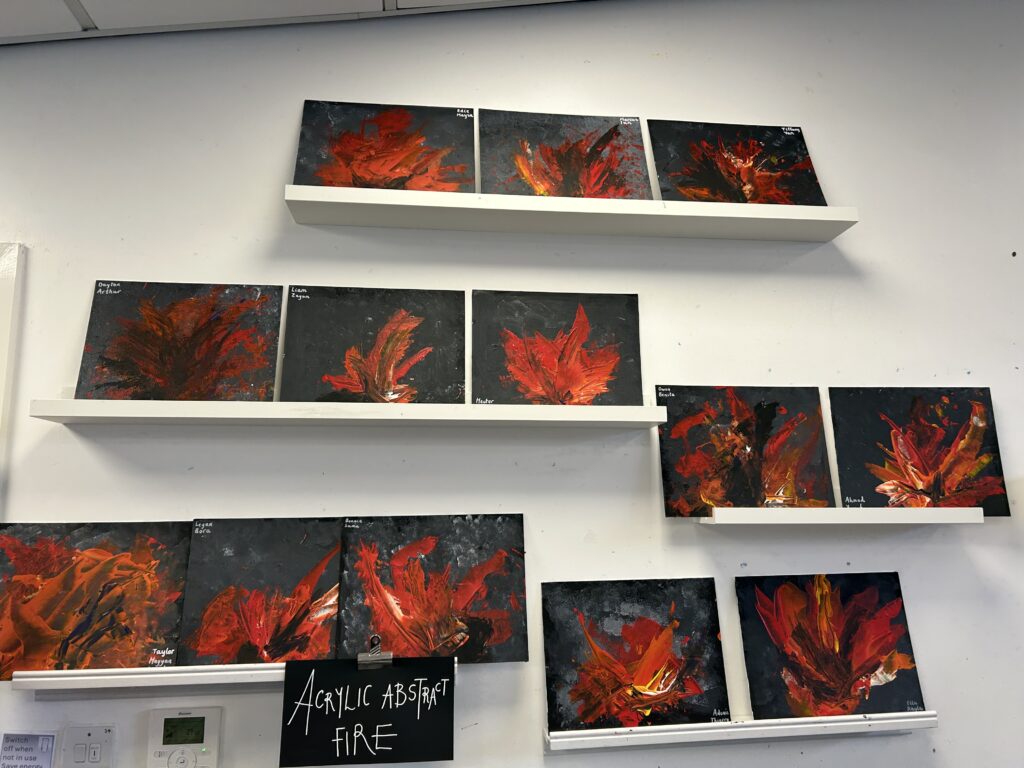
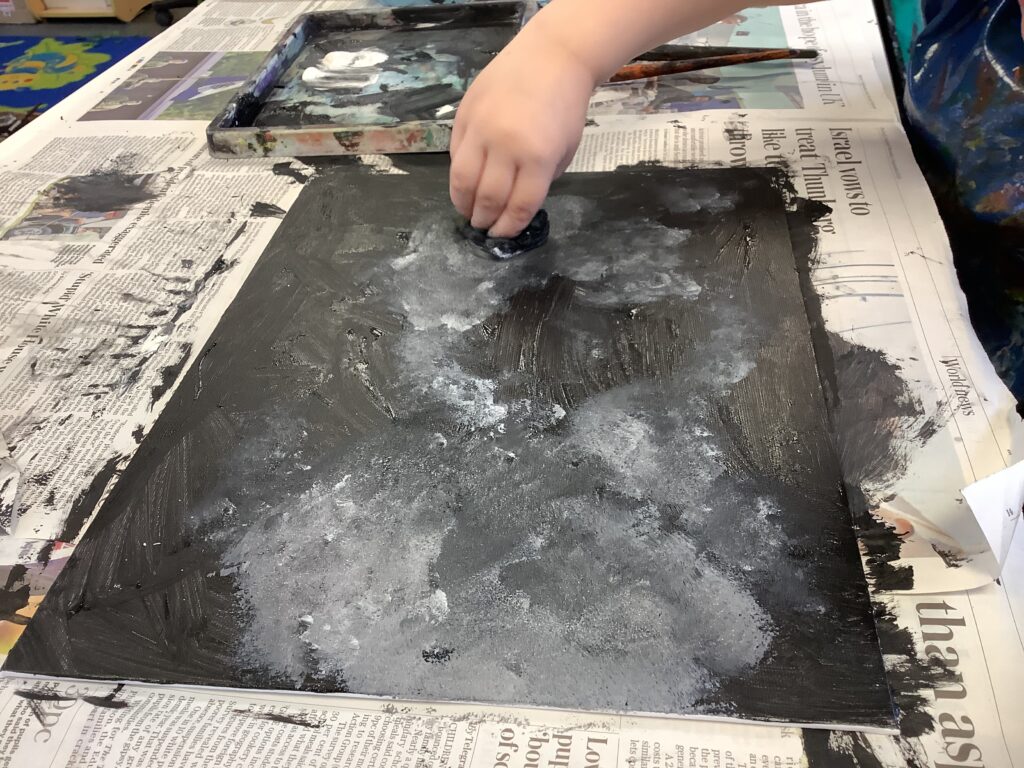
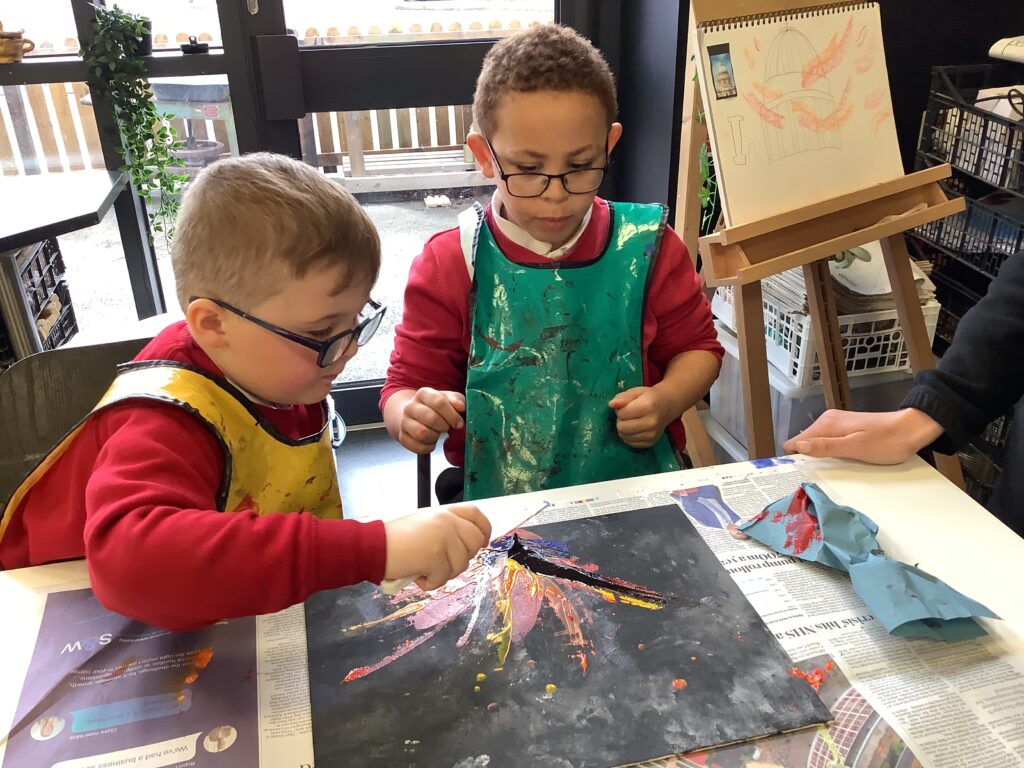
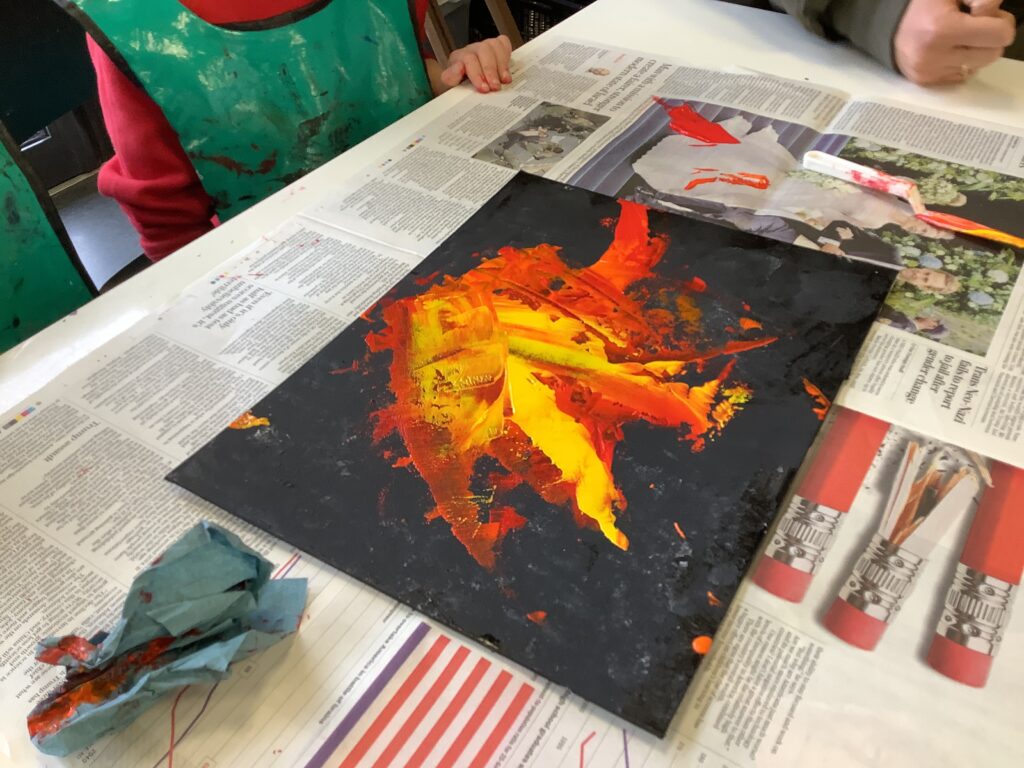
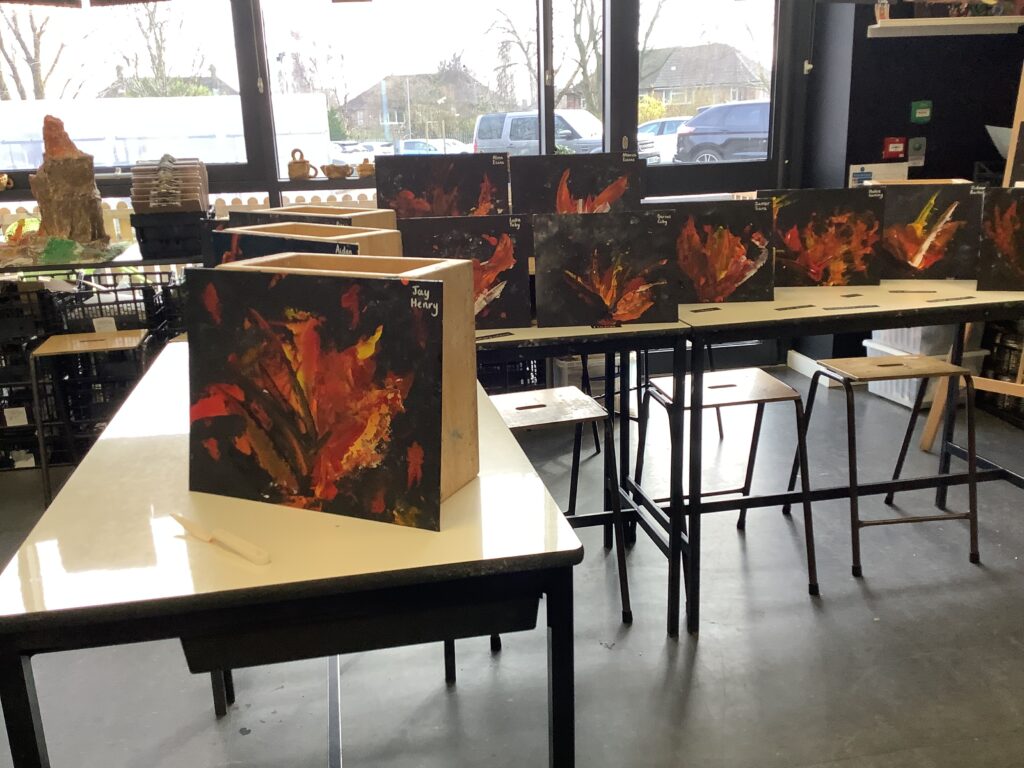
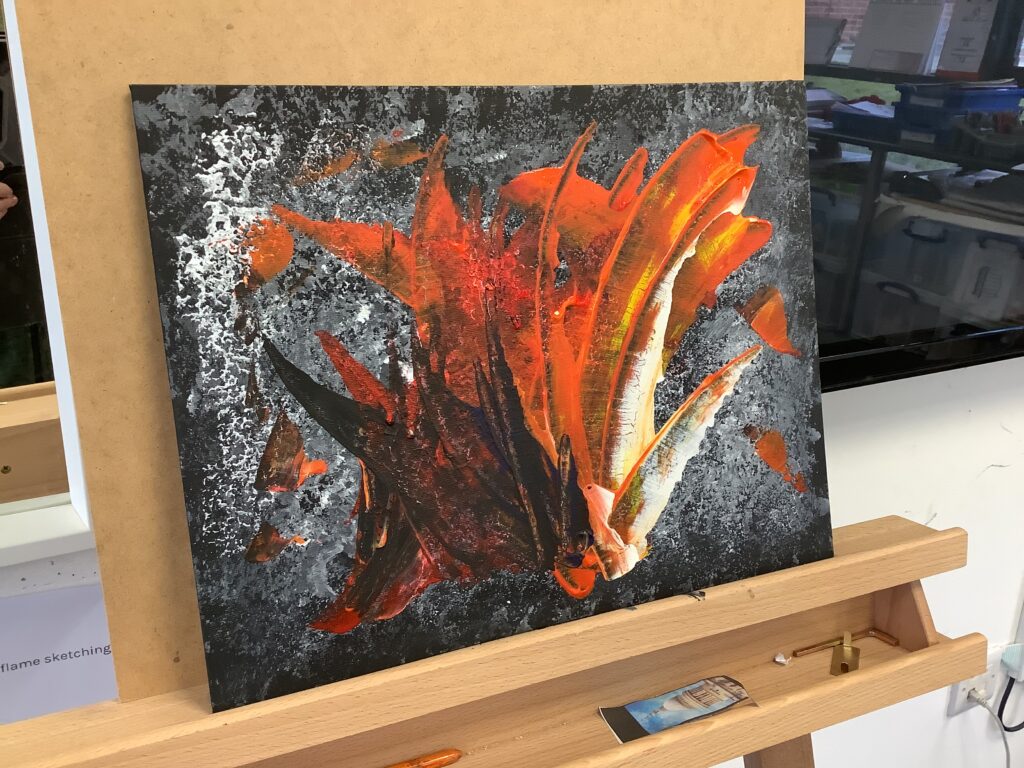
We then moved on to working with canvases to create our own abstract acrylic fire pieces. To begin, the children used blotting techniques and sponges to build a smoky background, working collaboratively and supporting one another brilliantly – our blue relationship orb was well and truly “switched on” all afternoon! It was lovely to see such thoughtful partner work, with children sharing ideas and offering kind compliments to each other at the end of the day. The following session, we introduced palette knives and explored how artists use them to spread and layer paint. We revisited our knowledge of primary and secondary colours and thought carefully about the bold, gestural movements needed to create a wild and intense fire effect. Taking turns, the children swept acrylic paint across their canvases, making decisions about which shades to begin with and how to build up their composition. The results were incredibly striking – so much so that many parents commented they would love to hang the finished pieces at home!

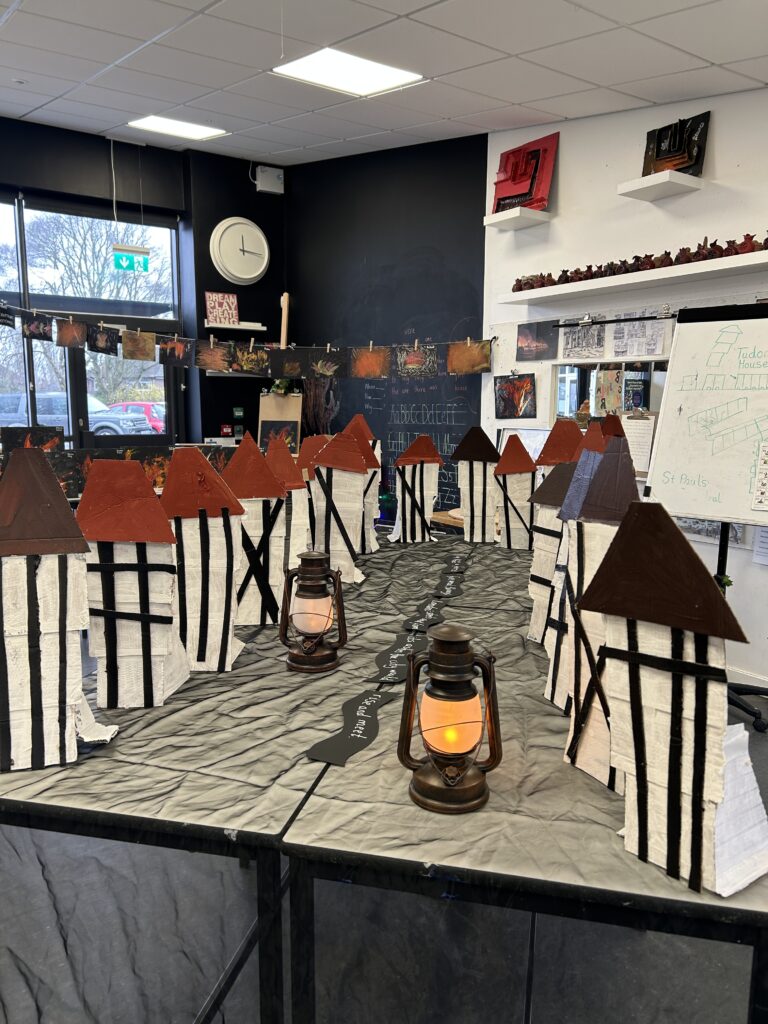
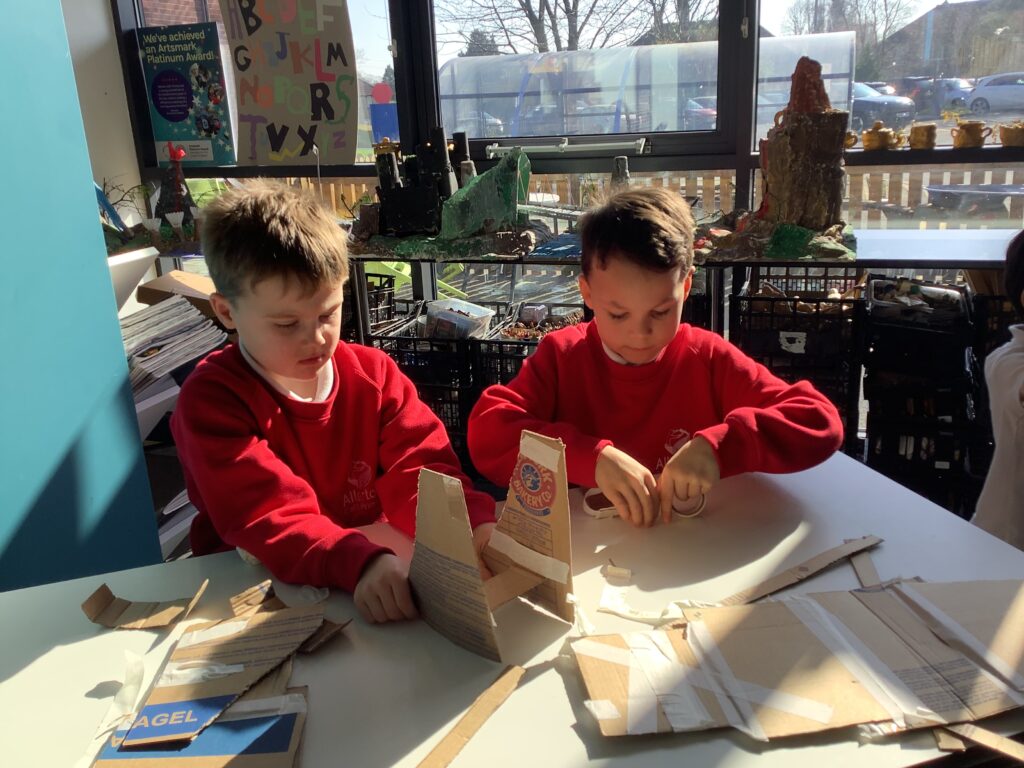
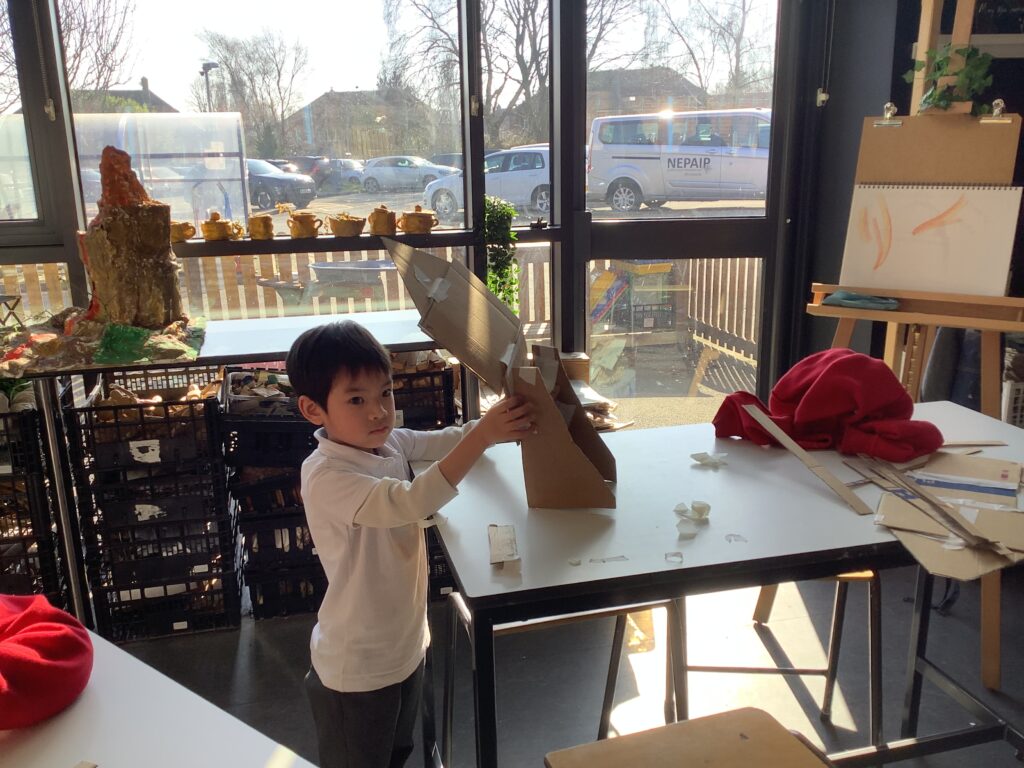
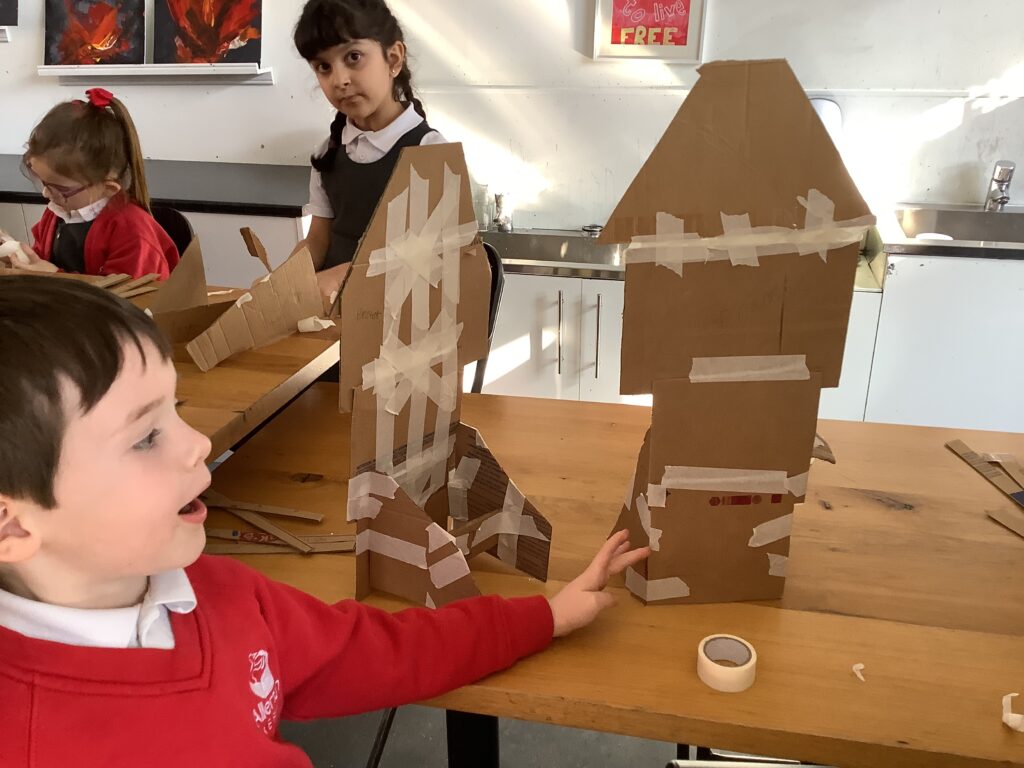
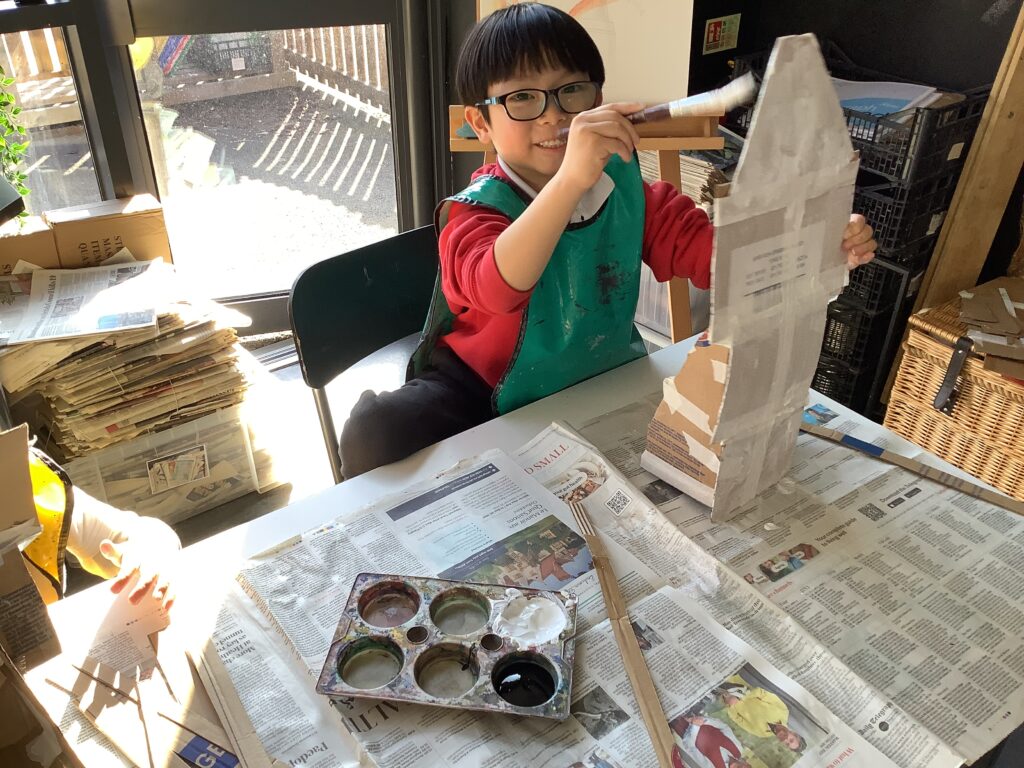
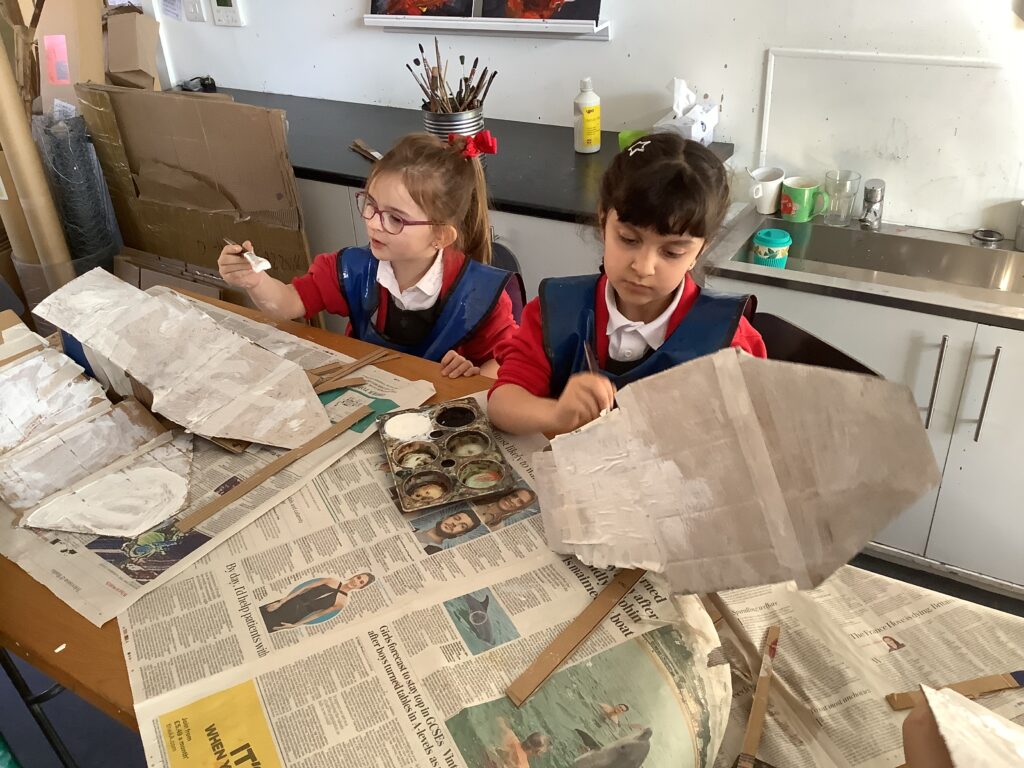
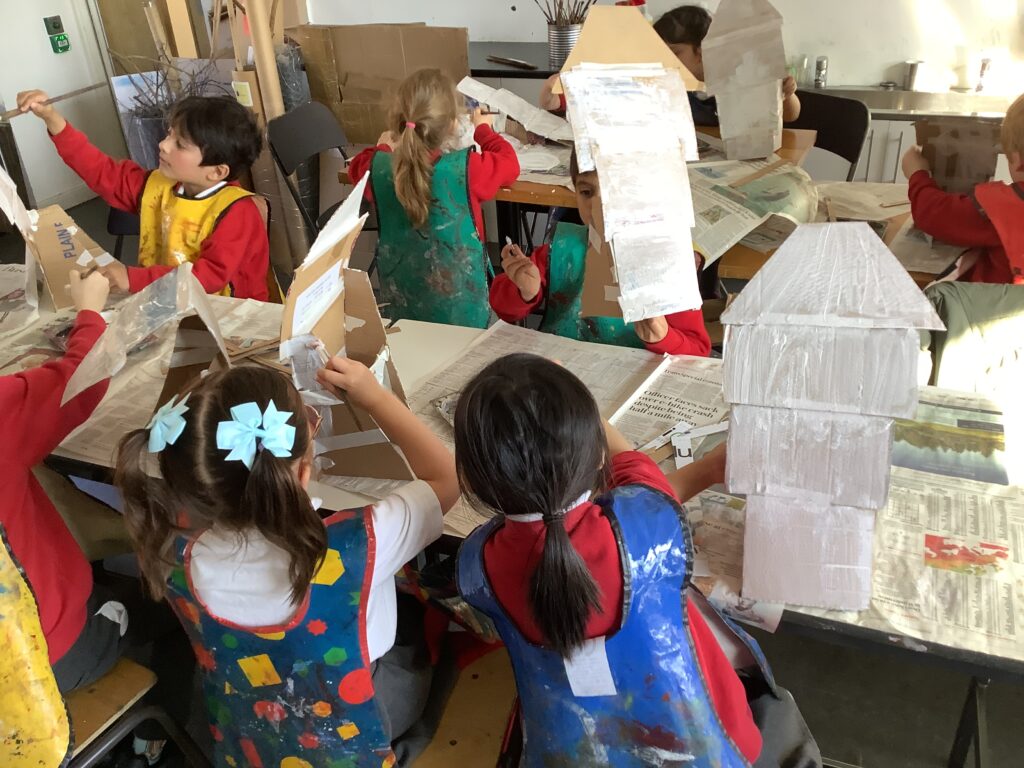
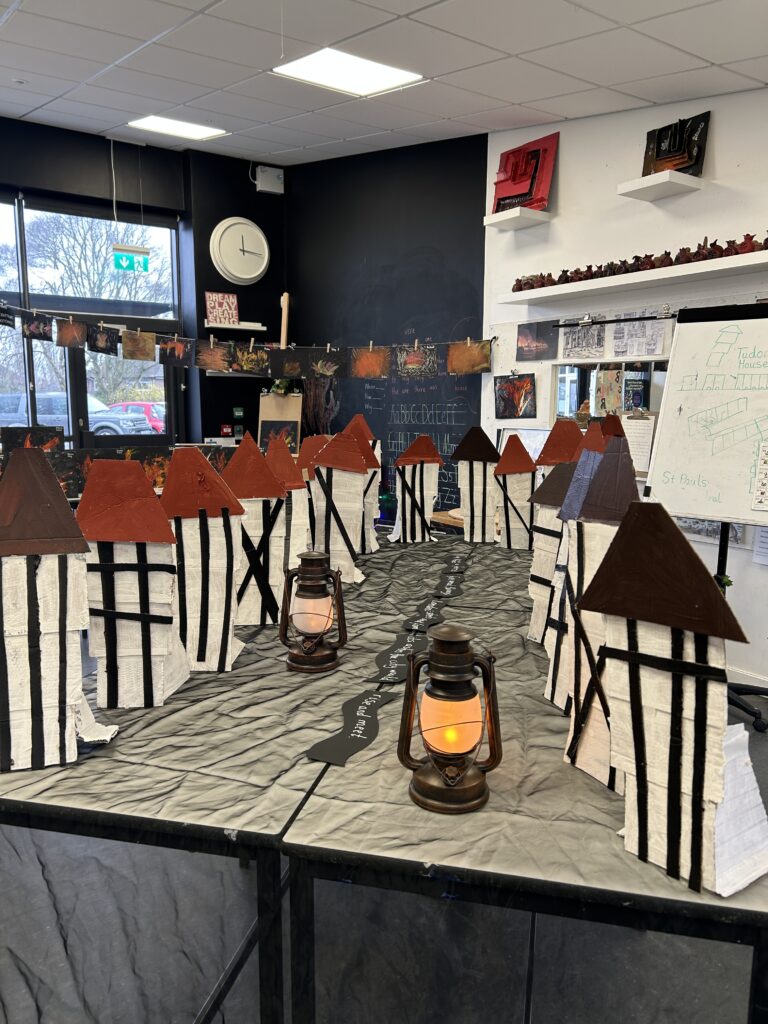
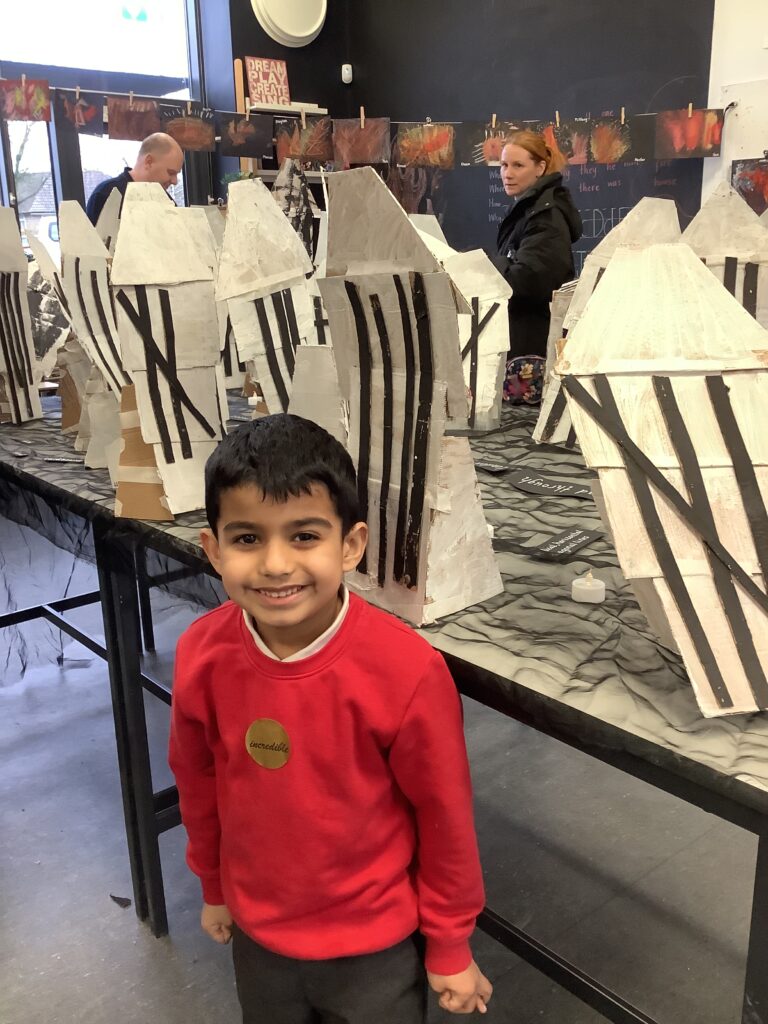
In Week 2, we shifted our focus to the 3D element of our Arts Fortnight. Building on their knowledge of Tudor houses, the children began constructing their own façades, carefully layering overhanging tiers to reflect the distinctive architectural style. One afternoon was dedicated entirely to collaboration, as pairs worked together to design and build freestanding stands to support their houses. This proved to be a real resilience challenge, as we intentionally gave very little guidance to encourage problem-solving and perseverance. It was fantastic to see how well the children rose to this, supporting each other and adapting their ideas when things didn’t quite go to plan.

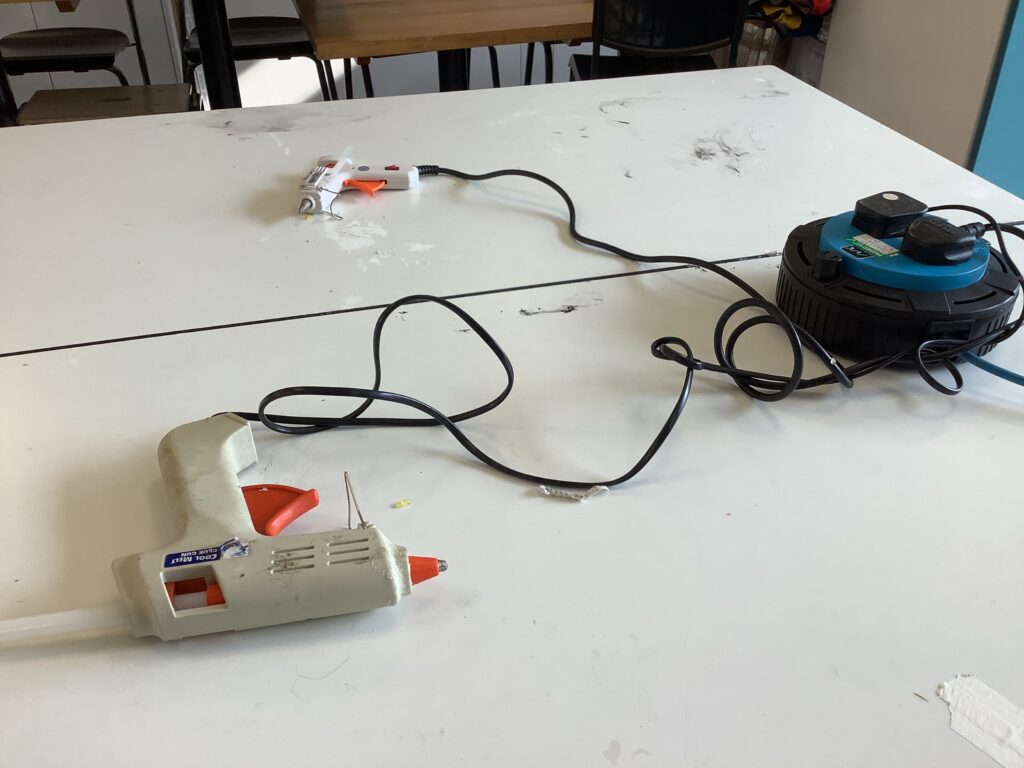
Once the structures were secure and the houses were assembled using masking tape, the children moved on to adding detail. They selected, measured and cut their wooden beams, thoughtfully deciding whether to arrange them horizontally, vertically, or diagonally to best reflect Tudor design. The next step was painting the houses with acrylics, carefully applying colour and waiting patiently for them to dry before using glue guns to attach the timber frames. Finally, we brought all the individual pieces together to create a collaborative exhibition of Pudding Lane. The finished result was fantastic; it was a wonderful testament to the children’s creativity, teamwork and resilience throughout the fortnight.

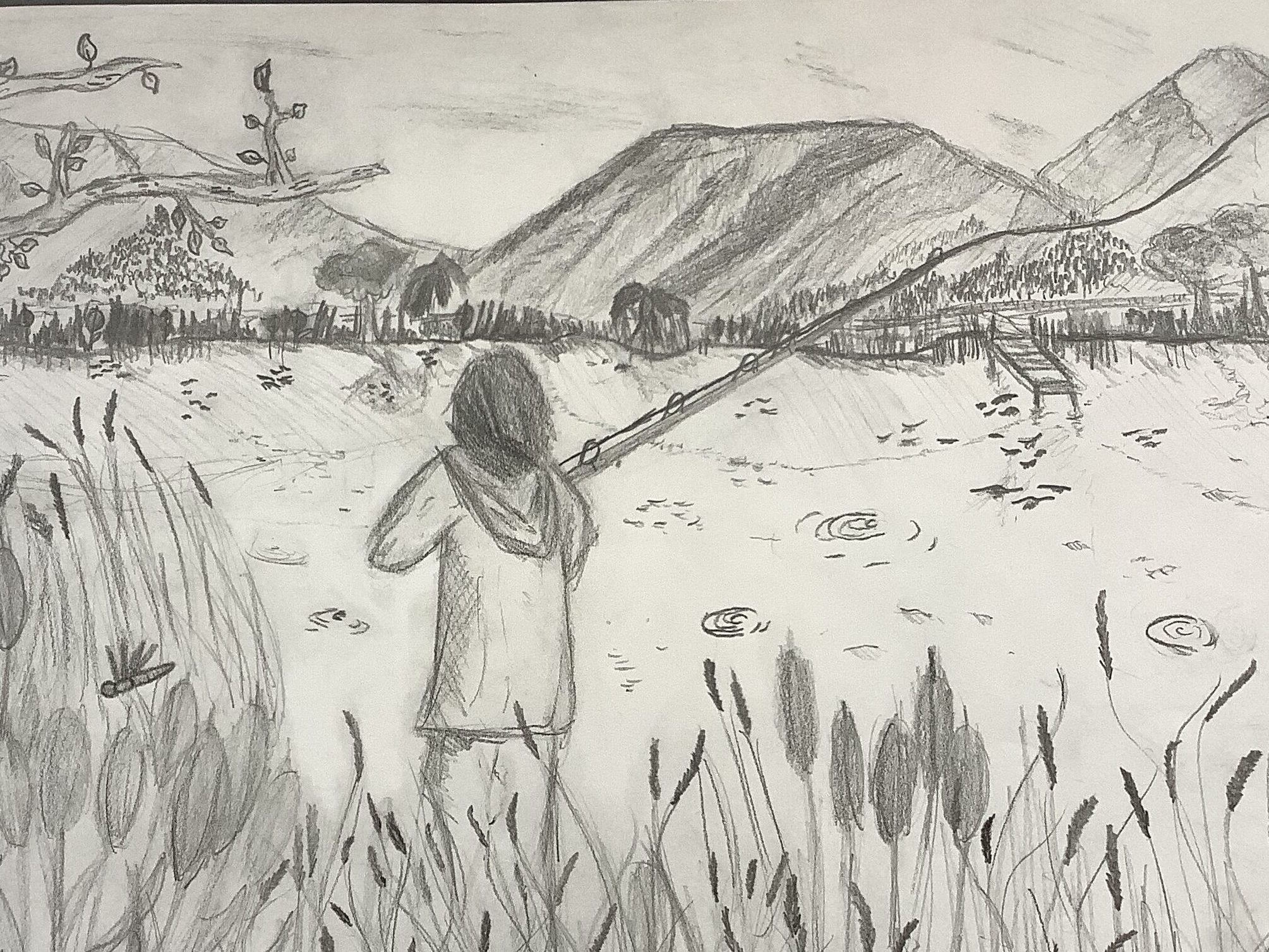
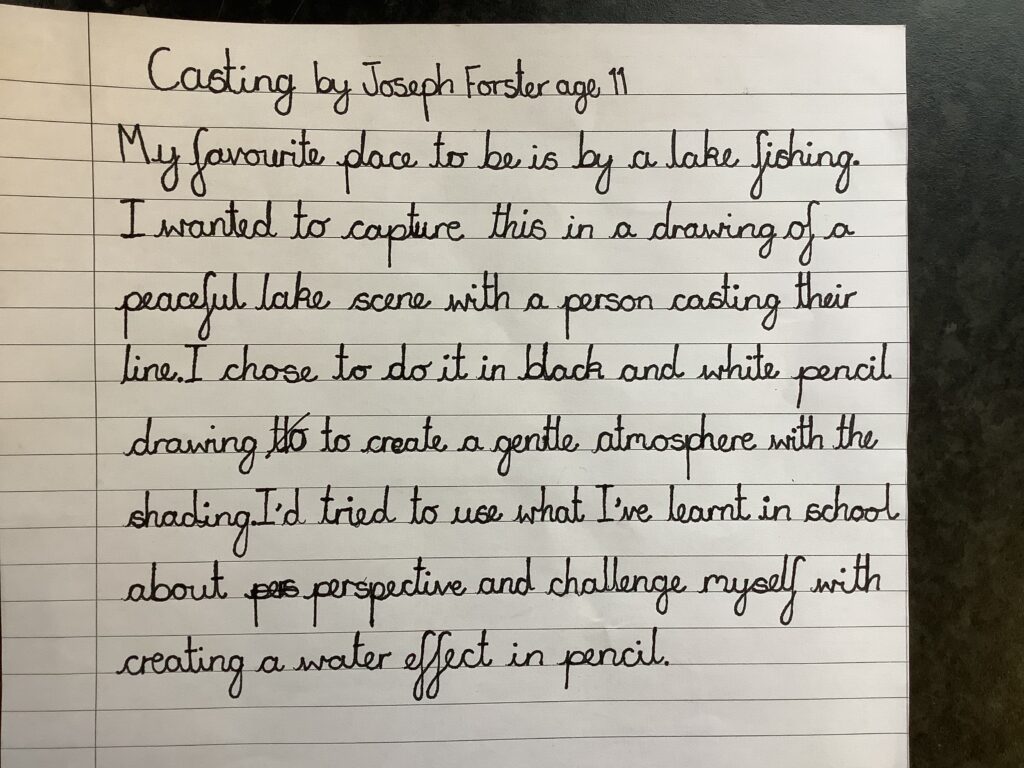
Casting by Joseph Forster

Take a look at Joseph from 6C’s incredible entry for the Young Artists’ Summer Show. He has captured one of his favourite places so beautifully with the use of gentle sketching and exquisite detail. I am so impressed by the focus, care and perspective used in this piece. Well done, Joseph.

If you would like to enter, please see the link: https://art.aceprimary.uk/2026/01/07/young-artists-summer-show-2026-artwork-opportunity-deadline-4th-march-bring-into-school-by-25th-feb/

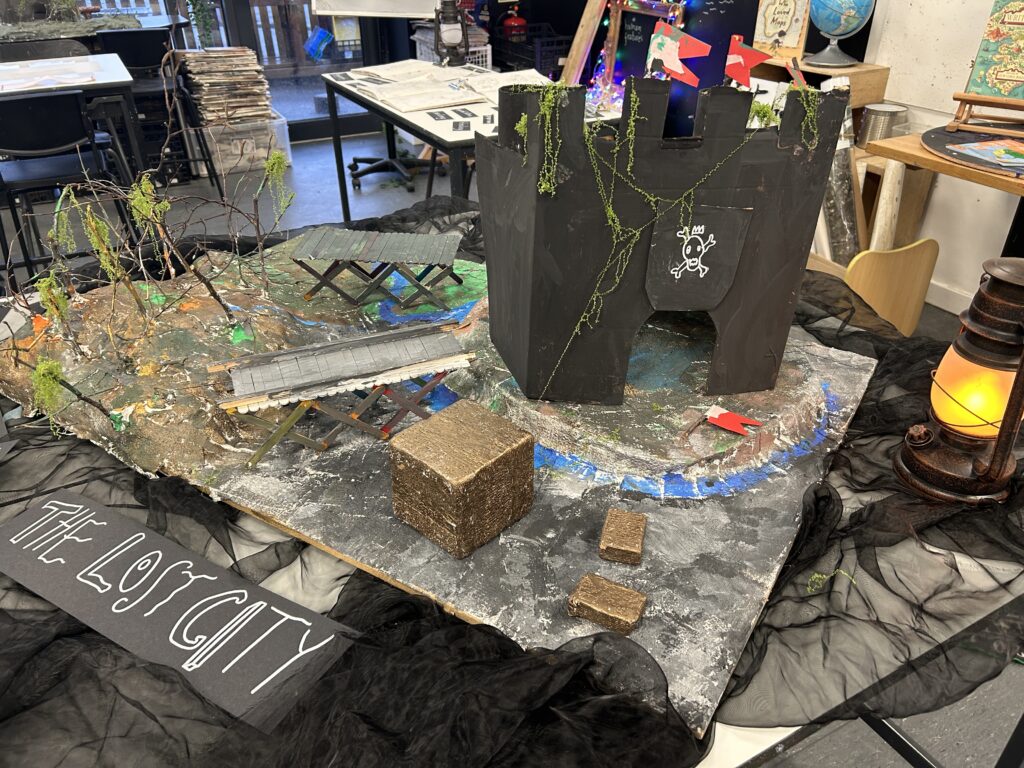
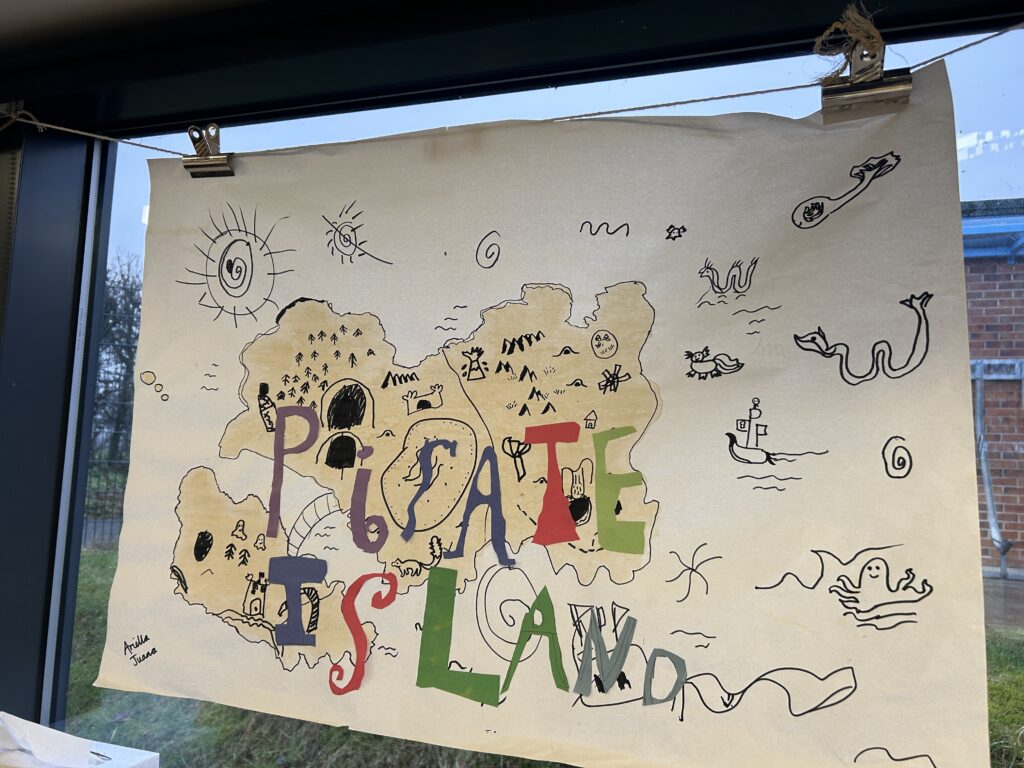
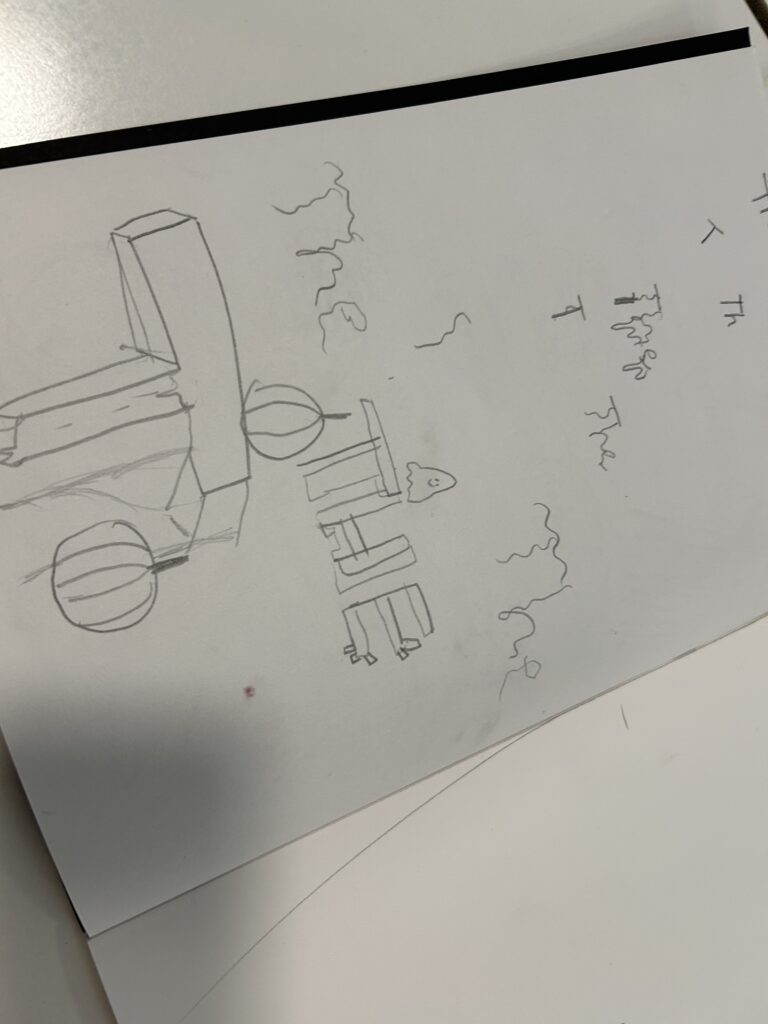
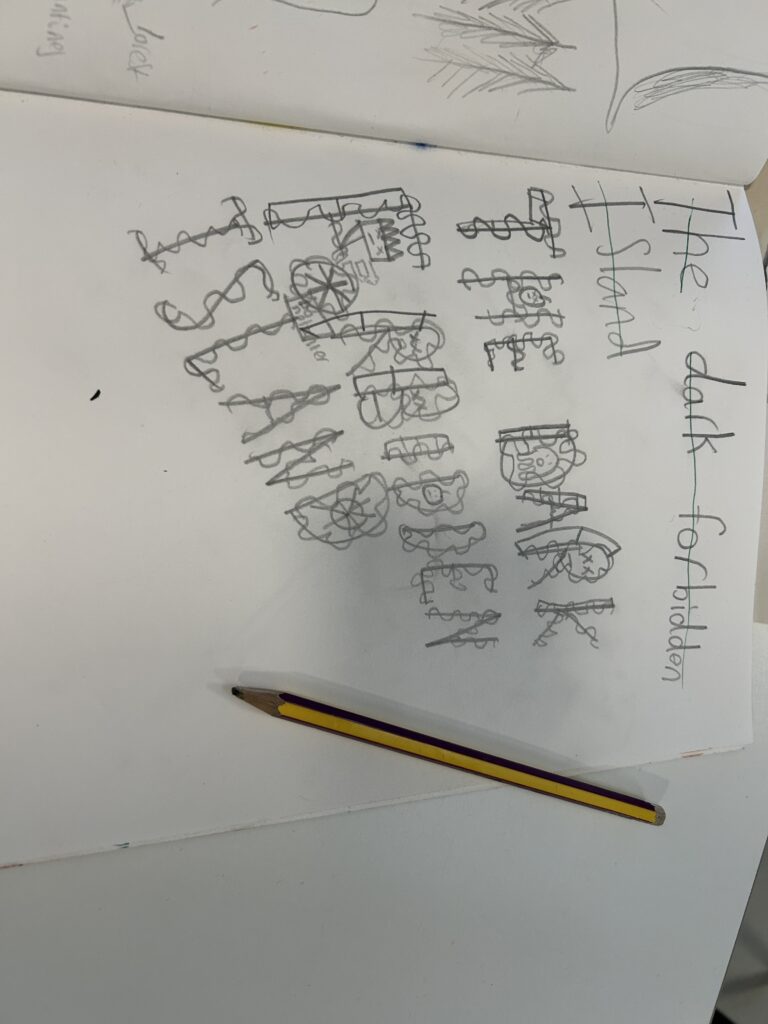
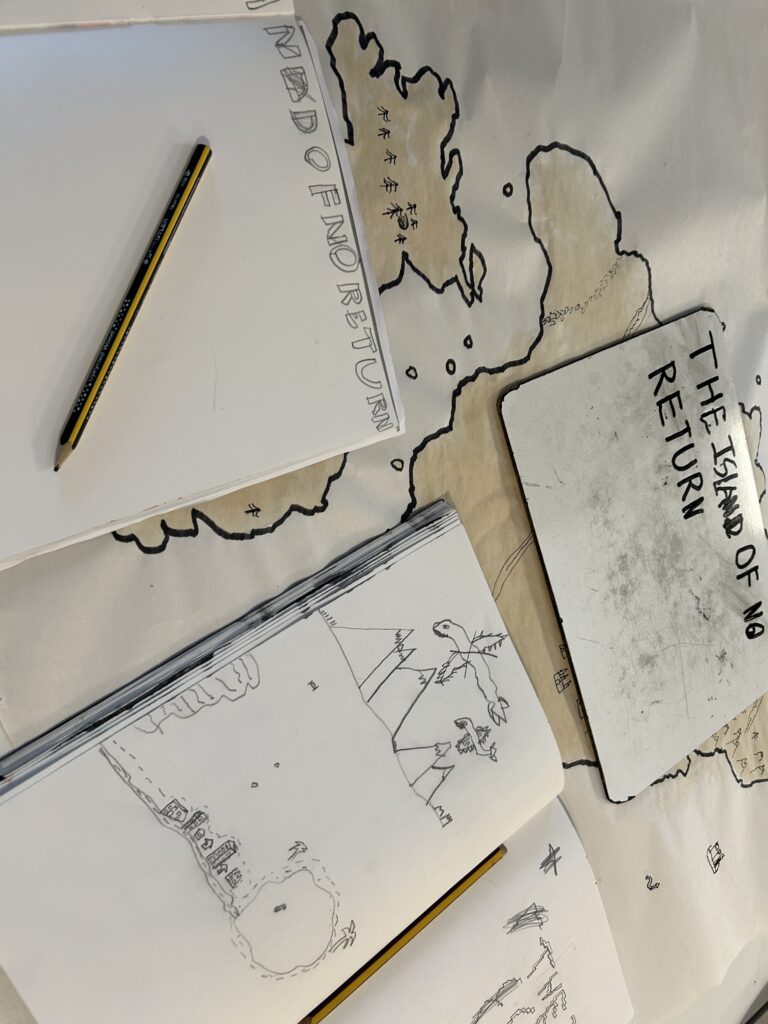
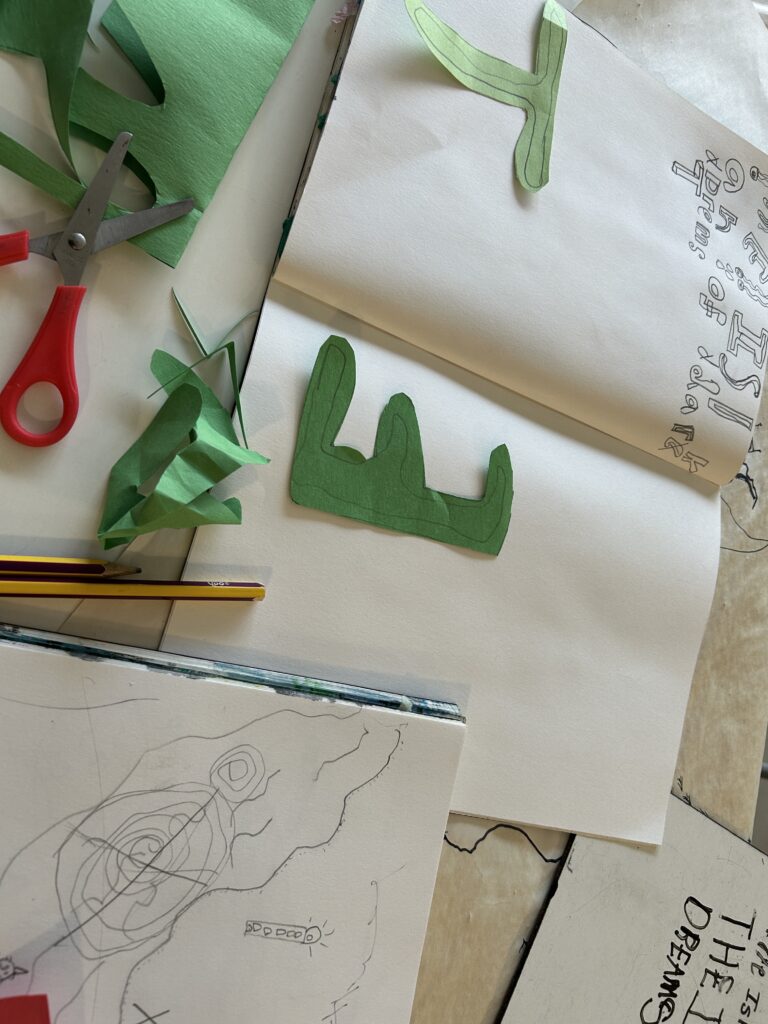
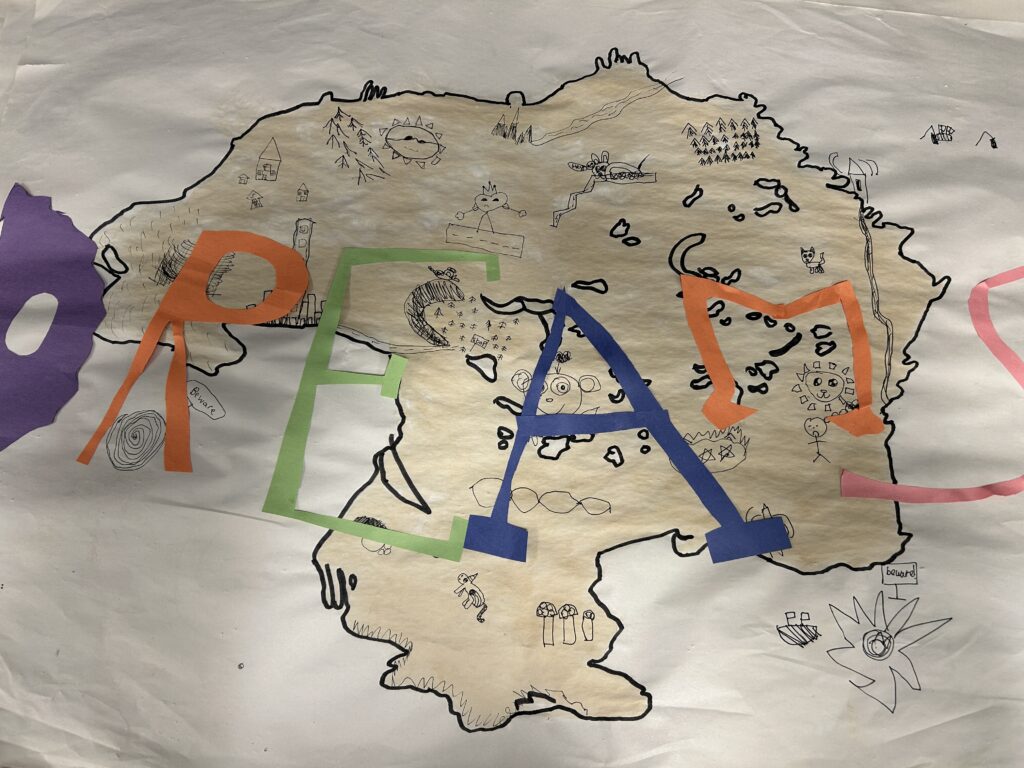
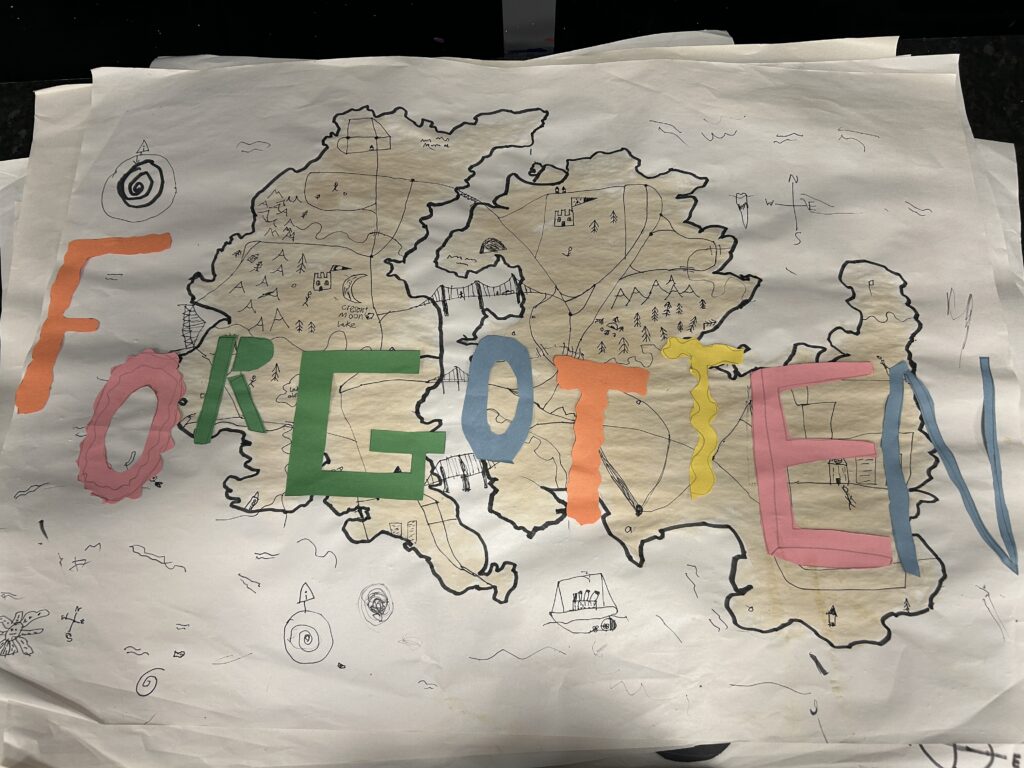
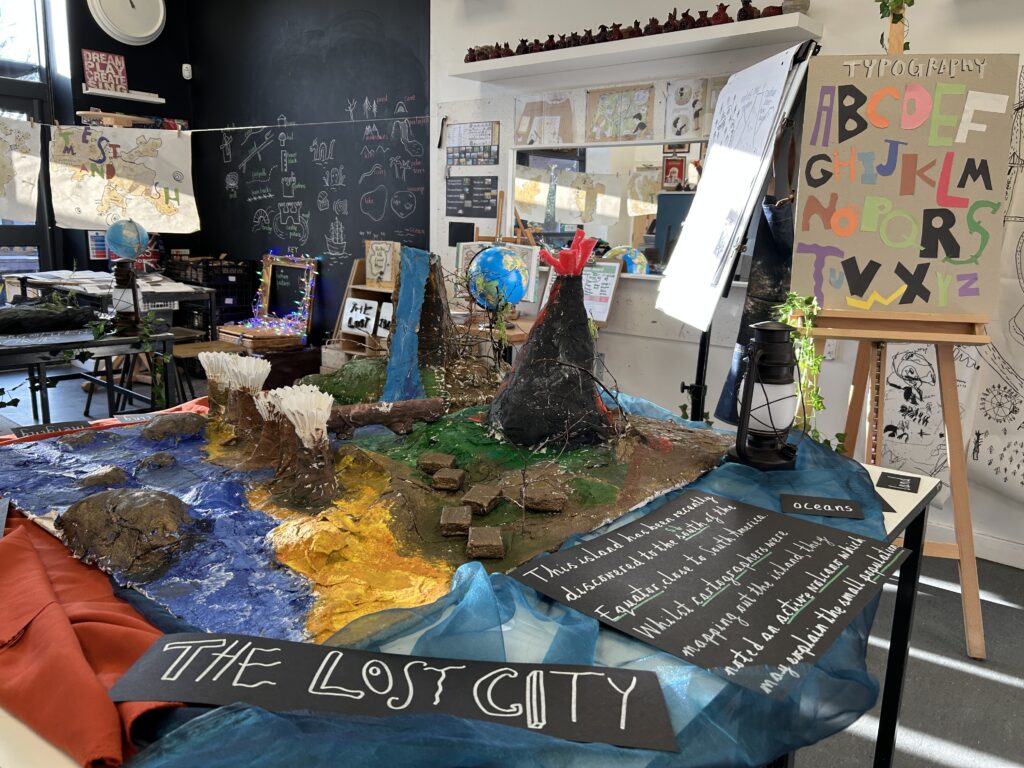
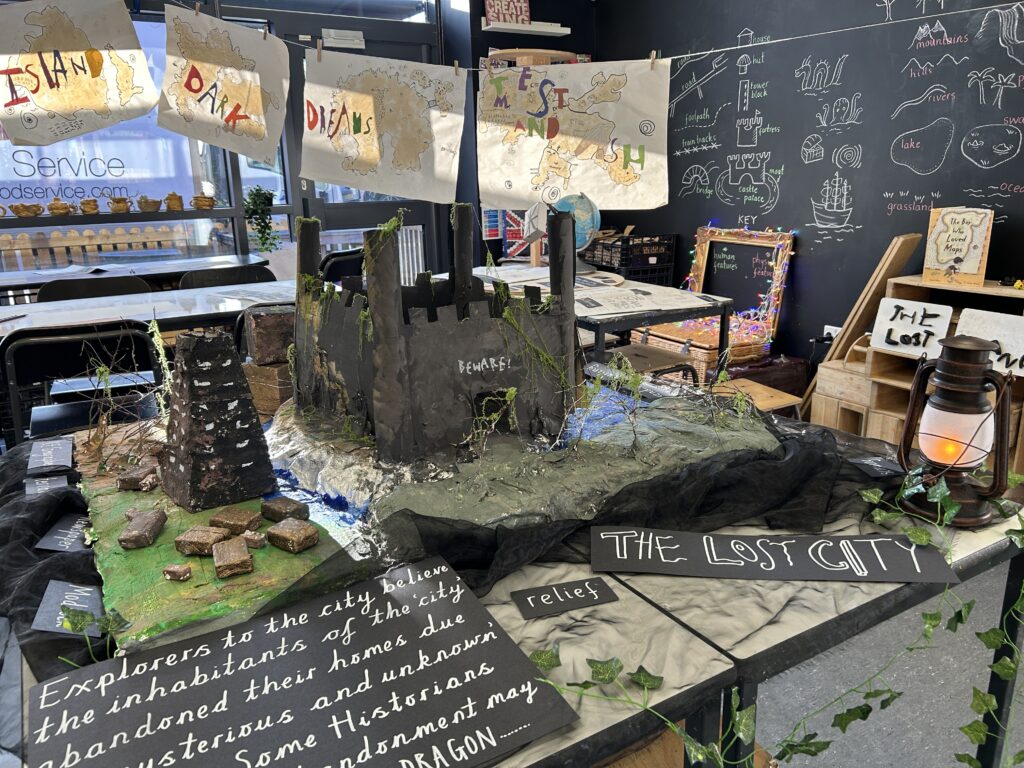
2CN – The Lost City and the Forgotten Island

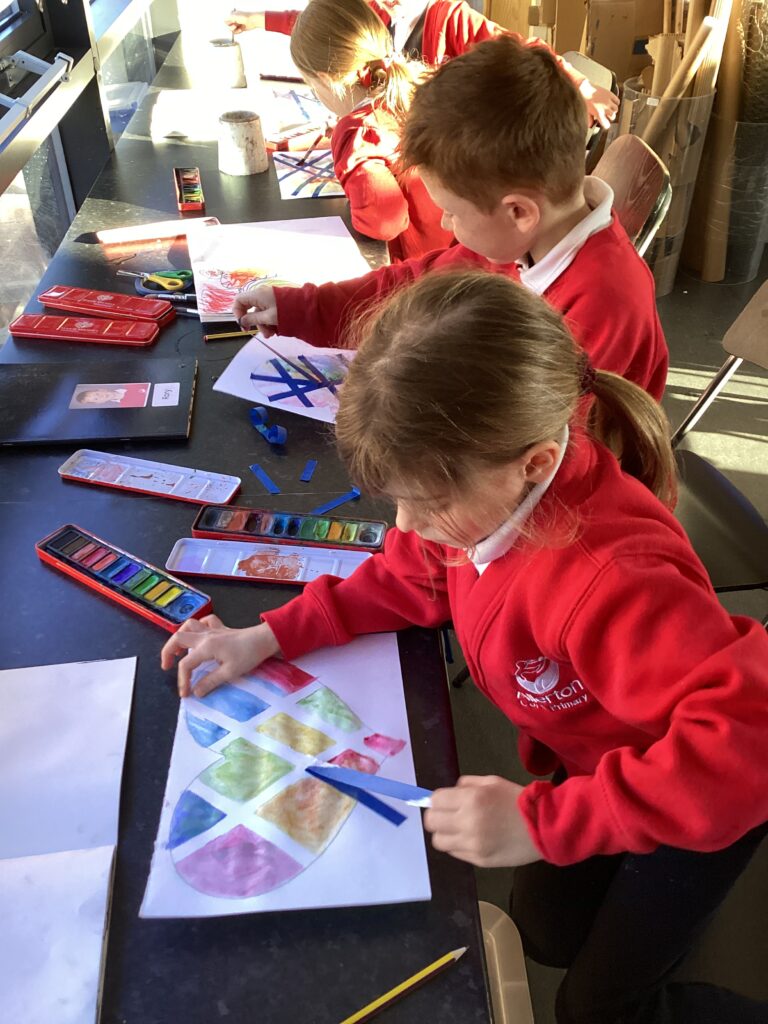
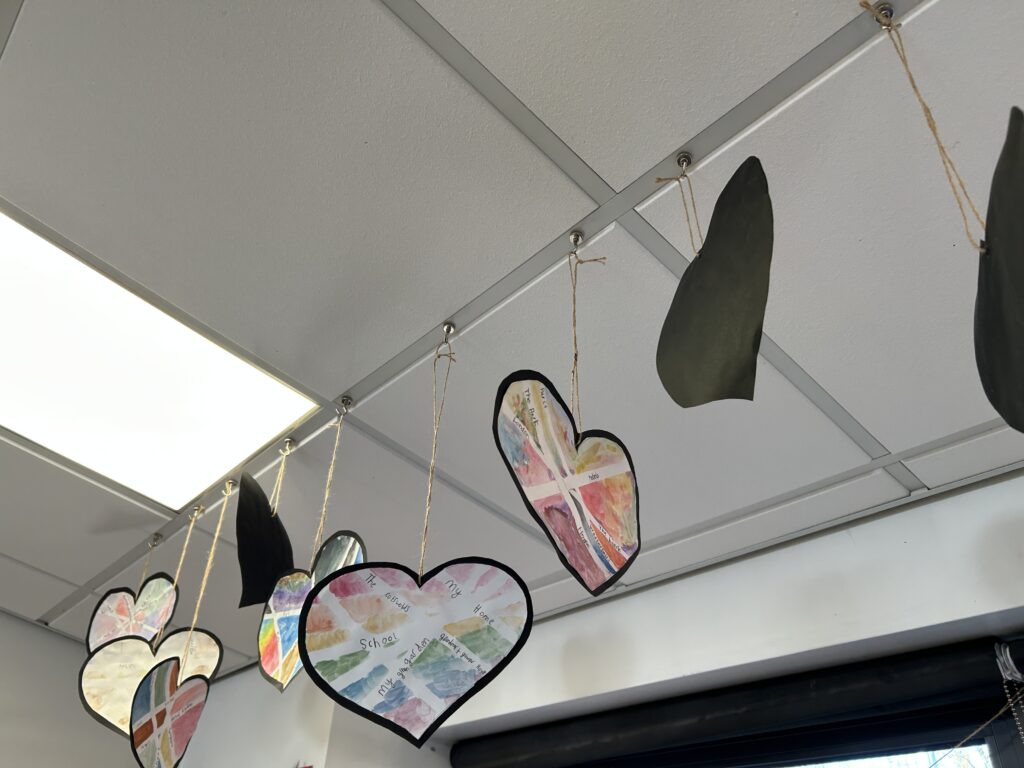
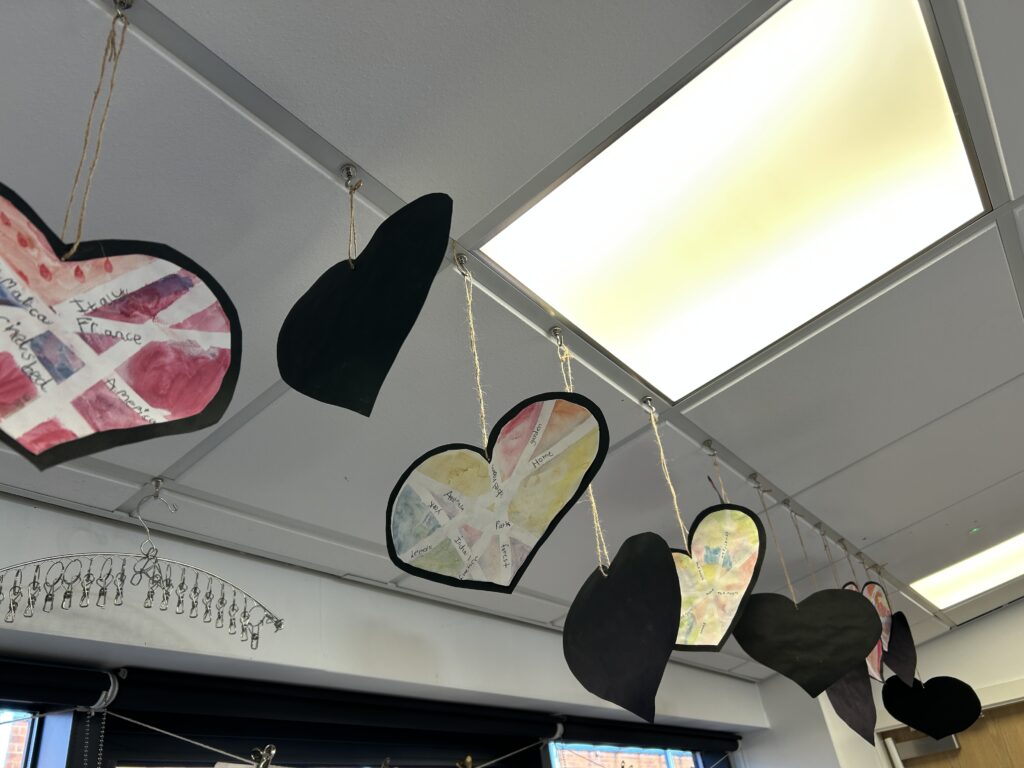
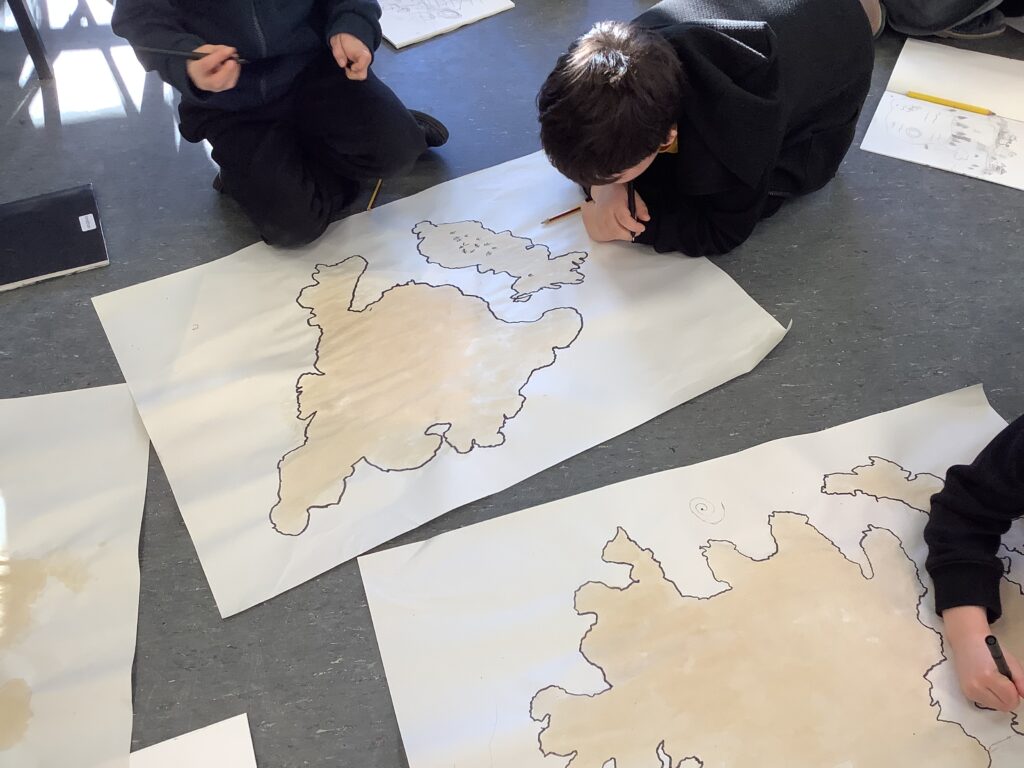
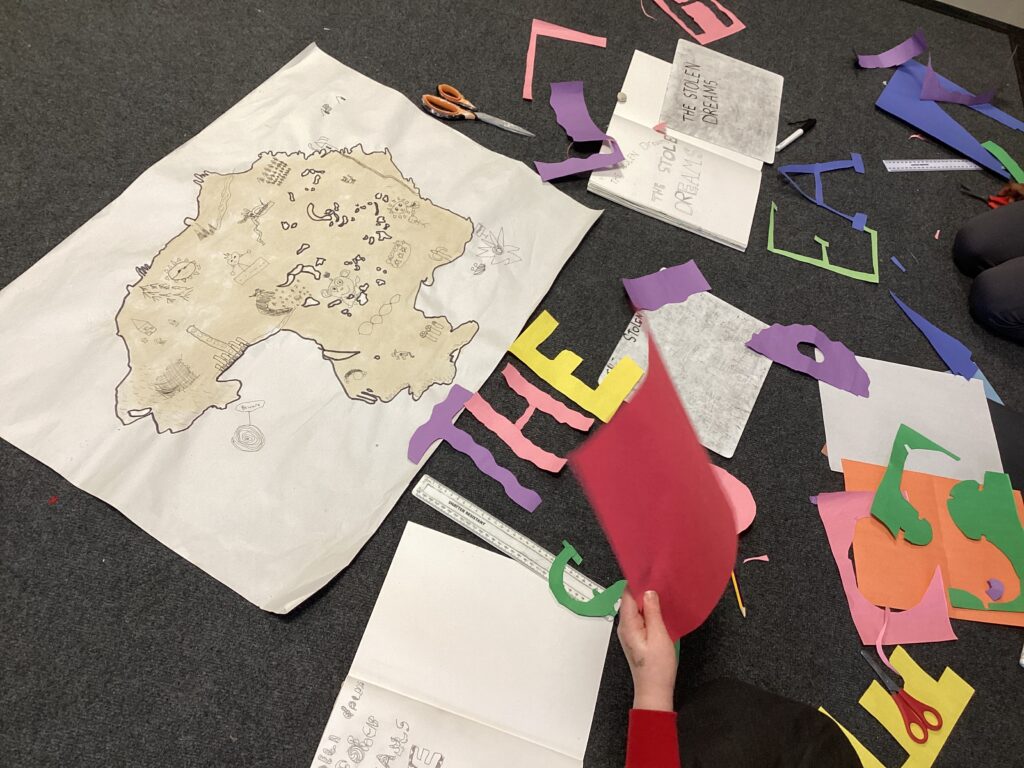
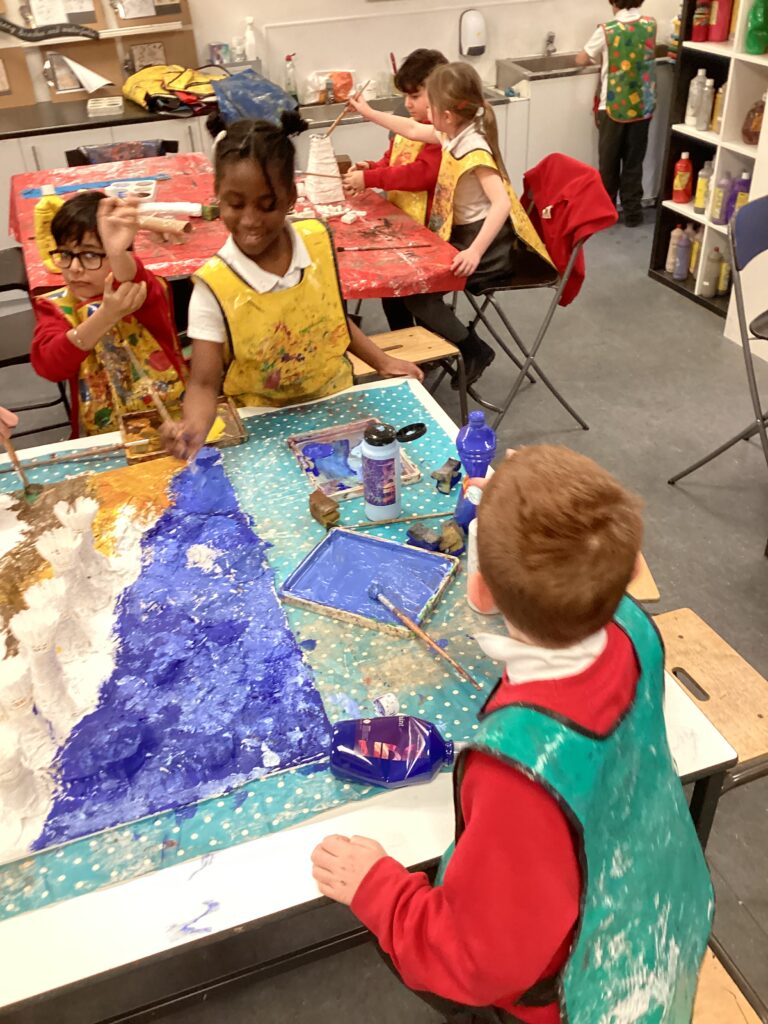
What an amazing fortnight we have had in 2CN. We have been working as ACE Artists and ACE Geographers to explore maps – real and fantasy. We started with special places that matter to us. We began by creating Maps to Our Heart using blue tape and watercolour paint. We carefully thought about the lines, shapes, and patterns we wanted to create to represent our maps. After painting, we gently removed the tape to reveal clear lines, then added our special places.

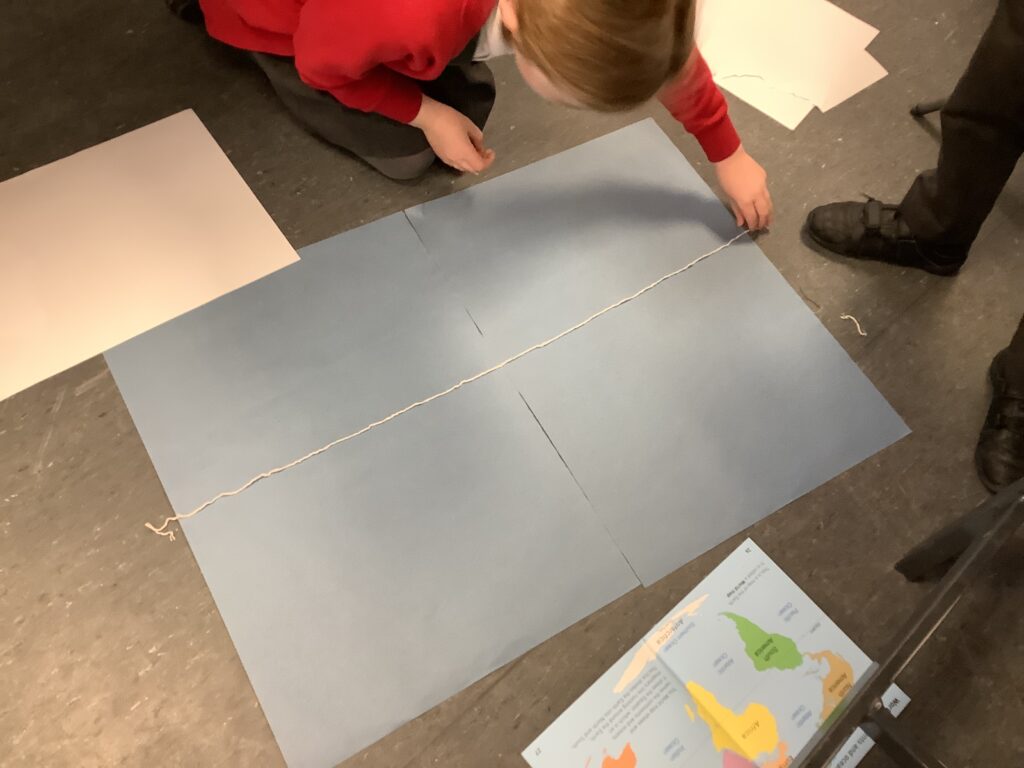
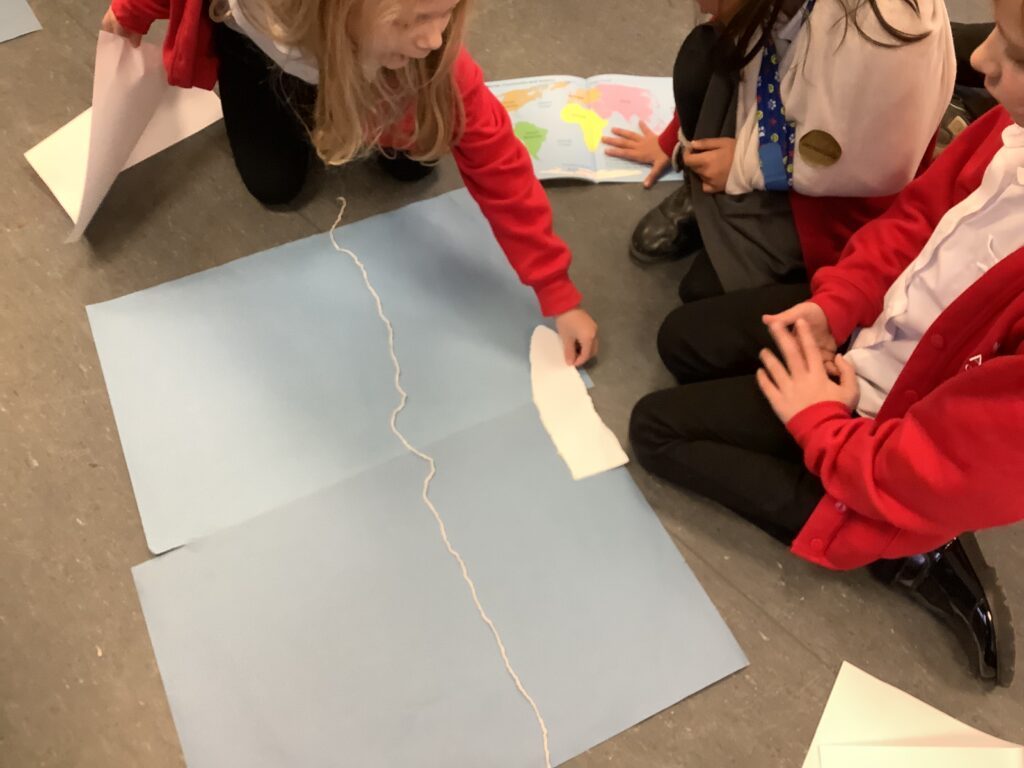
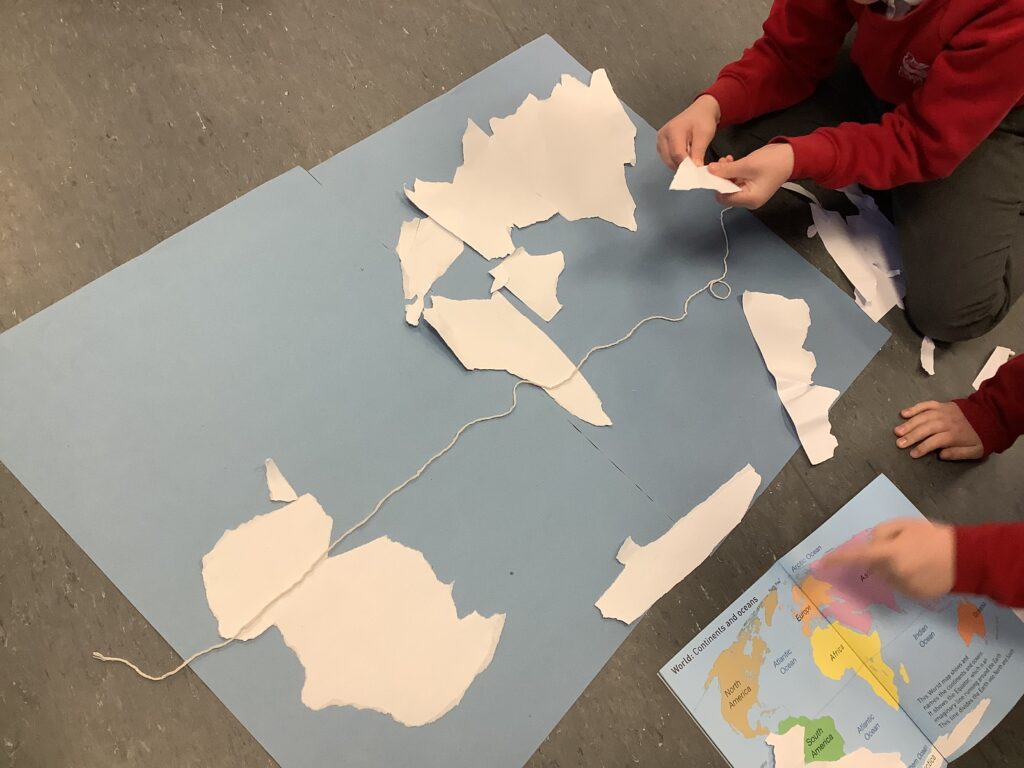
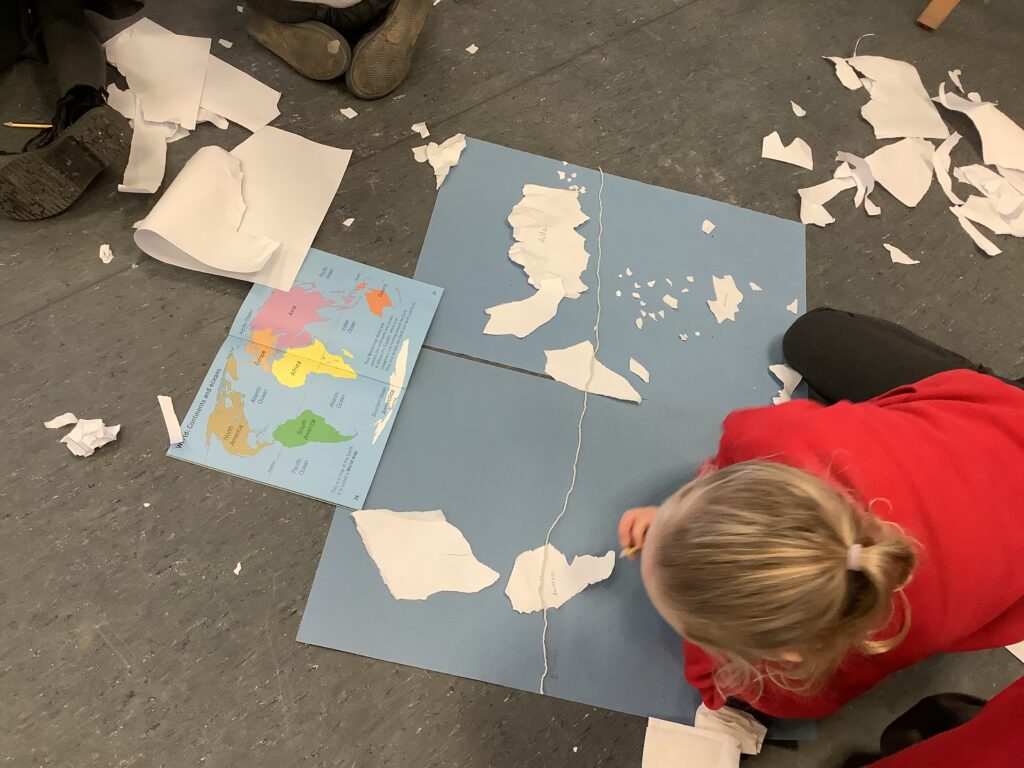
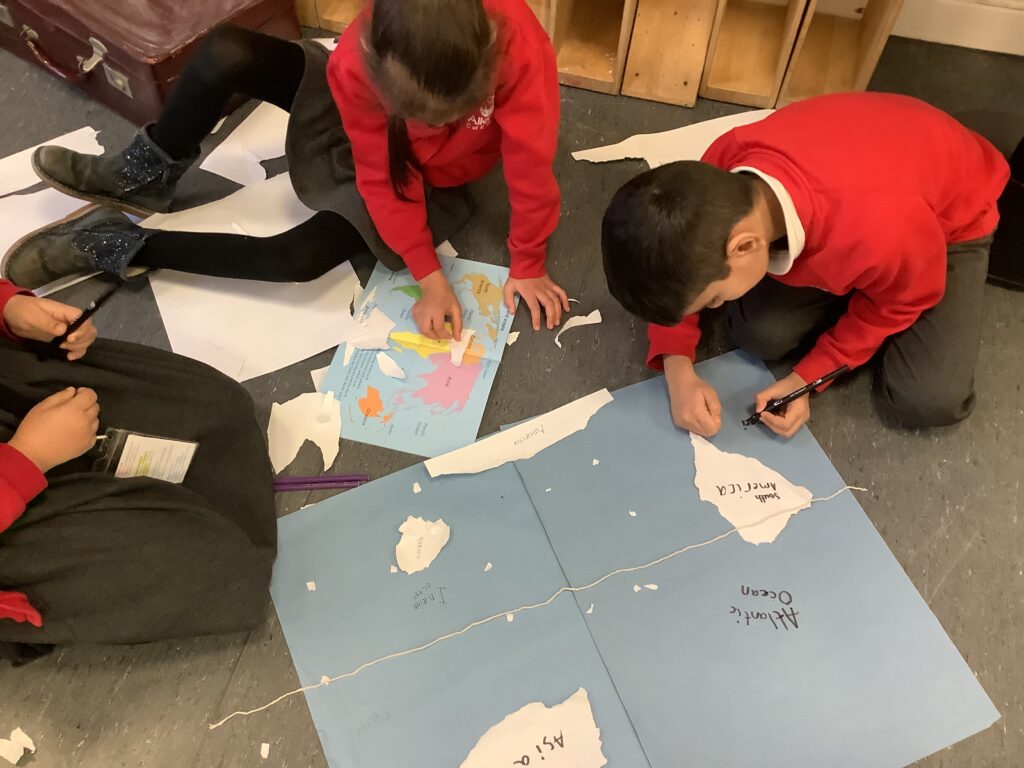
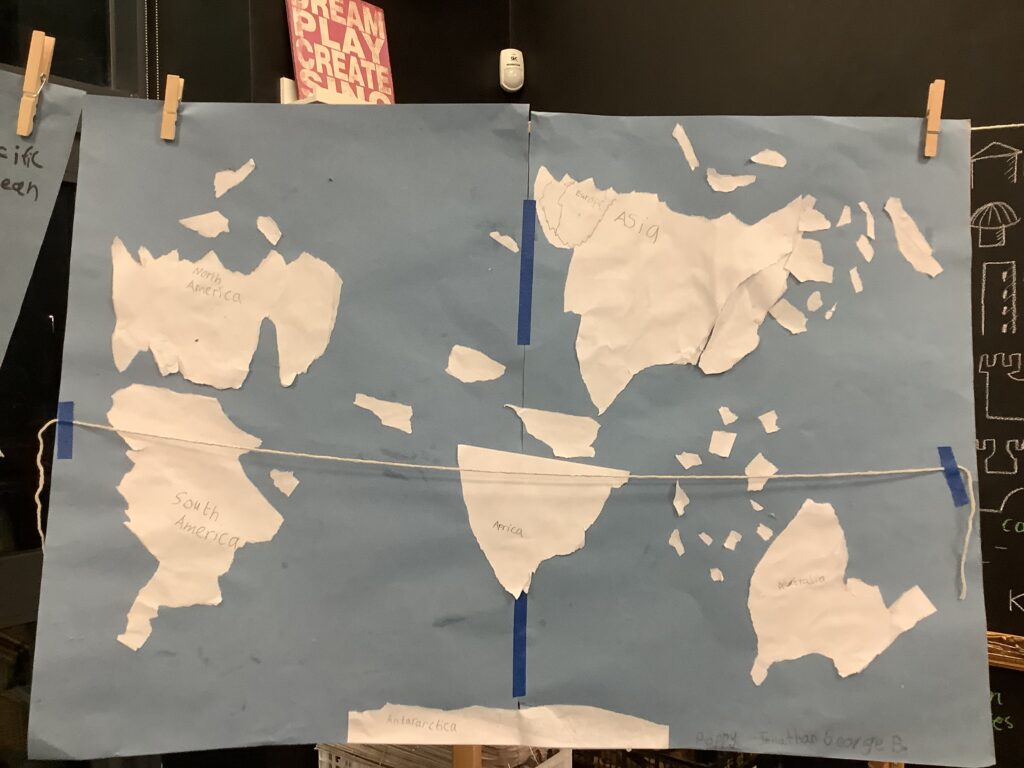
Next, we moved on to ripping, manipulating, and folding paper to create the continents and oceans of our world. We used an equator line to help us position the land correctly. This hands-on activity helped us to visualise land formation and supported us in retrieving our previous Geography learning from last term, including our understanding of land and water.

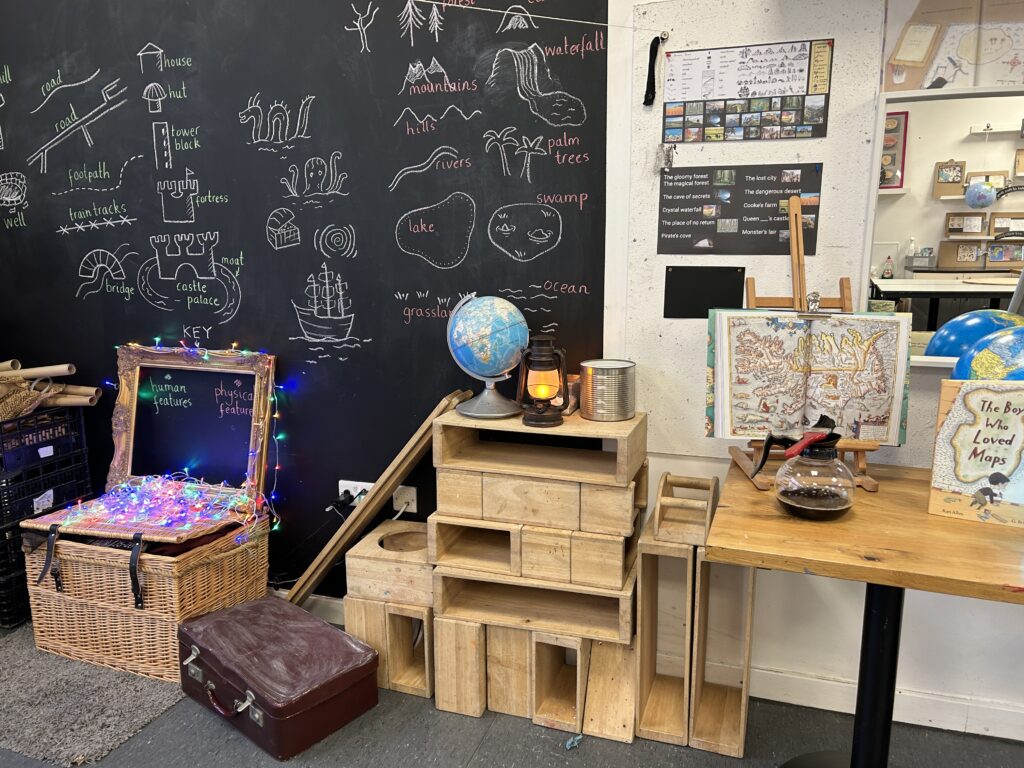
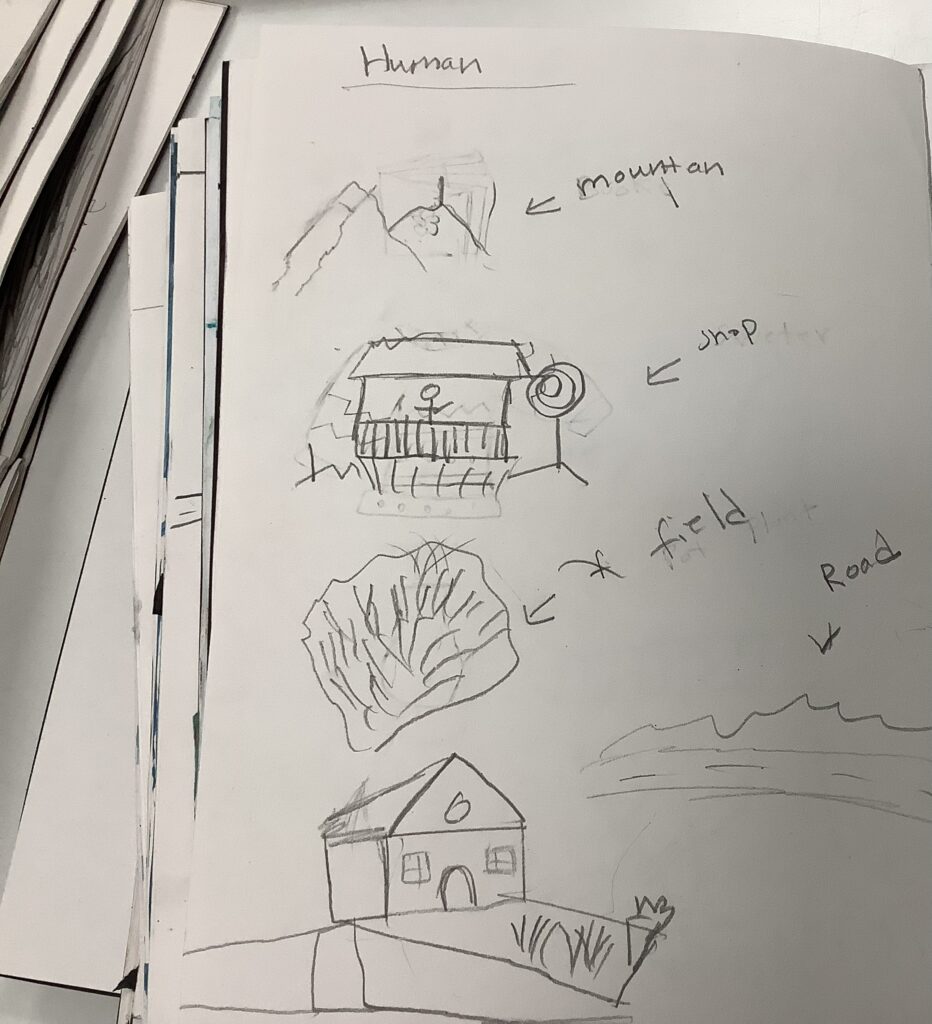
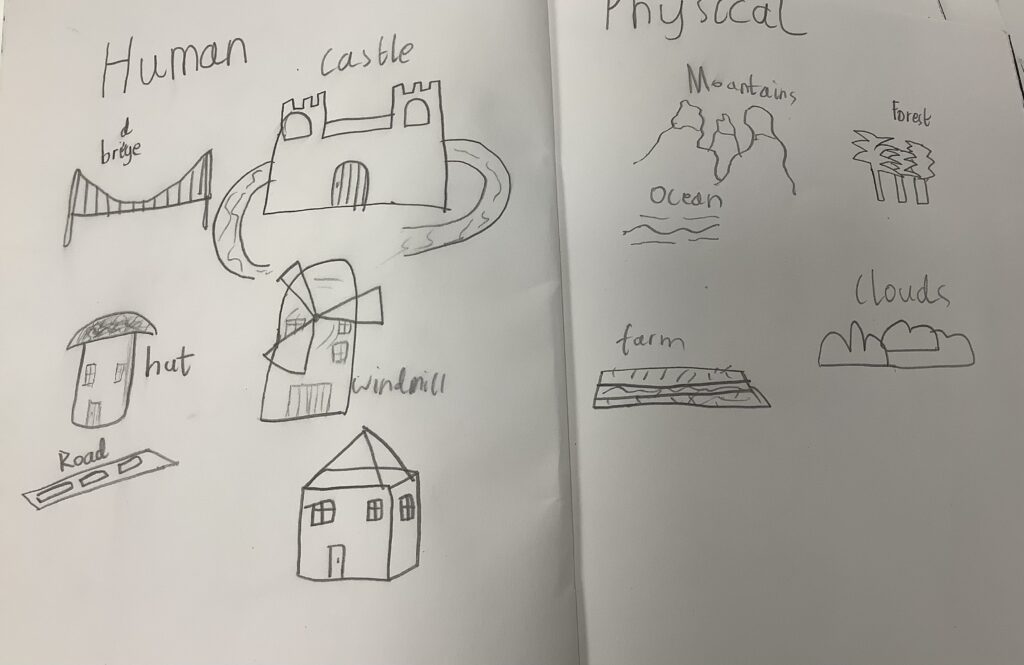
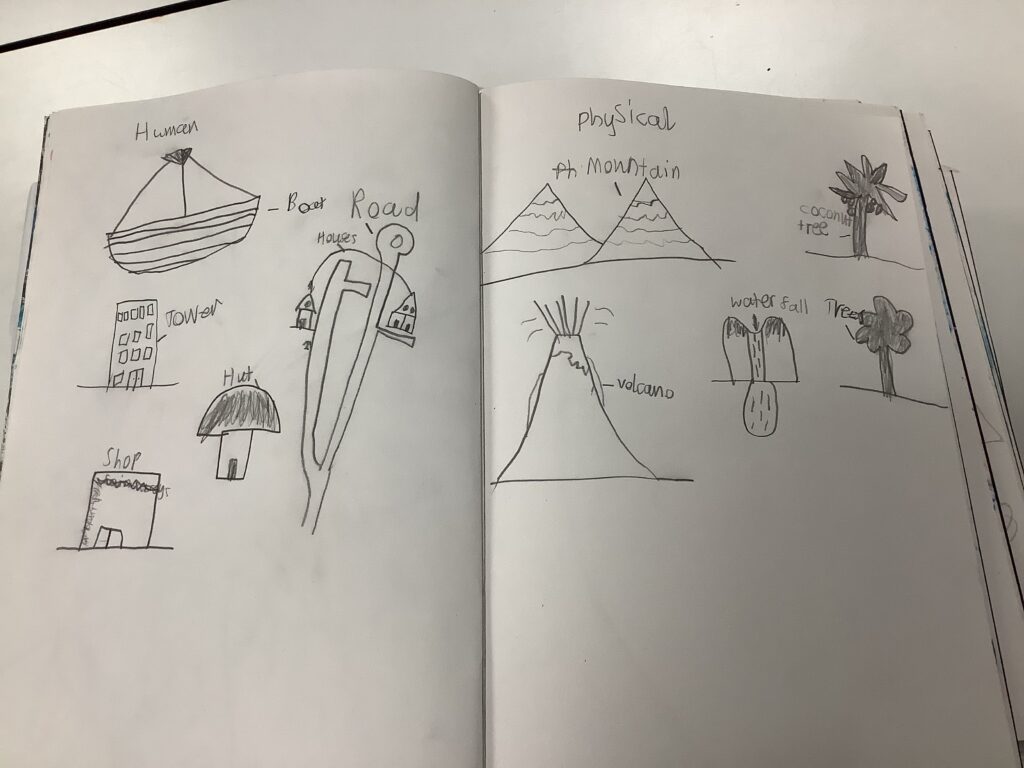
We then moved from studying OS map features to exploring more fantasy-style map symbols. We looked closely at how symbols can be used to represent places and features in creative ways. We grouped these symbols into human features and physical features, helping us to deepen our understanding of how maps can communicate information while also allowing us to use our imagination and design skills.

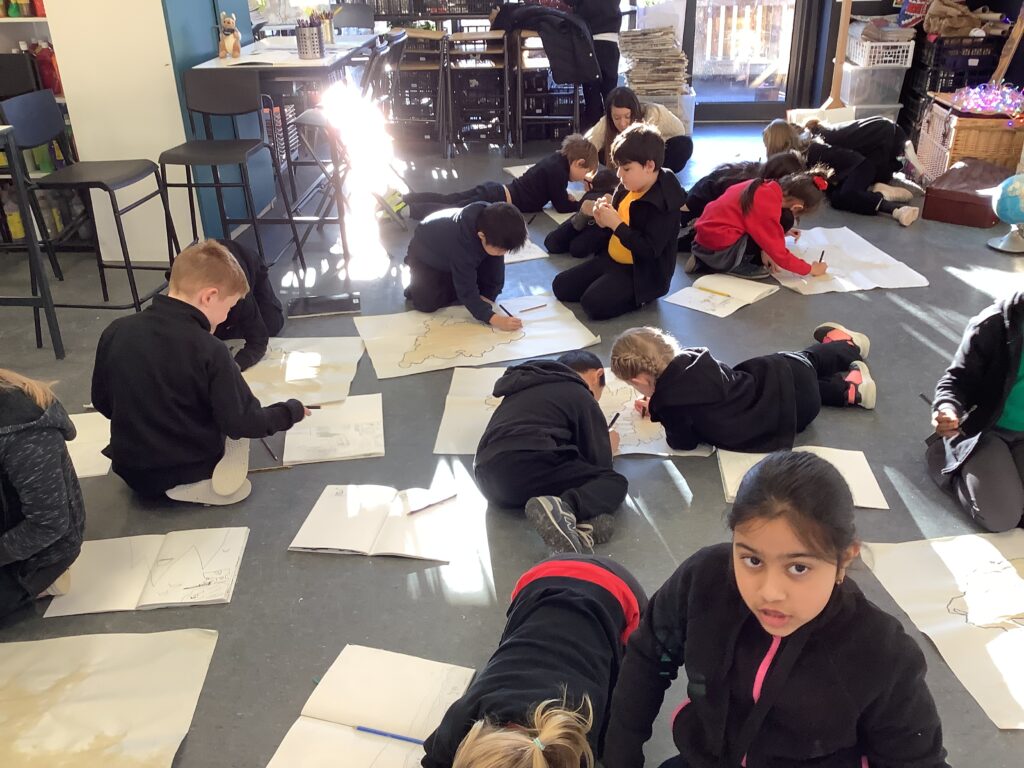
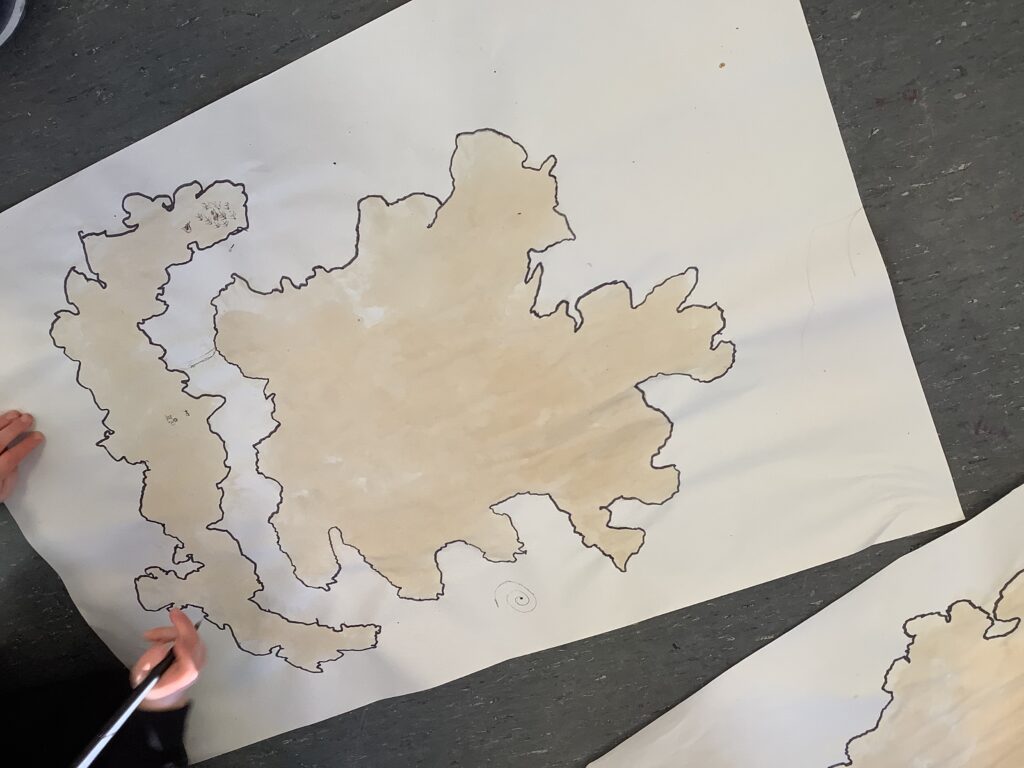
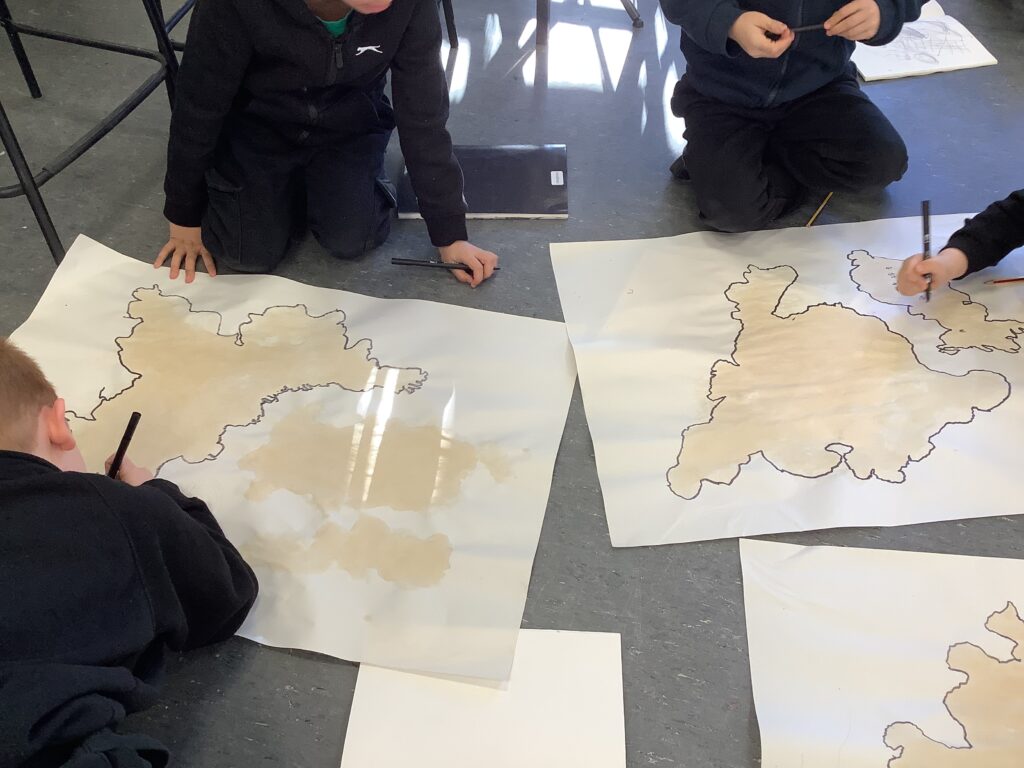
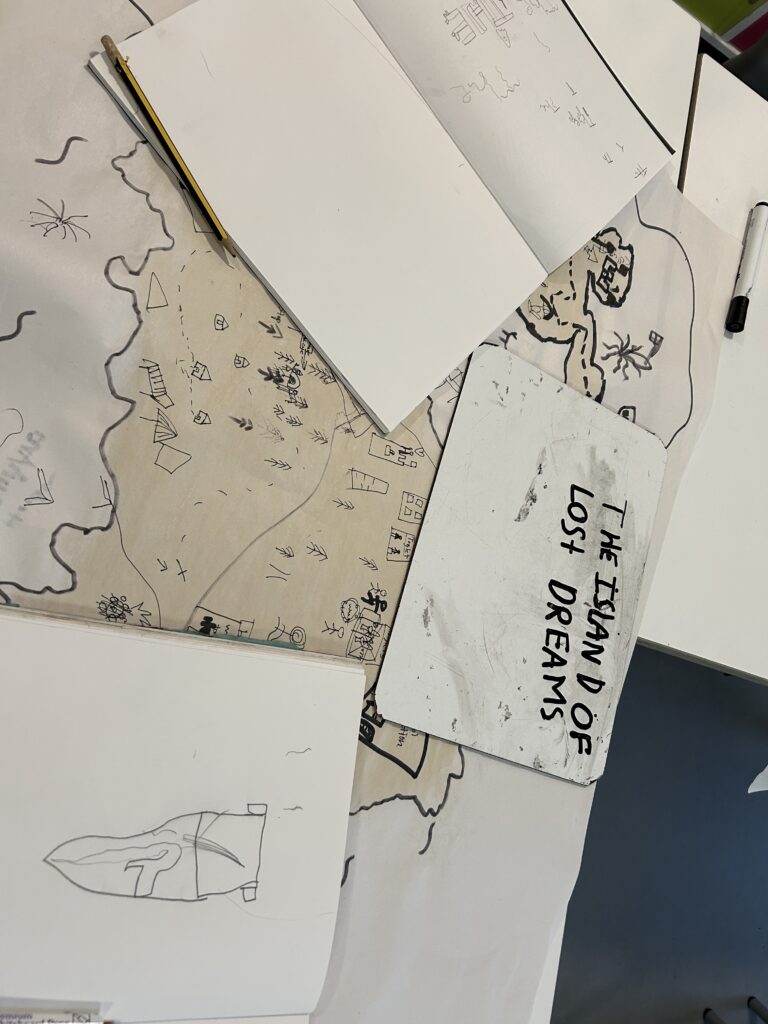
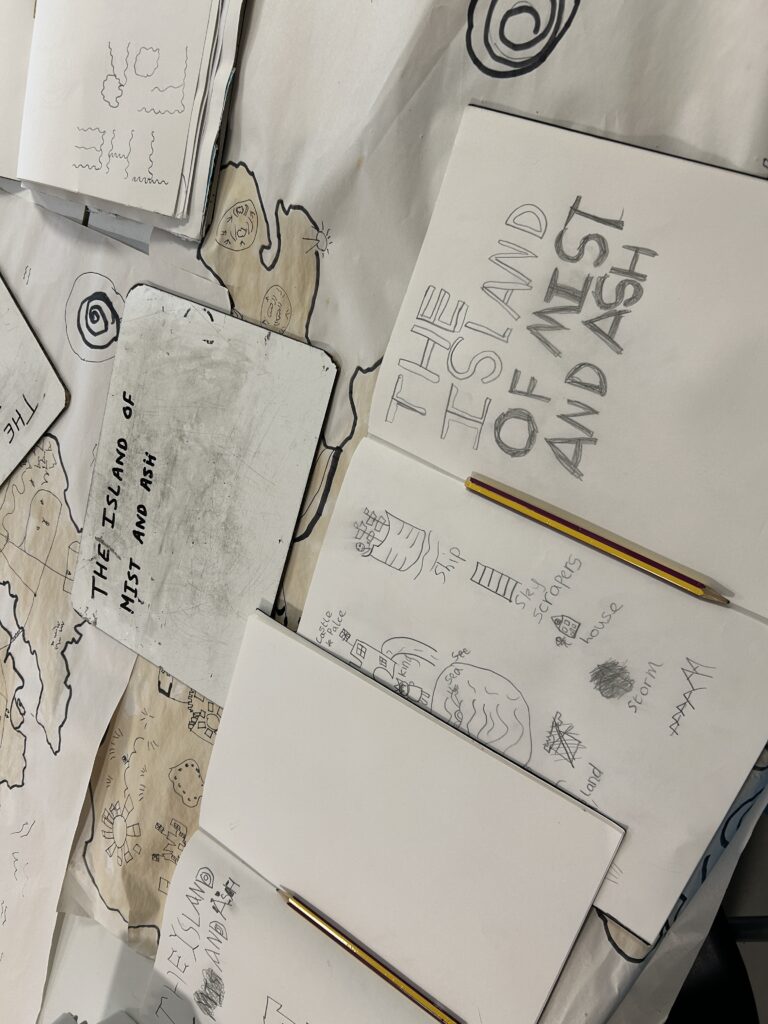
Using these skills, we worked in pairs or trios to apply our map symbols to a newly discovered island. Each island was completely unique and encouraged the children to think carefully about where in the world it was located, such as on the Equator, in the Northern Hemisphere, or the Southern Hemisphere. This helped them decide which human features and physical features would be suitable for their map. Through this process, we were introduced to the role of a cartographer and learned how map-makers use symbols, labels, and keys to clearly communicate information.

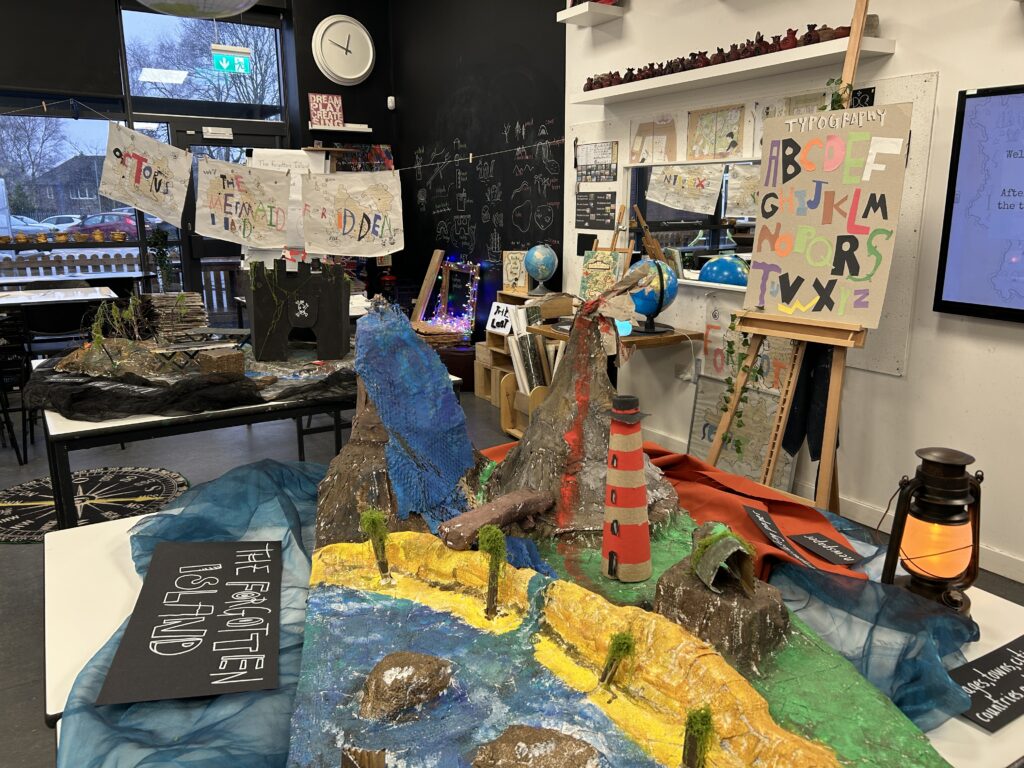
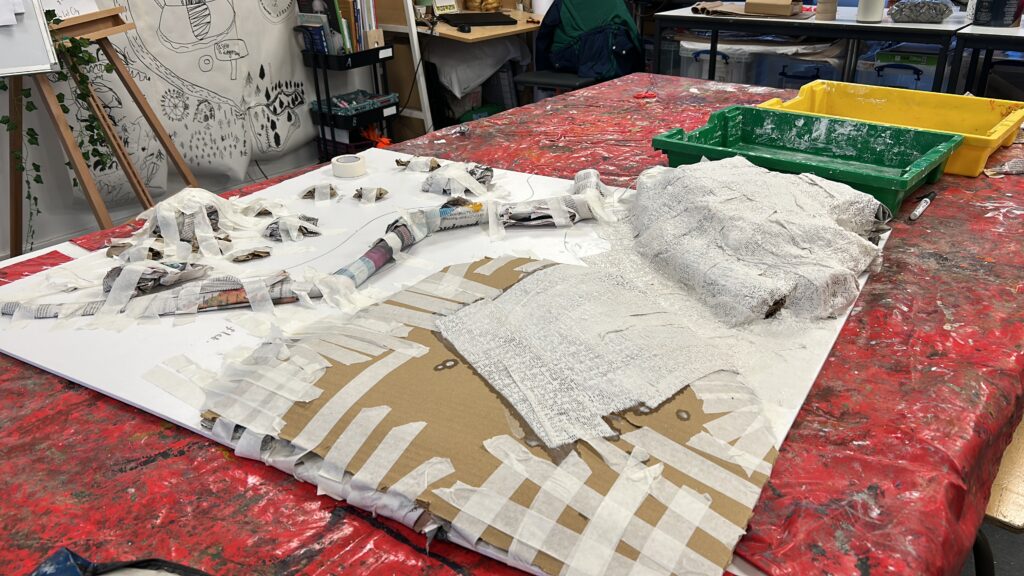
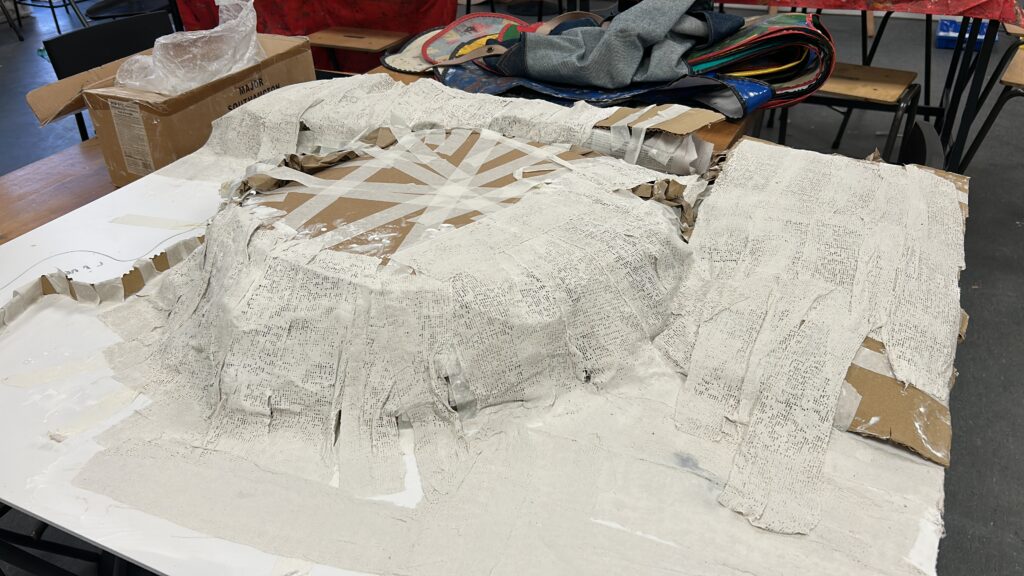
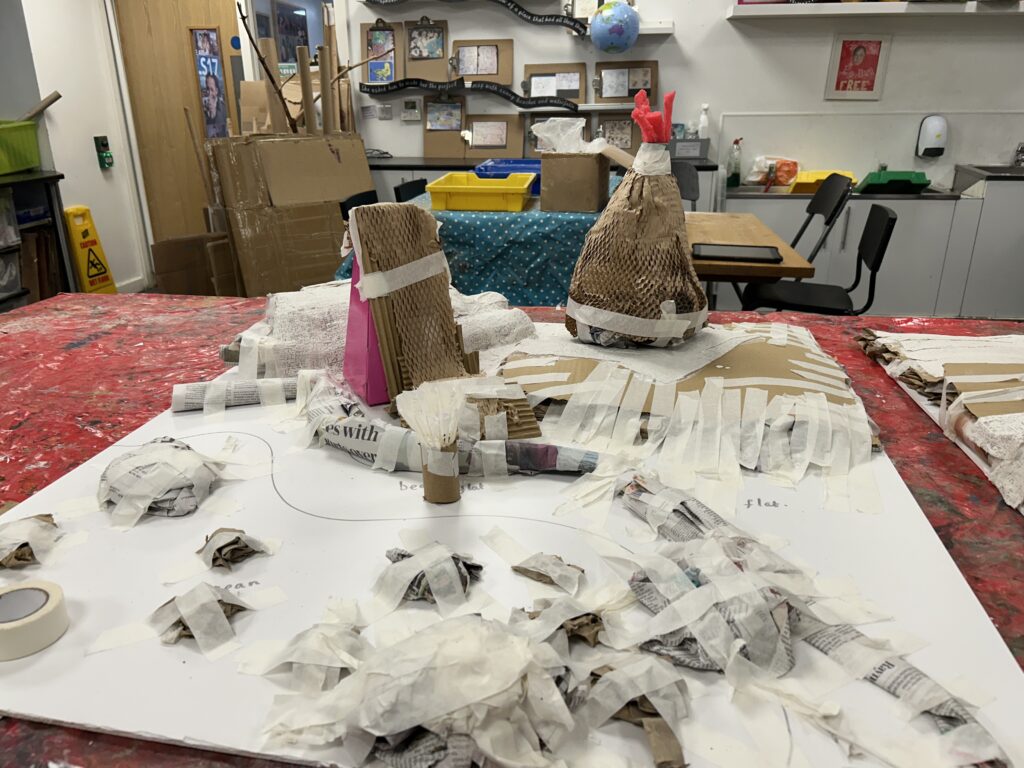
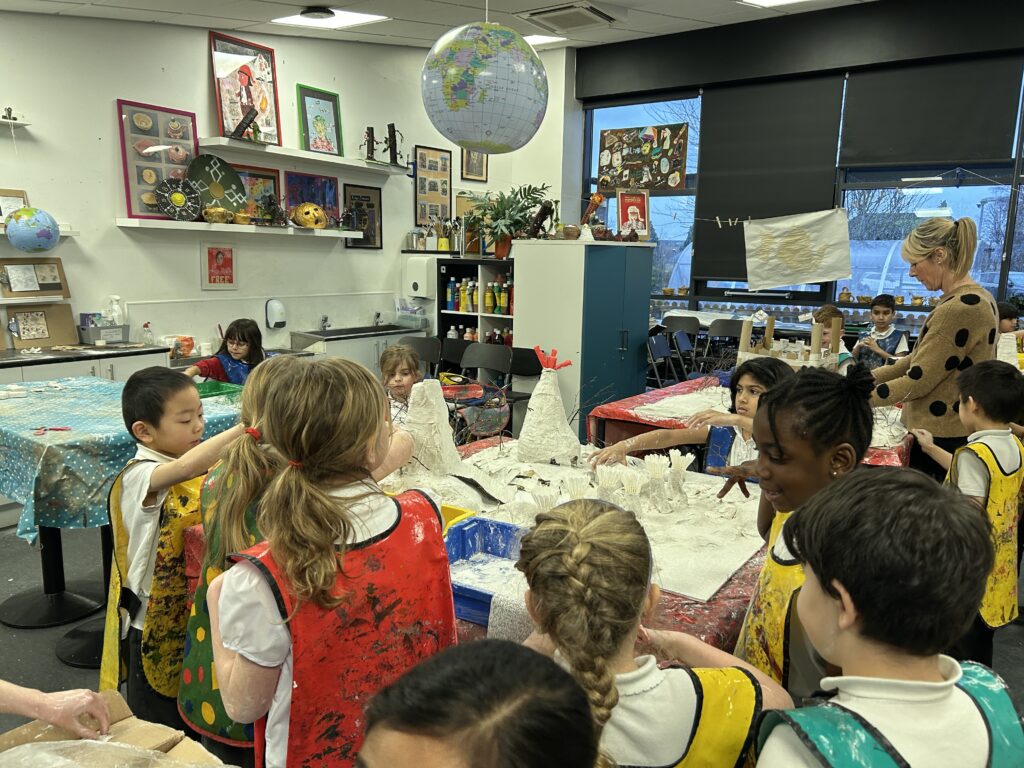
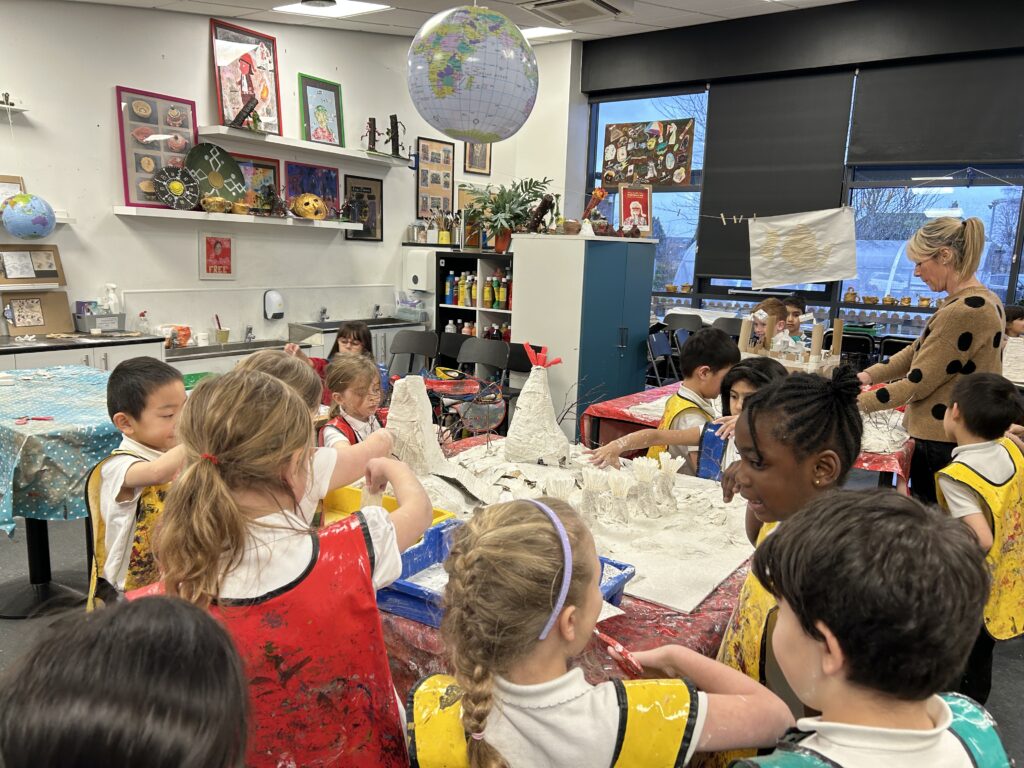
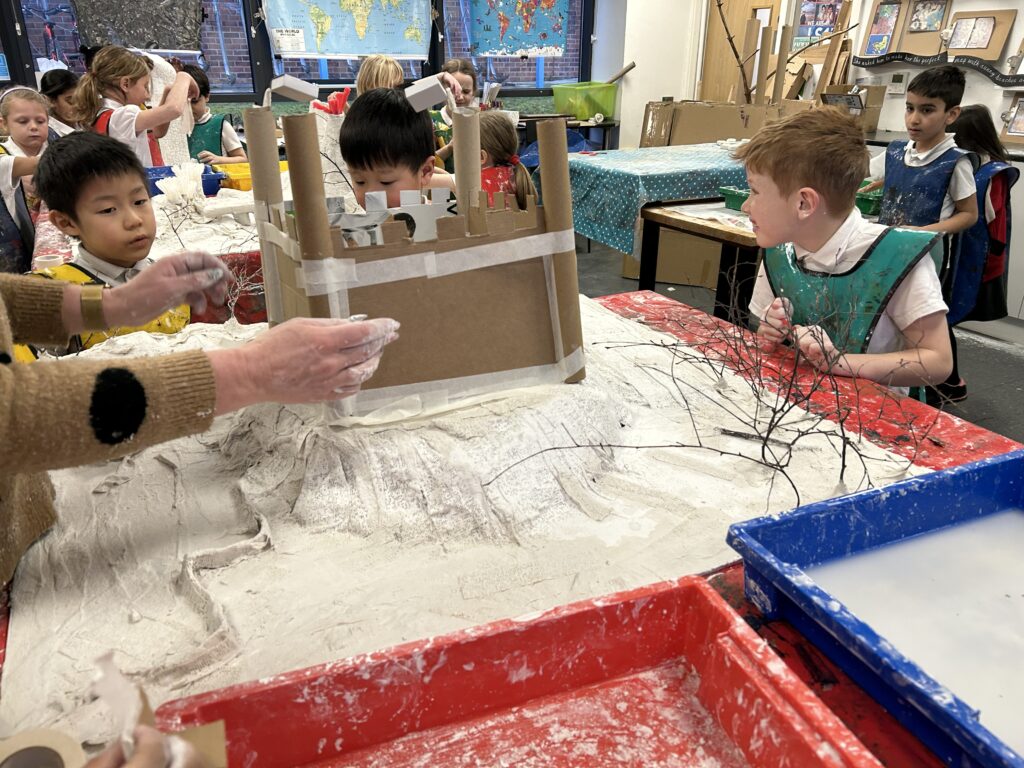
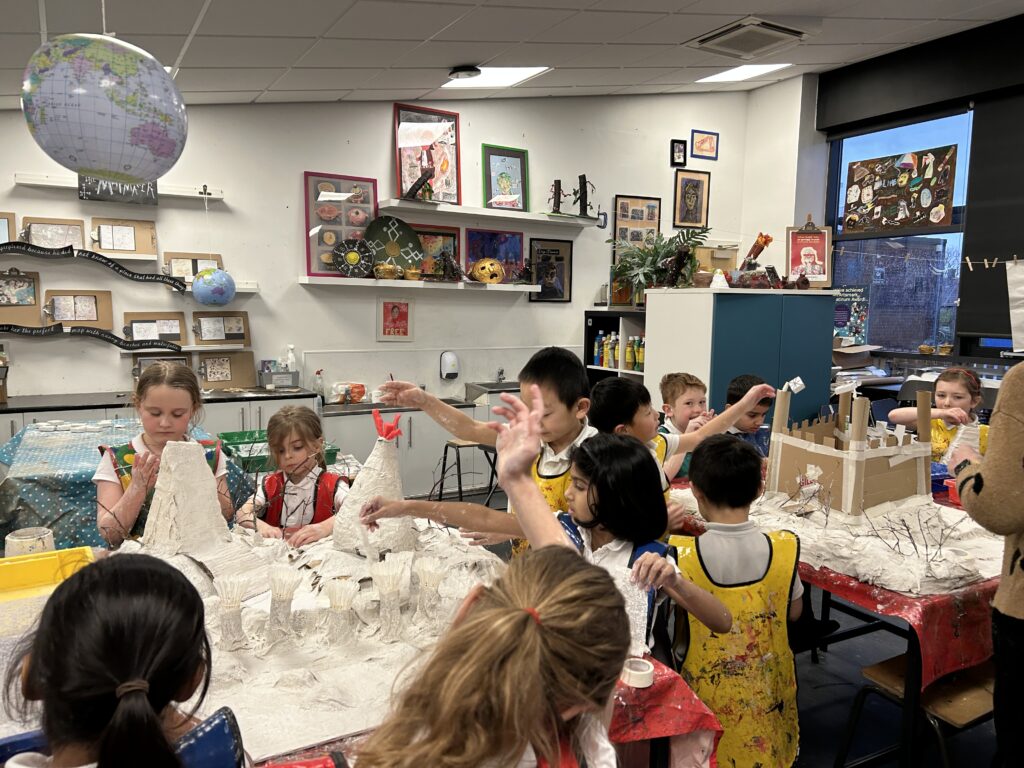
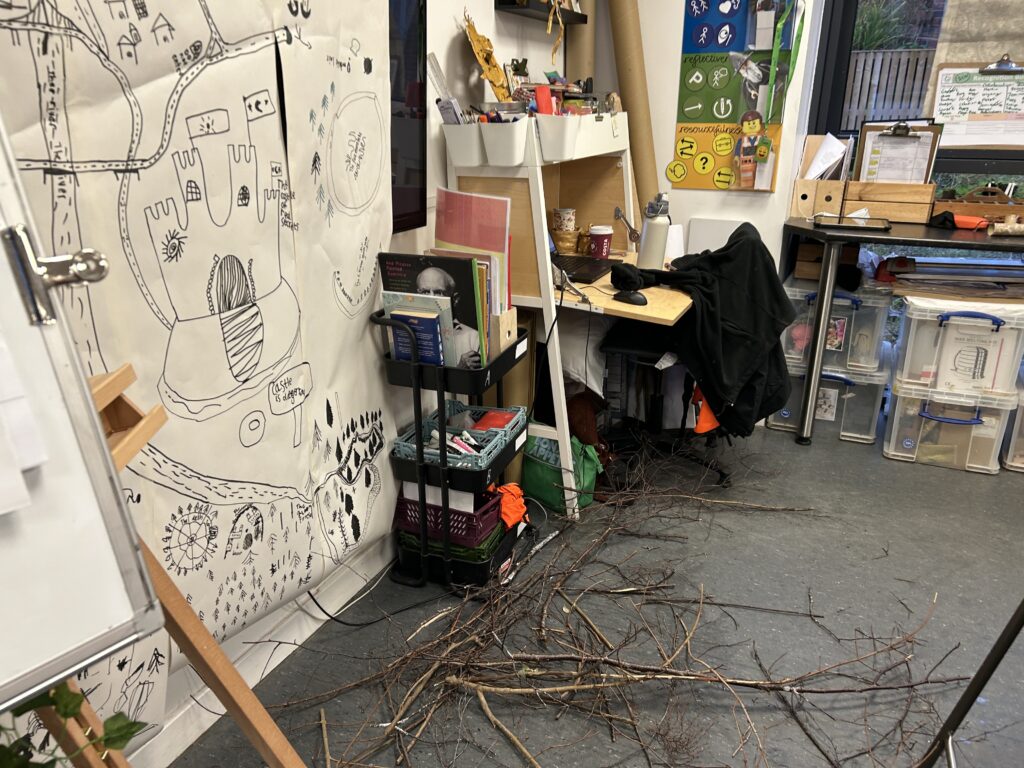
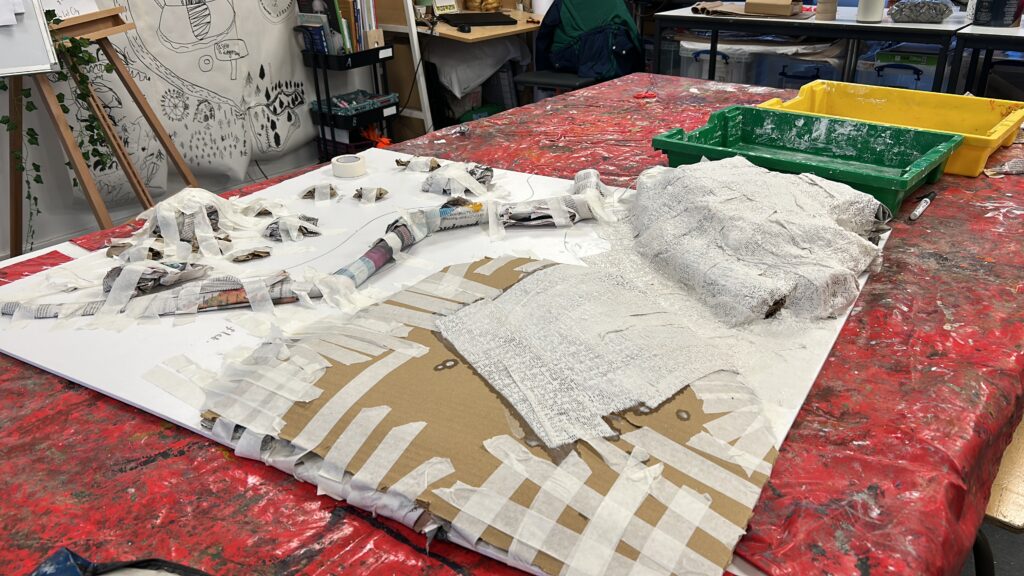
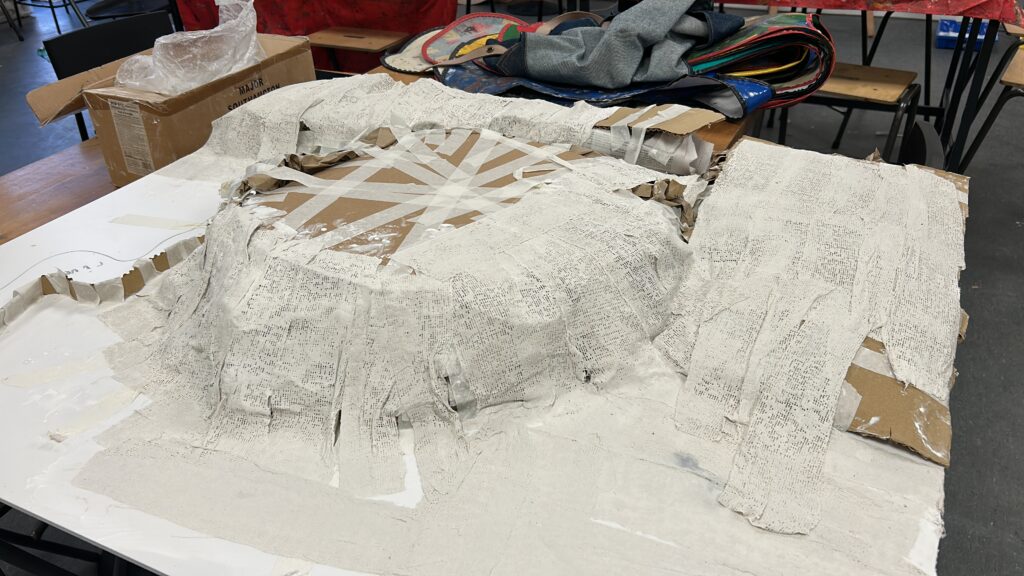
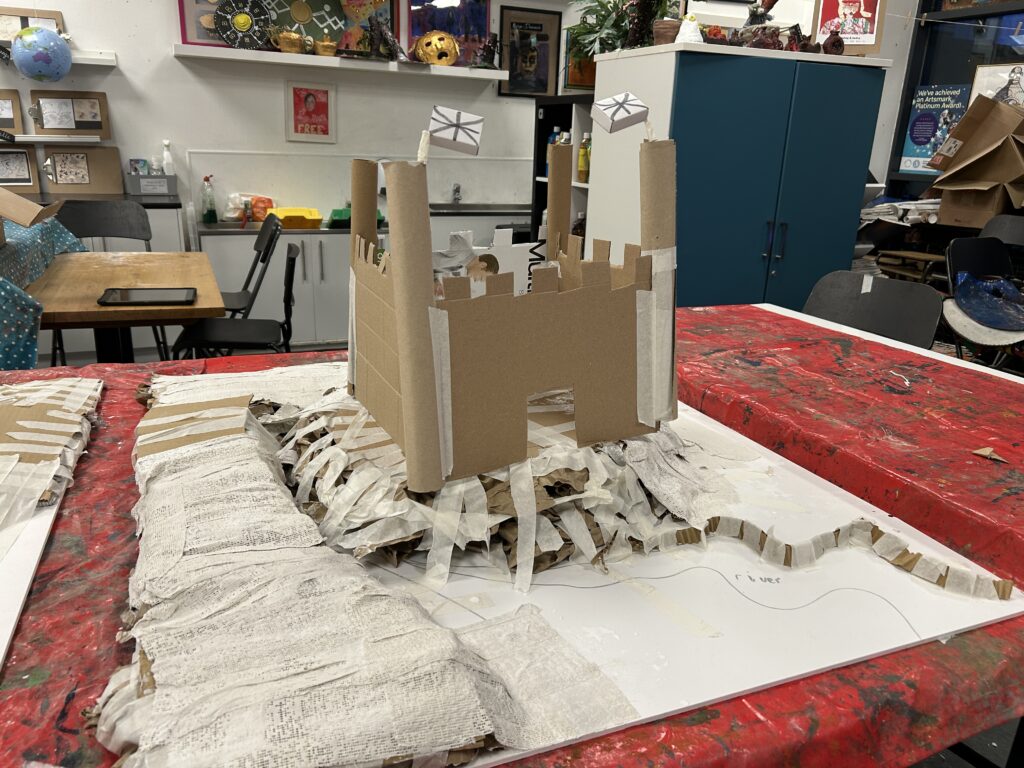
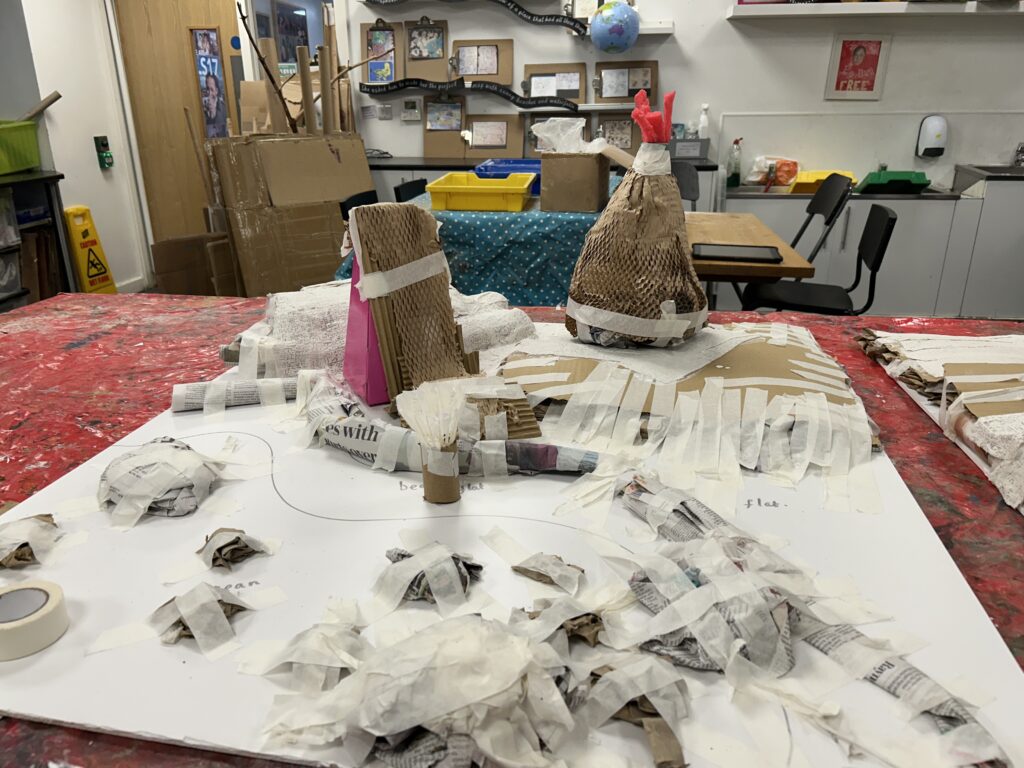
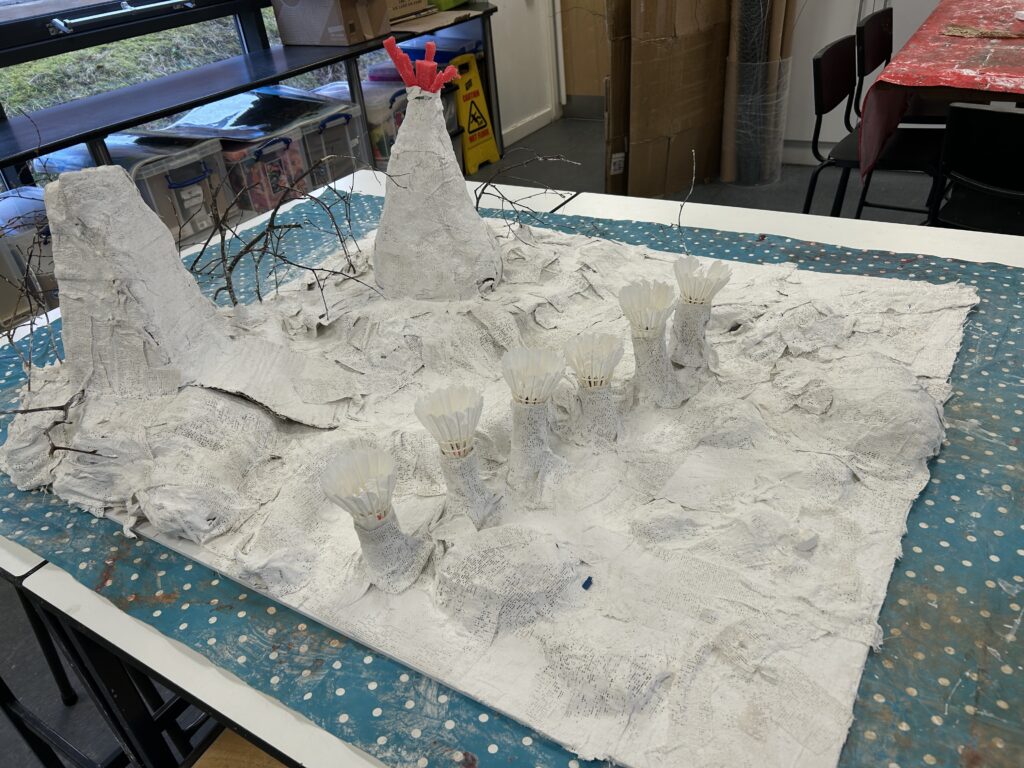
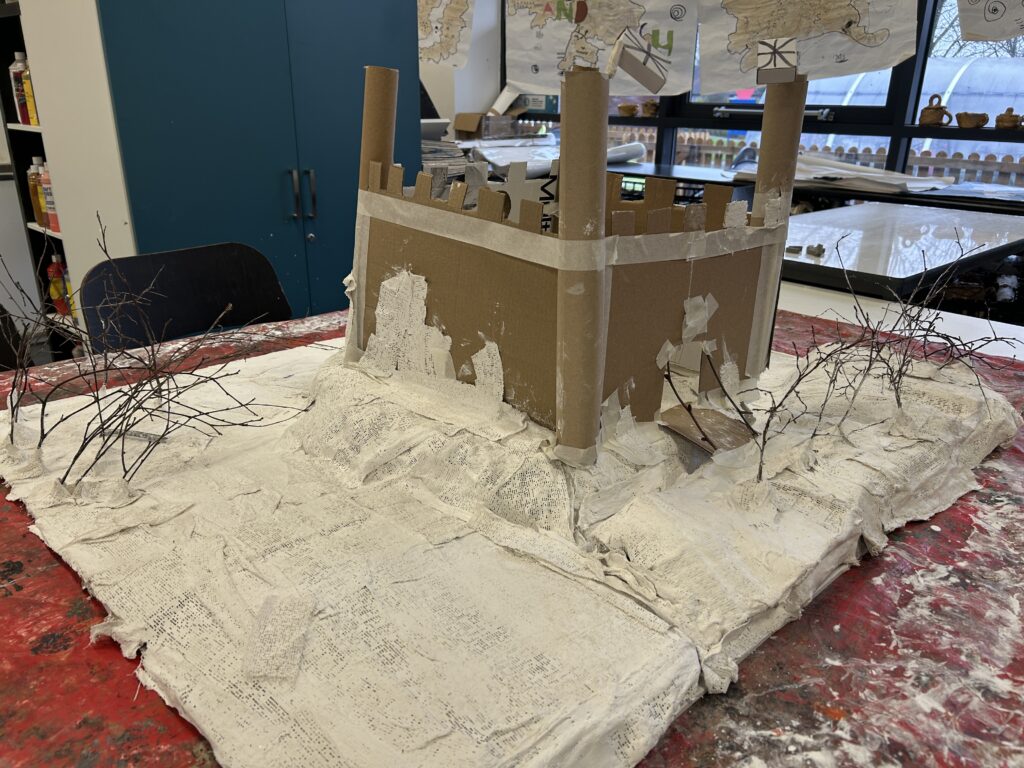
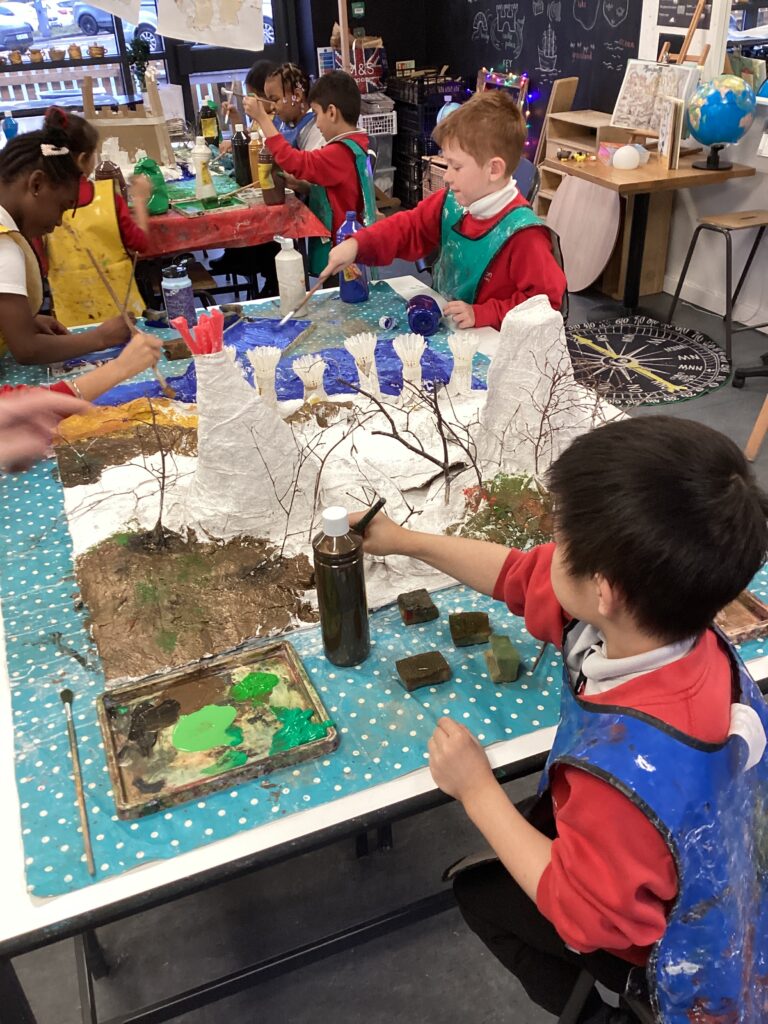
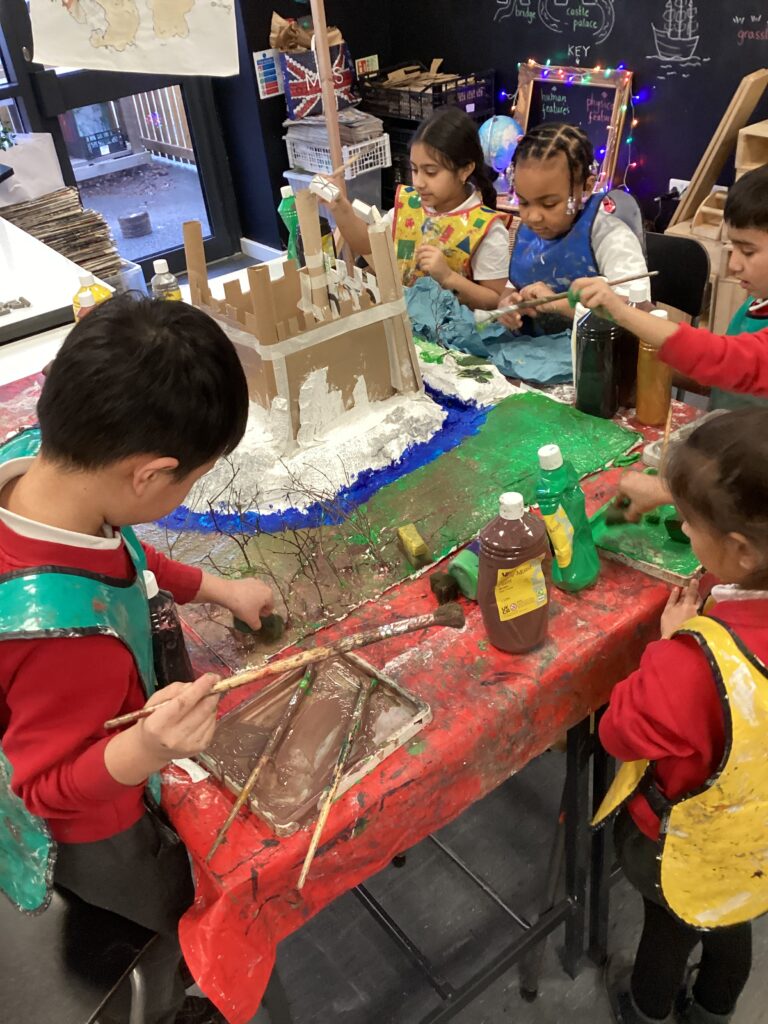
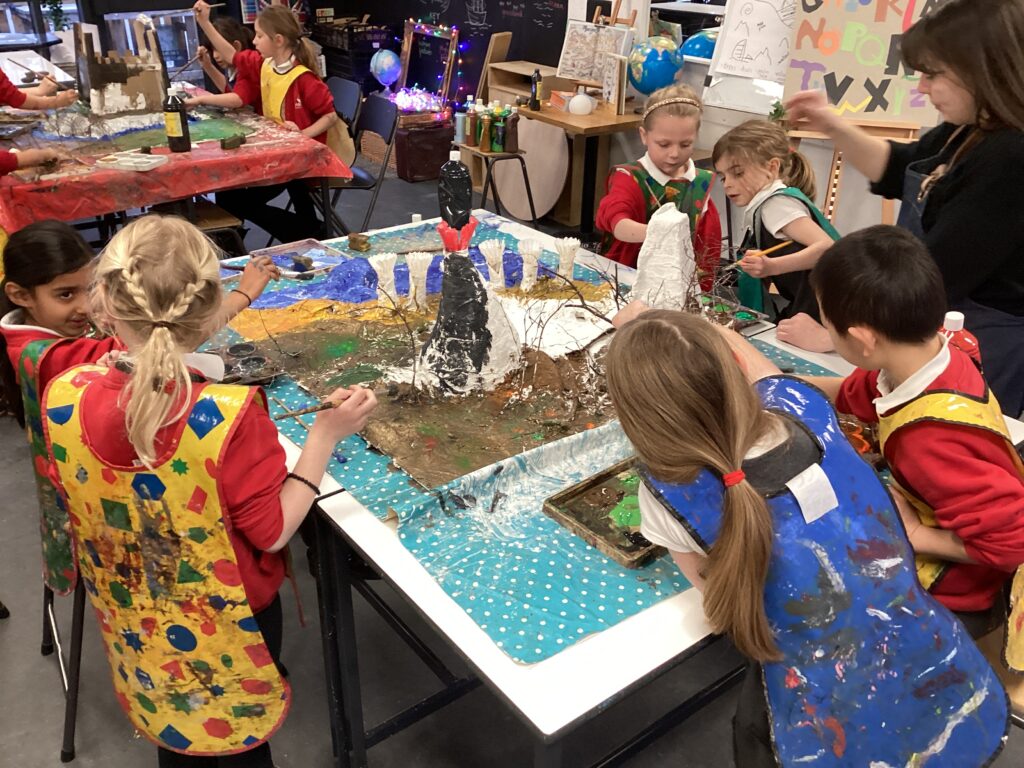
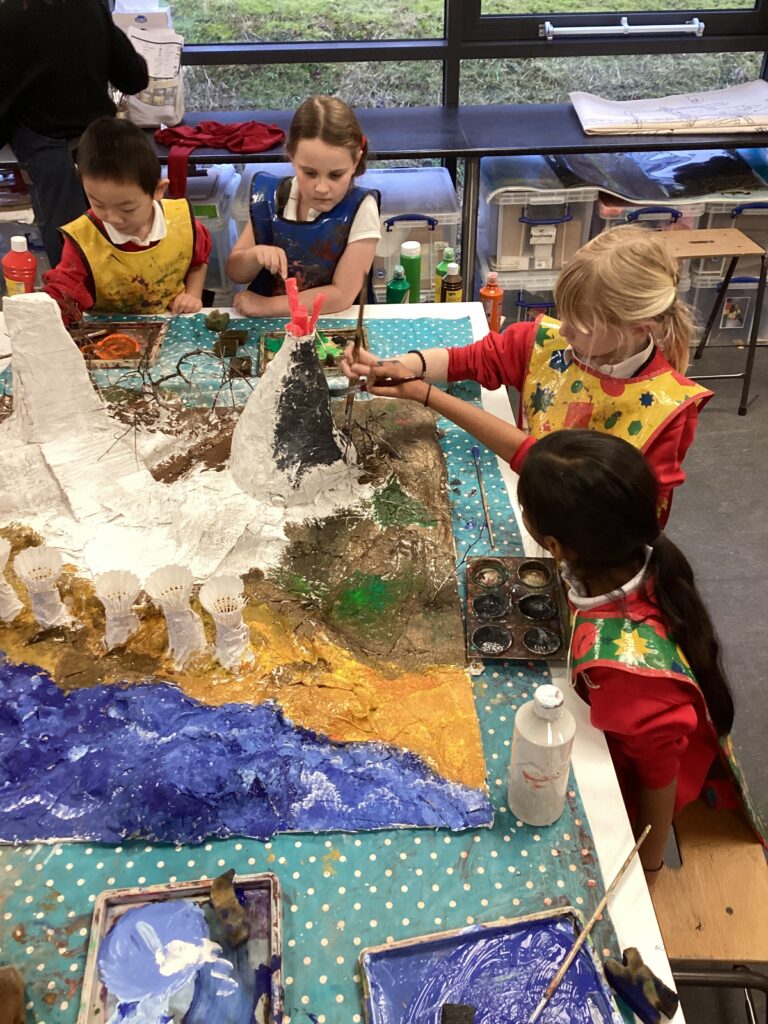
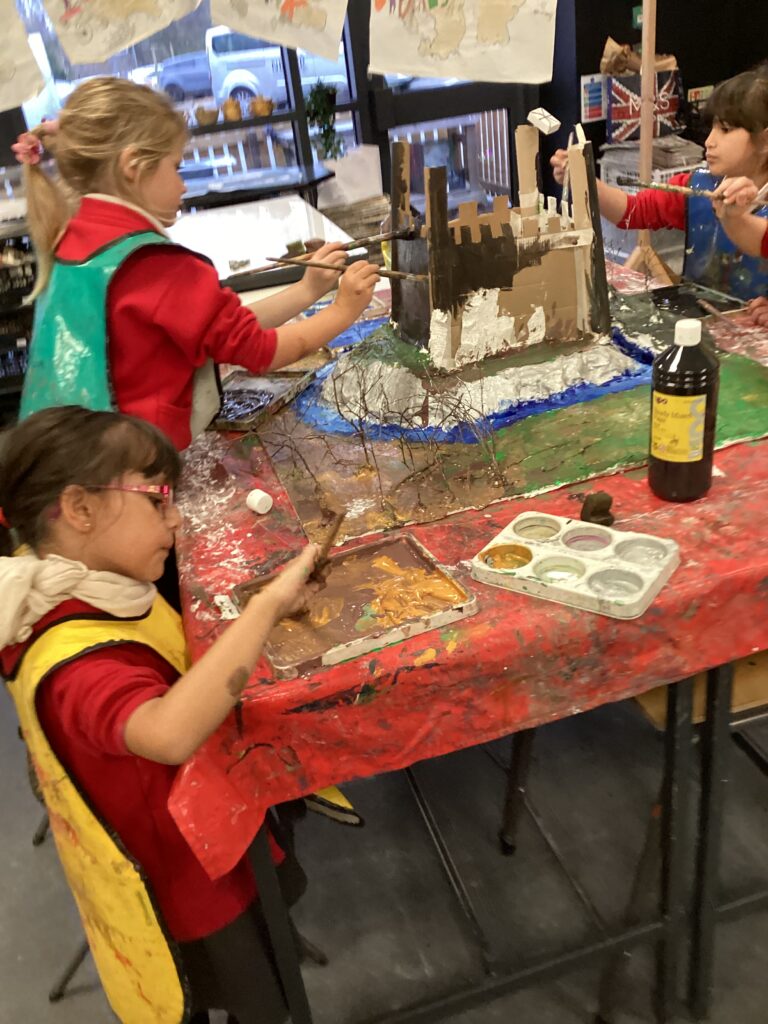
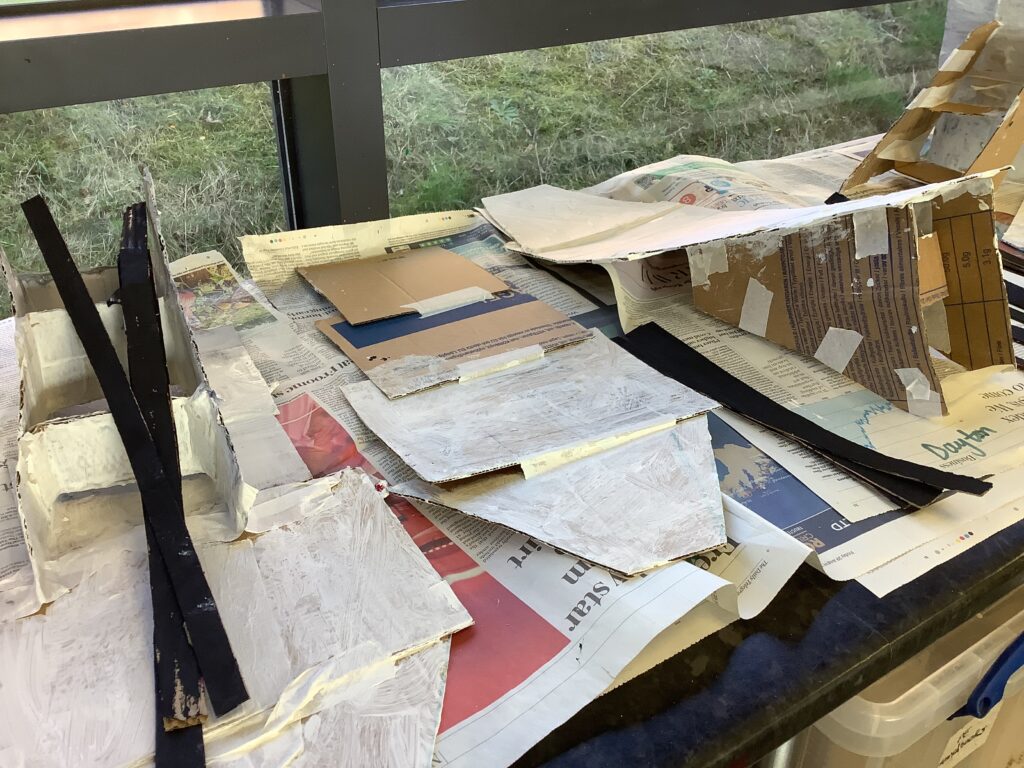
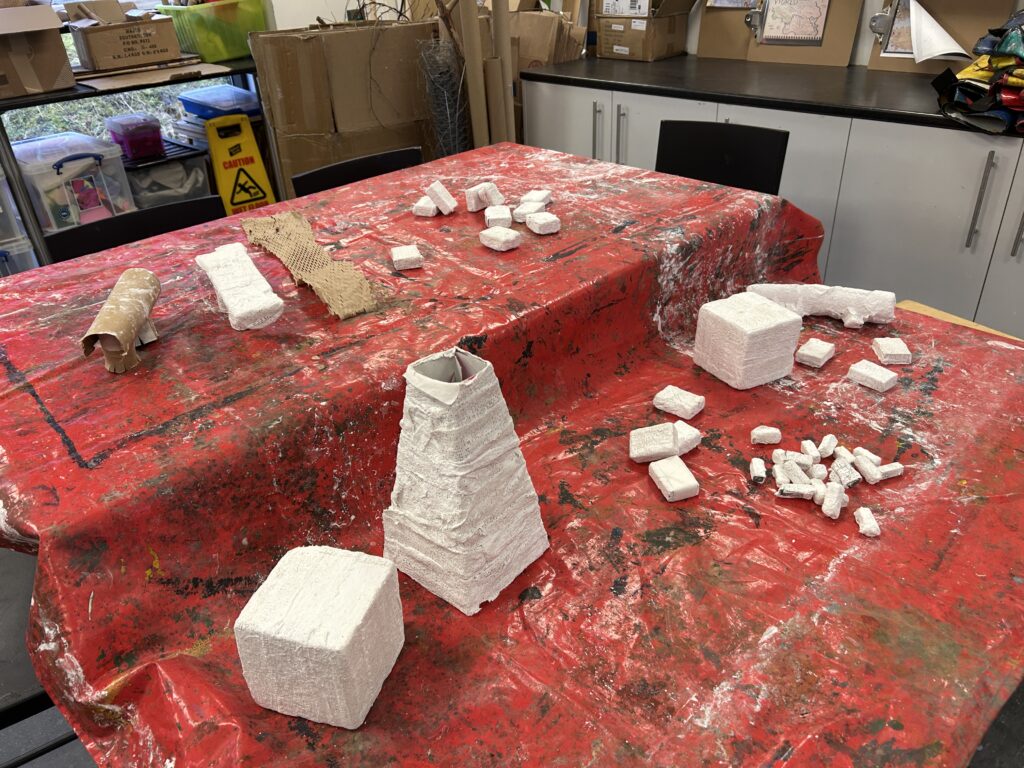
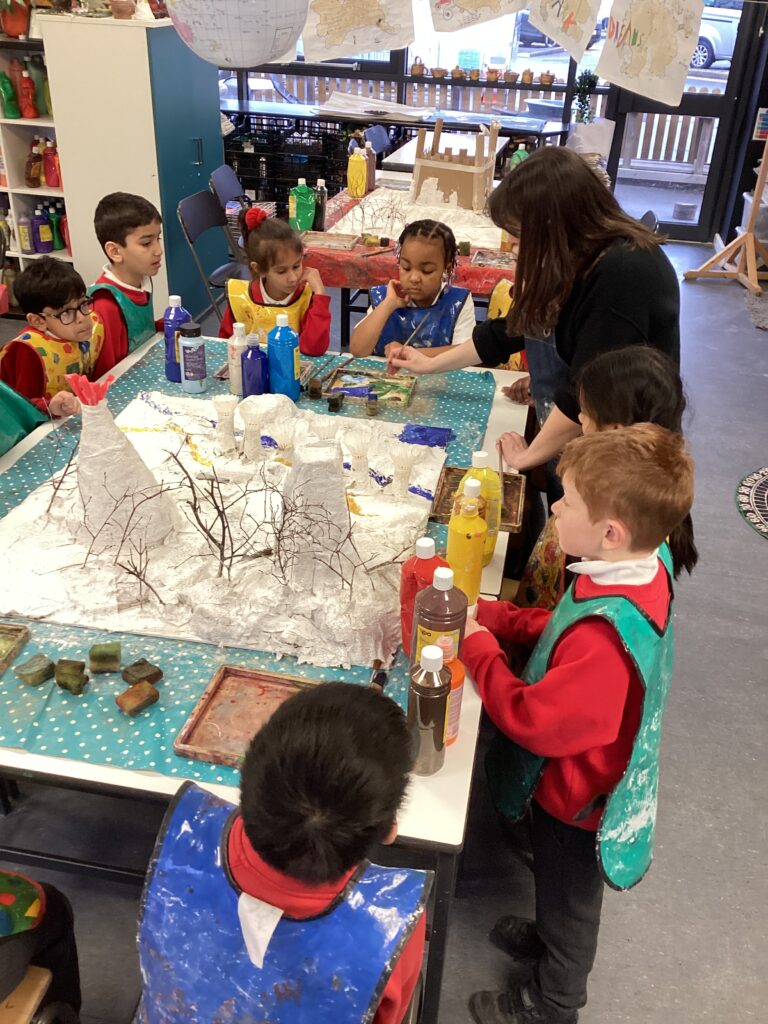
Next, we worked in larger groups and were given the creative brief of either ‘Lost City’ or ‘Forgotten Island’ to scale up our ideas. Using excellent communication and our Team Ant skills, we worked collaboratively to decide which features, terrain, and landforms we wanted to include on our island. We first created a 2D plan, carefully pooling our ideas, before transforming it into a 3D model. This process mirrored our Maths learning on shape and form. We began by building up relief using newspaper, packing, and masking tape, creating raised surfaces and textures ready for the next stage of our work.

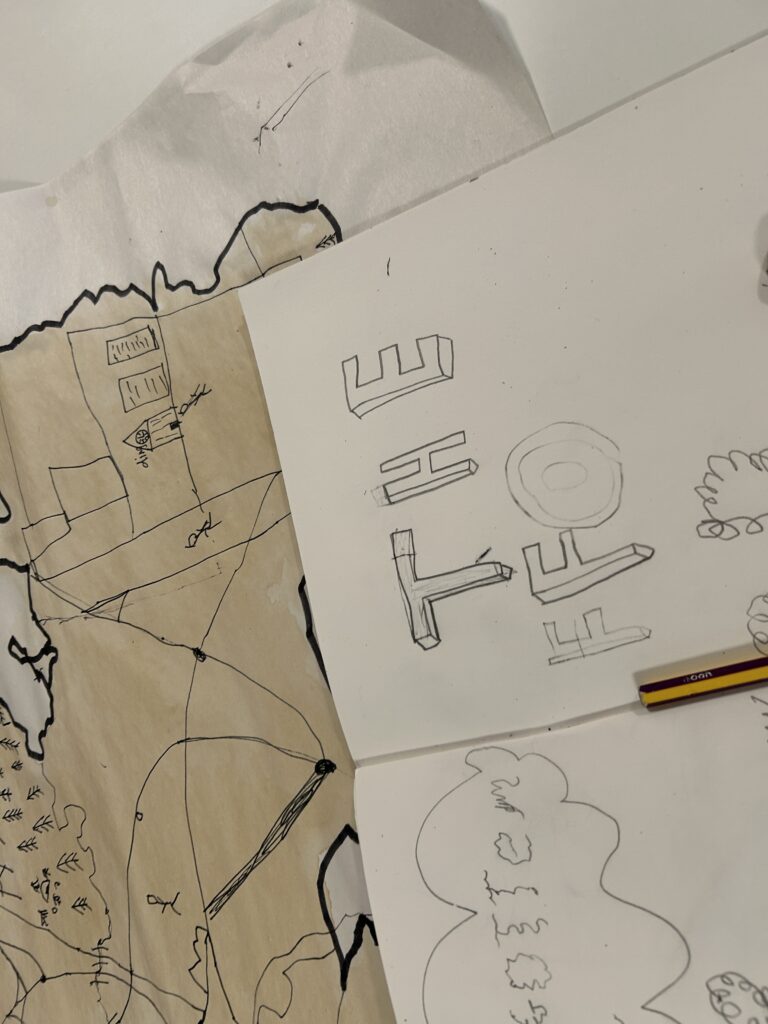
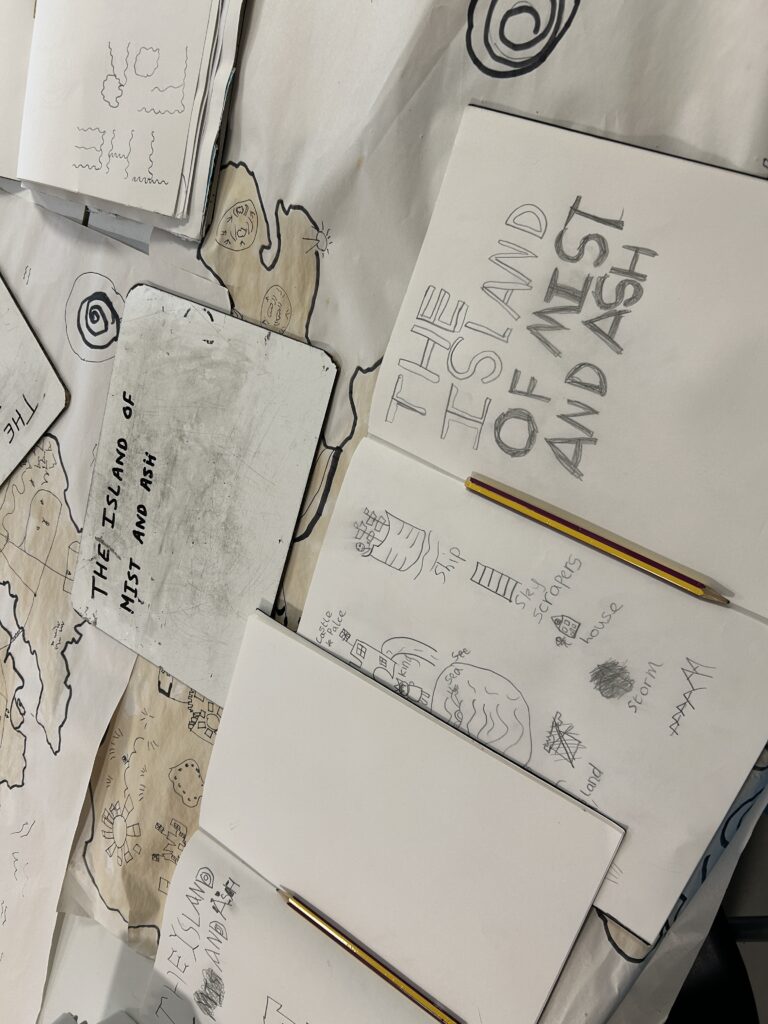
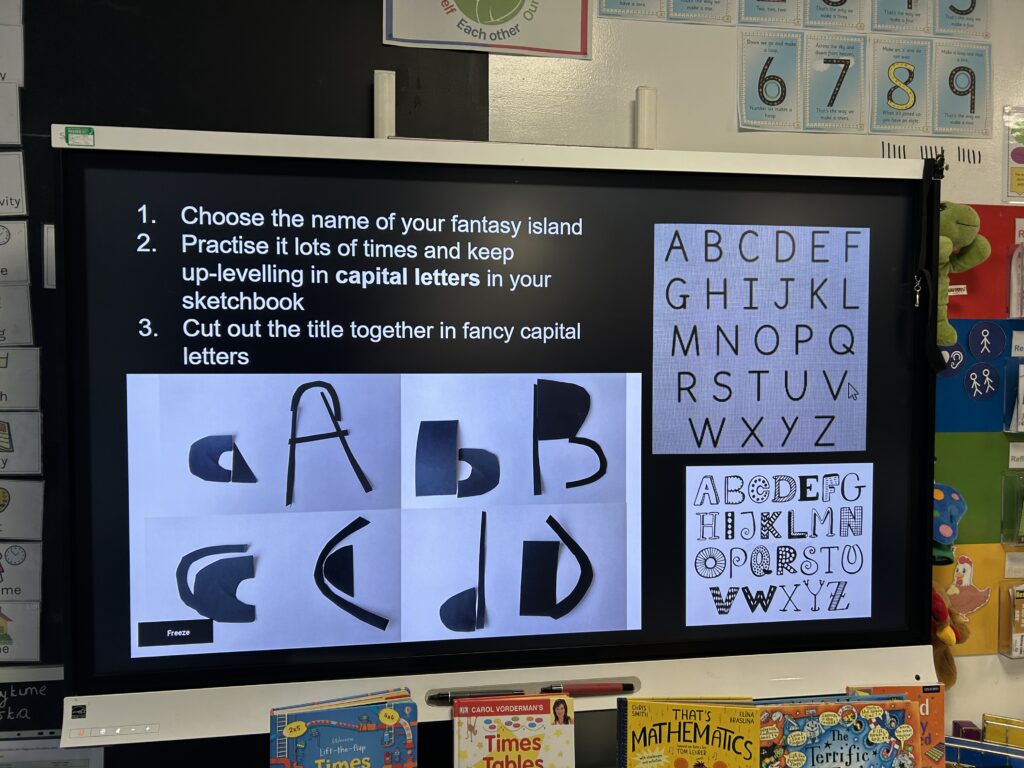
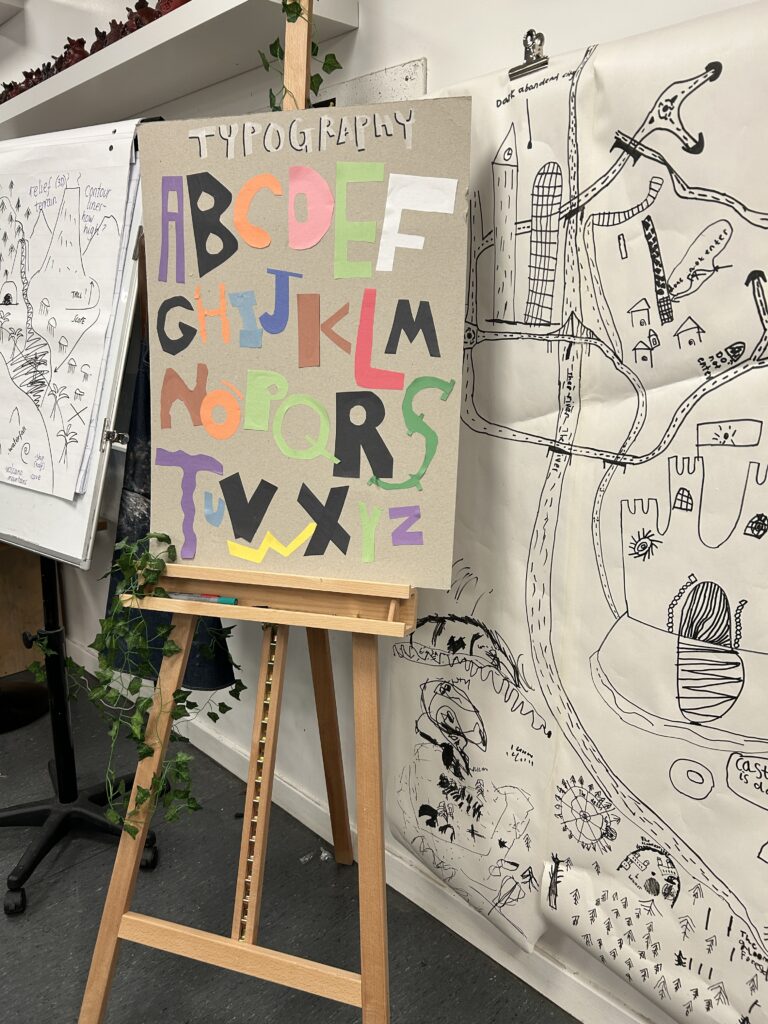
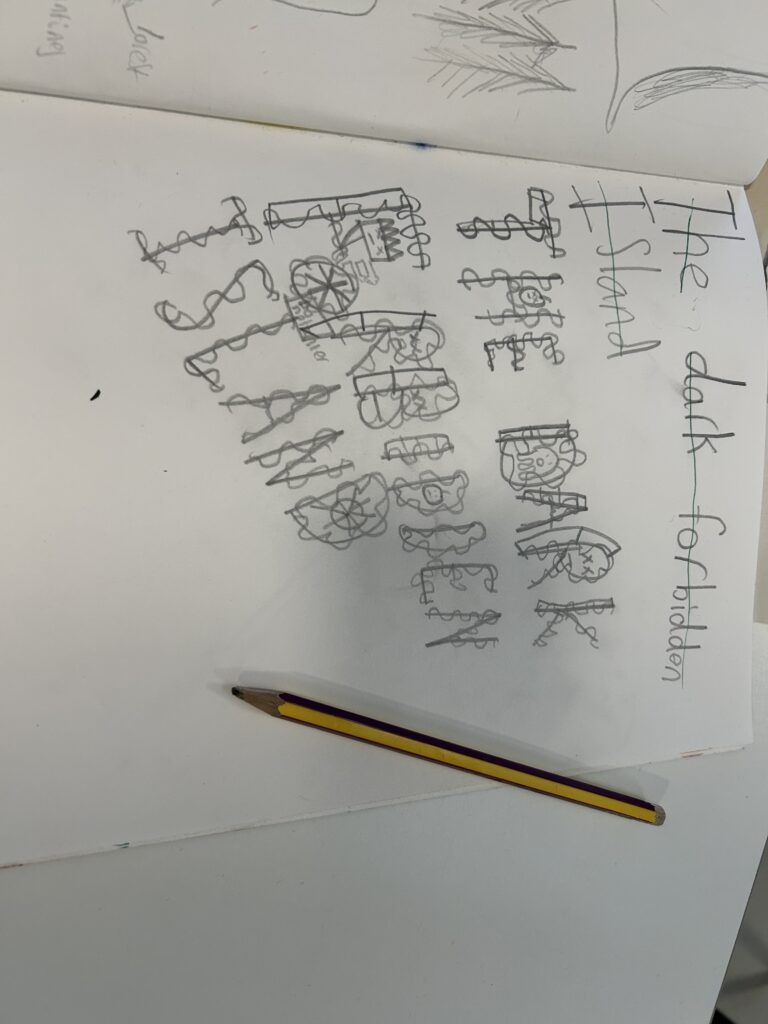
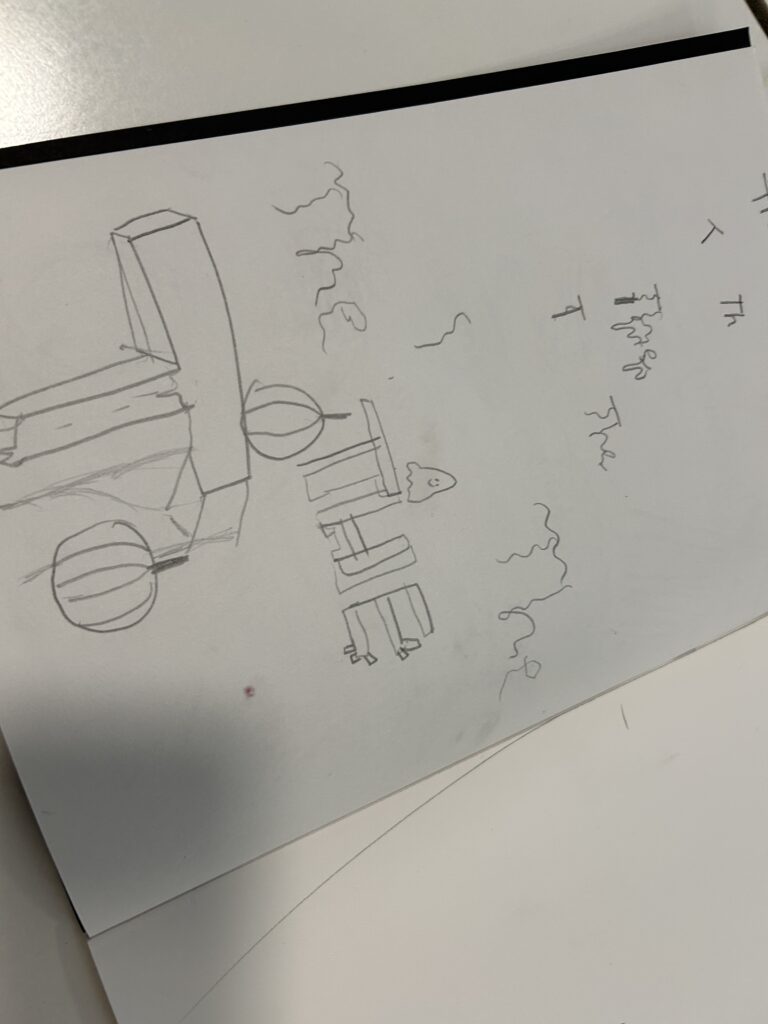
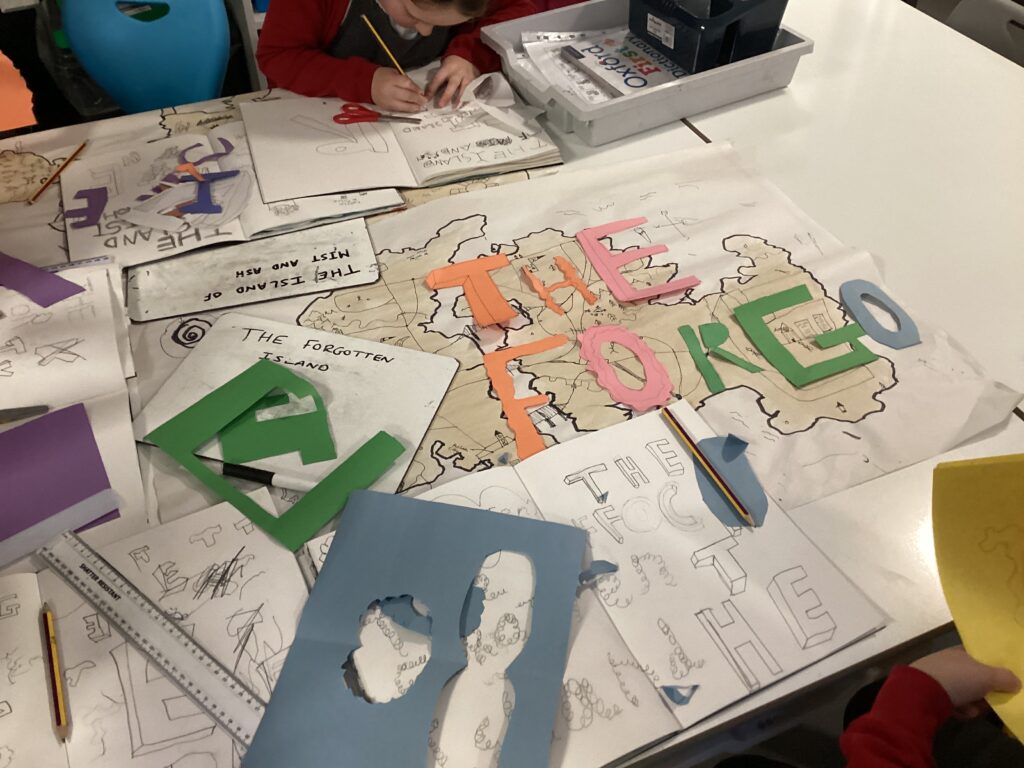
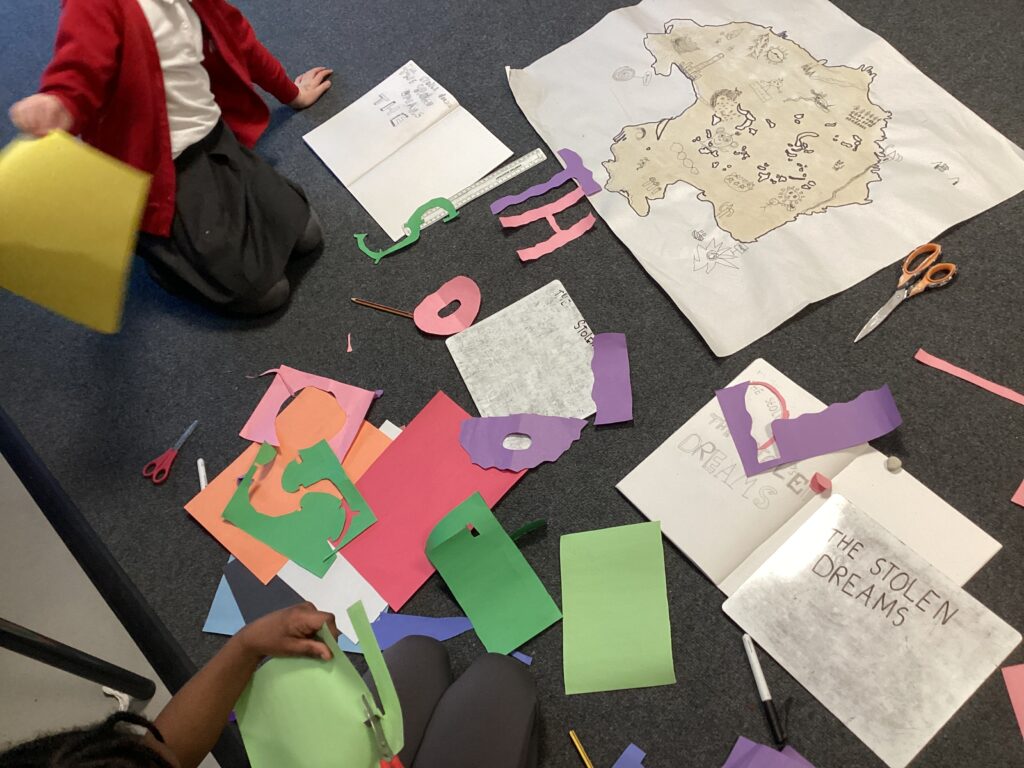
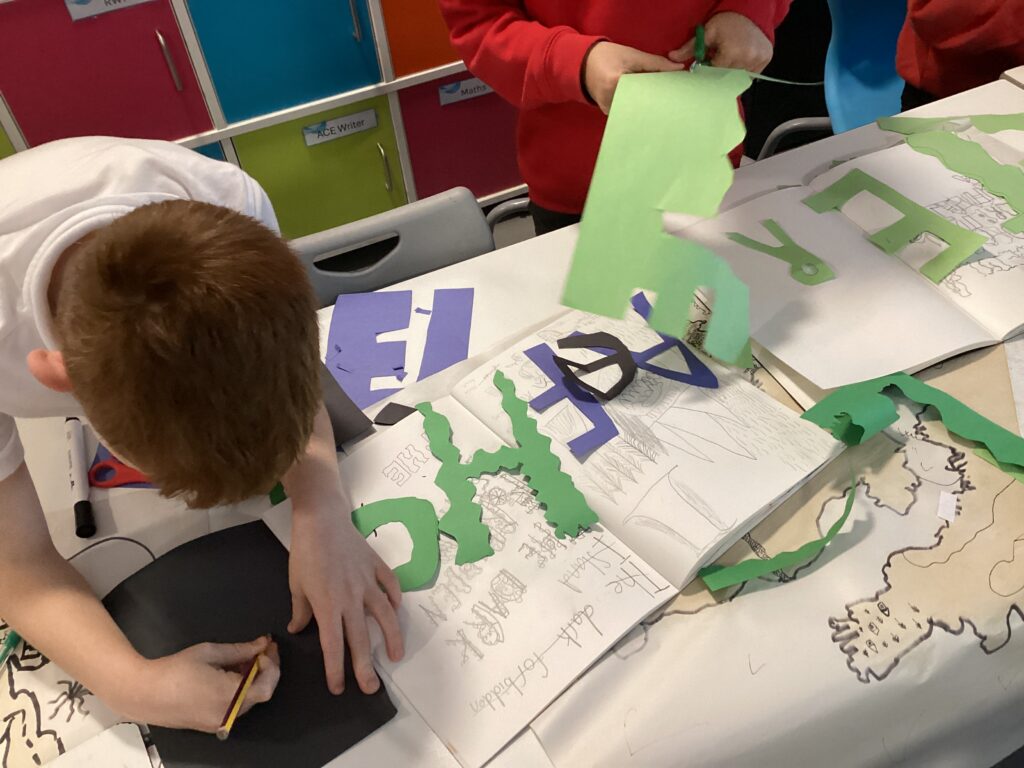
Whilst the Modroc dried, we explored typography and discussed why this is such an important feature of fantasy maps. We noticed that many novels begin with a made-up map, where the lettering has been carefully designed to match the mood and story. We began by line drawing our chosen island names, before moving on to cutting out letter forms. In a wonderful moment of spontaneity, George experimented with laying out his island’s name directly onto his and his partner’s map. The result looked so effective that we were inspired to adopt this creative decision across the whole class.

Once the Modroc was fully dry, we explored blotting, merging, and blending, thinking carefully about how to create different shades and tones for each type of terrain. We discussed how a forest floor would never be just one colour and experimented with layering and mixing to achieve more realistic textures. Working collaboratively, we combined our ideas to produce an absolutely wonderful final piece. We are excited to gift our completed map to Year 1’s provision. Thank you, 2CN — you have amazed me with your curiosity, teamwork, enthusiasm, and focus throughout this project.

Young Artists’ Summer Show 2026 – Artwork opportunity! Deadline 4th March (Bring into school by 25th Feb)

Roll up, roll up ACE Artists! The Royal Academy of Arts have just released an exciting opportunity for students aged 4–18, in the UK to exhibit their artwork on site or online at
the Royal Academy of Arts.

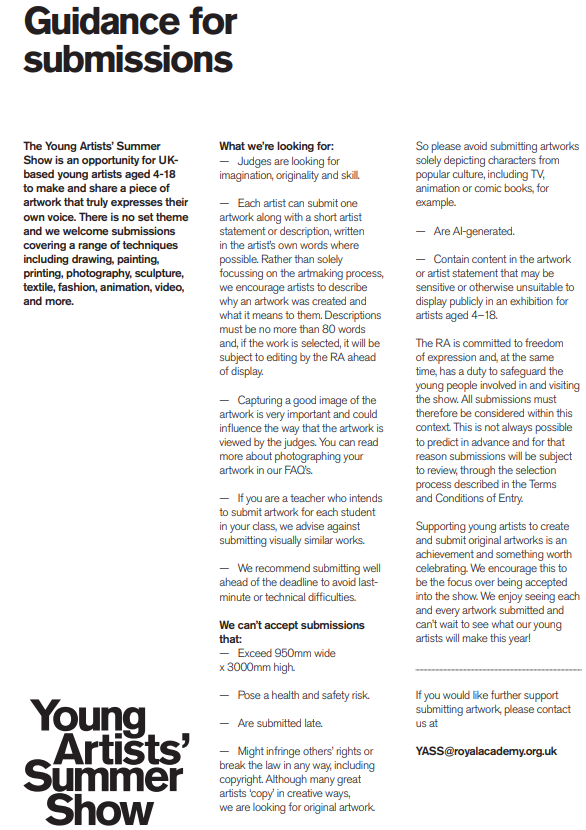
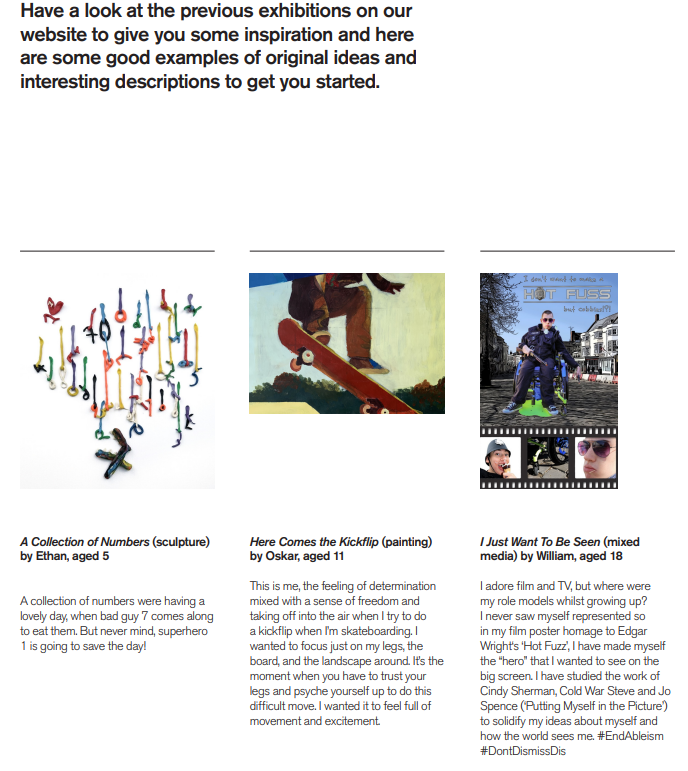
Your brief is to create a piece of artwork that truly expresses your own voice. There is no set theme and the Royal Academy of Arts welcome submissions covering a range of techniques including drawing, painting, printing, photography, sculpture, textile, fashion, animation, video and more.

To make this easiest for you at home, please bring your artwork into school (with your name and year group attached) before Wednesday 25th February. Mrs Housam will then help you to take a high quality photo of it, write your title and 80 word max. description of the artwork. She will then submit it for you on the website. Depending on entries received, we would love to display an open exhibition of all the artwork brought into school in the final week of the Spring term – this date is TBC dependent on entry numbers.

More details are attached below. We really hope you enter because, as we know, creativity is fundamental to what we do at ACE and this would be a wonderful opportunity for you to showcase your artwork.

4C – The Coming of the Iron Man

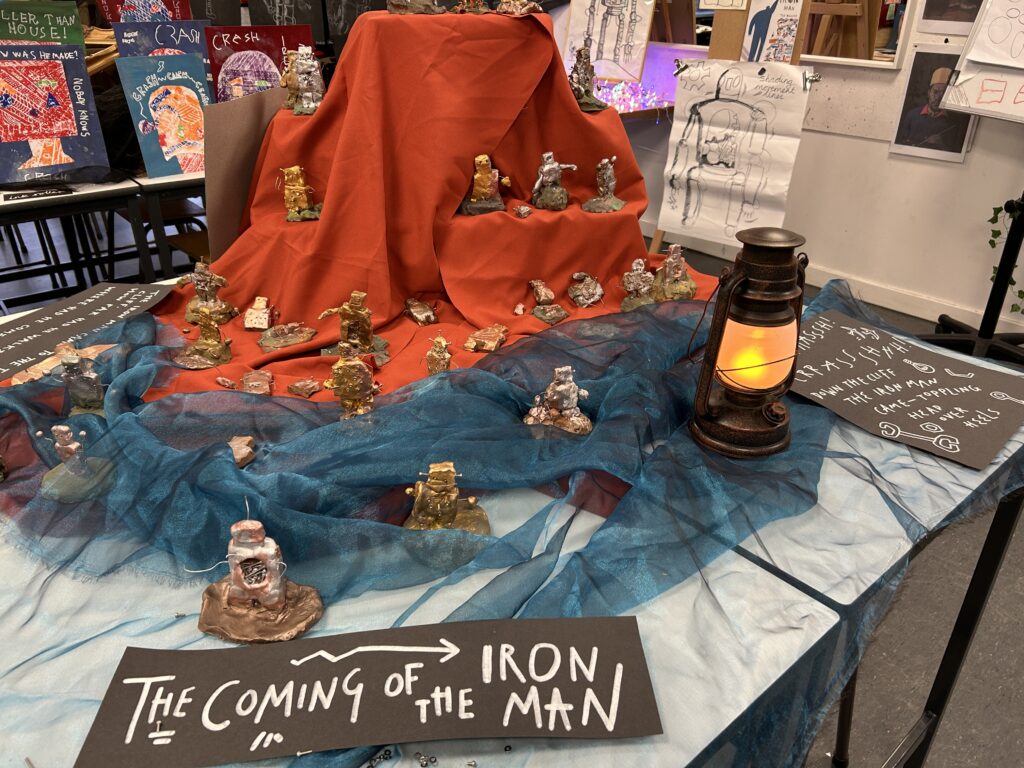
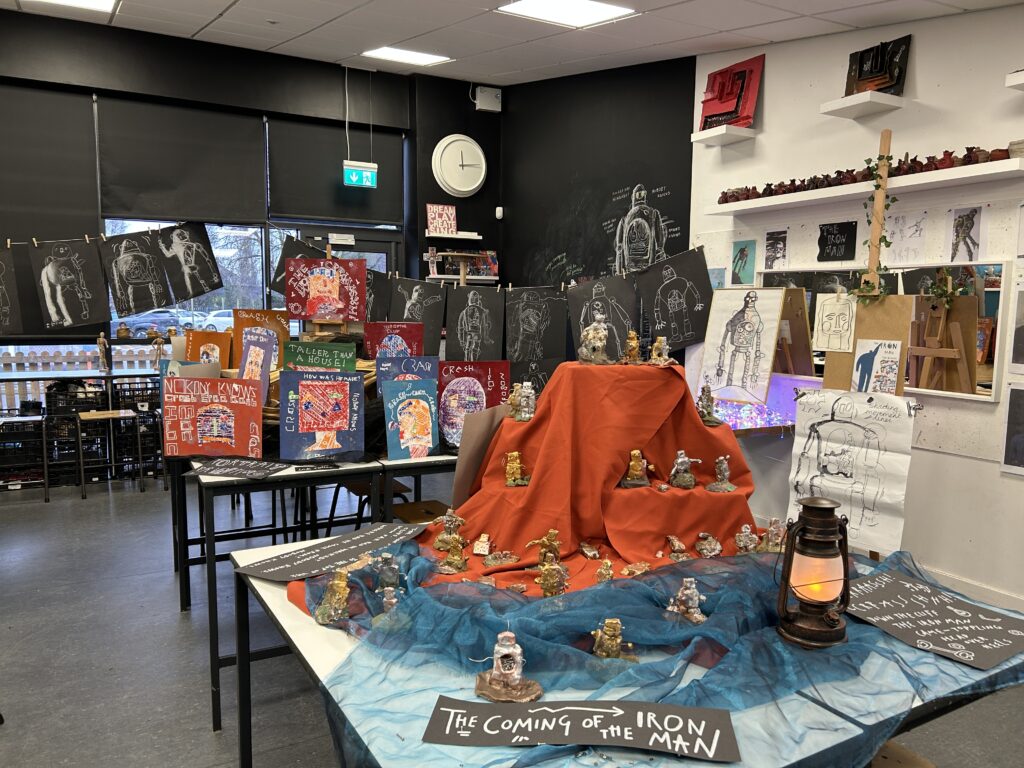
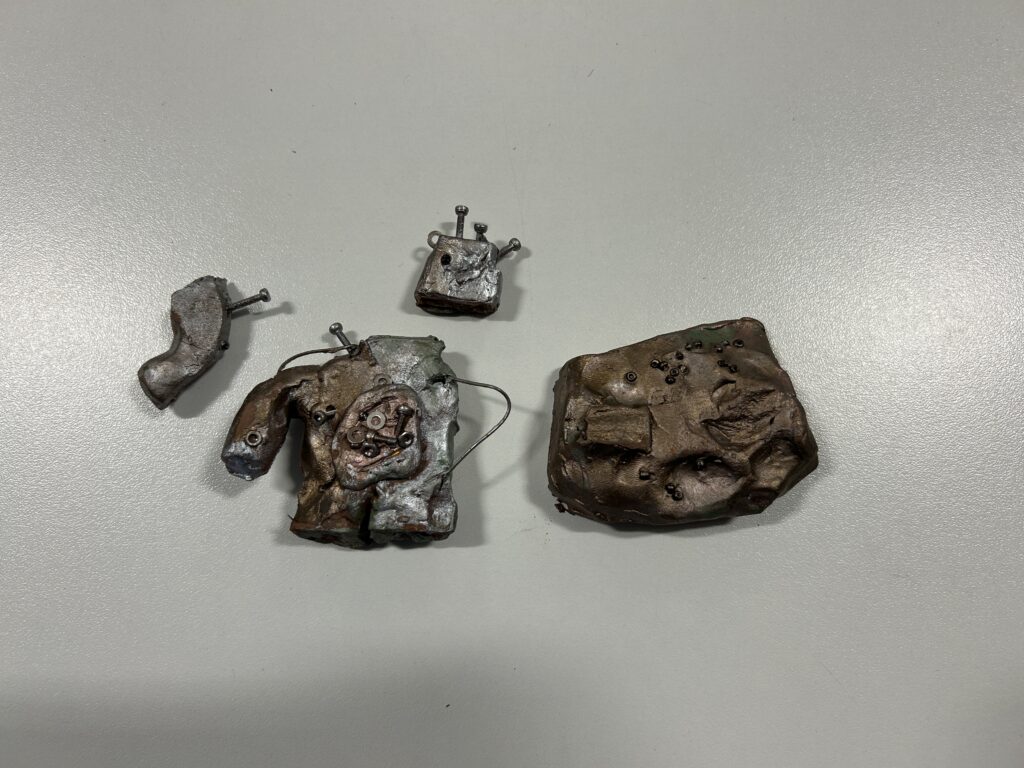
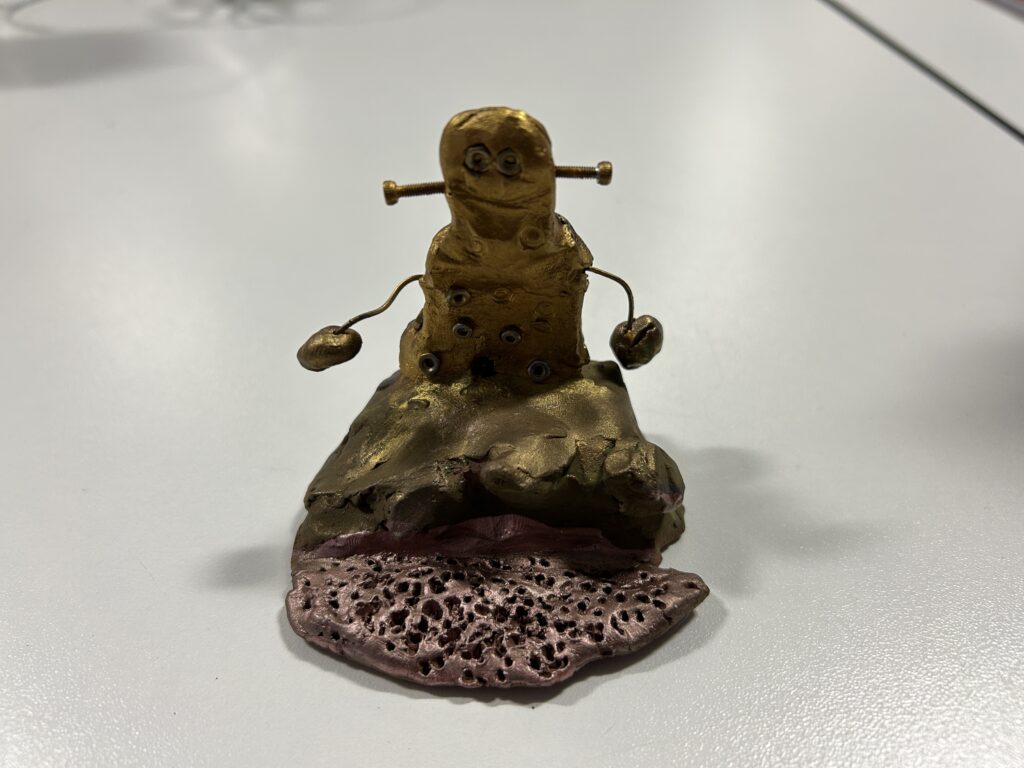
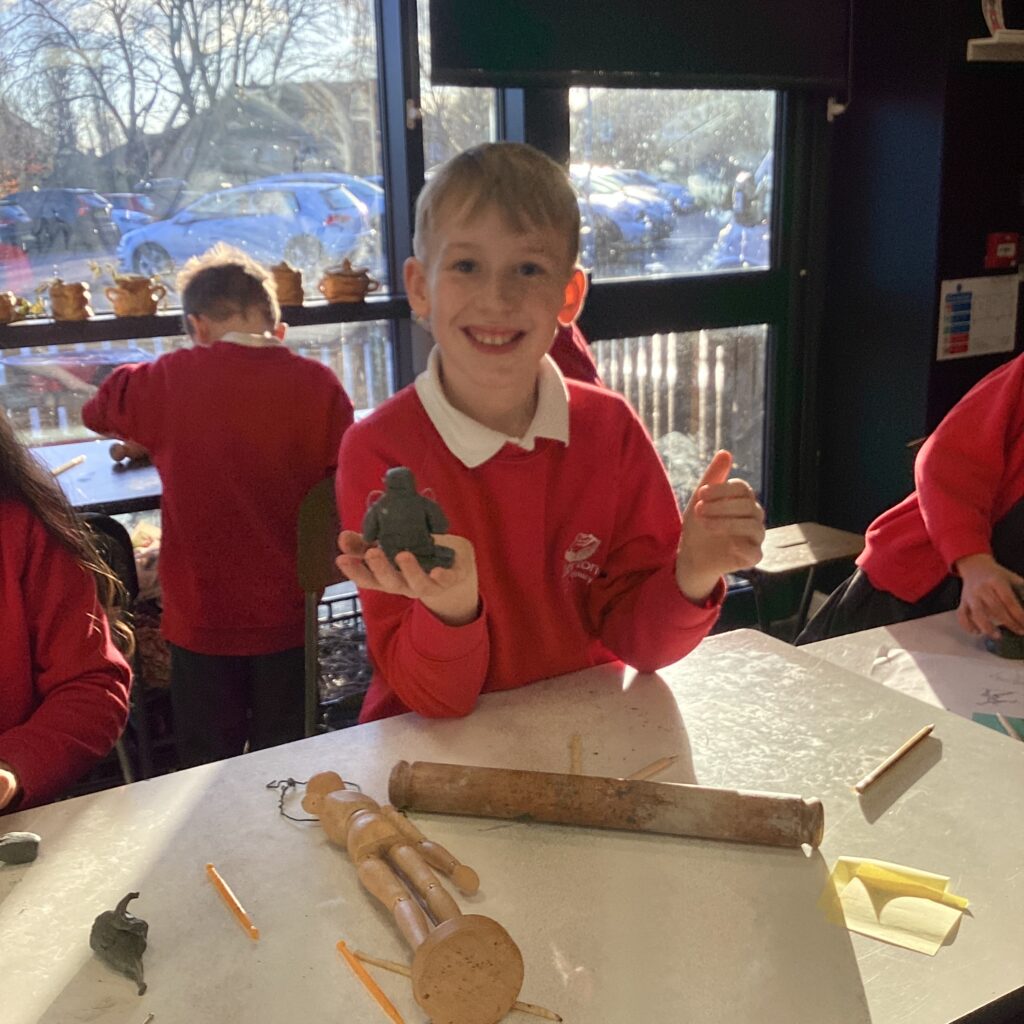
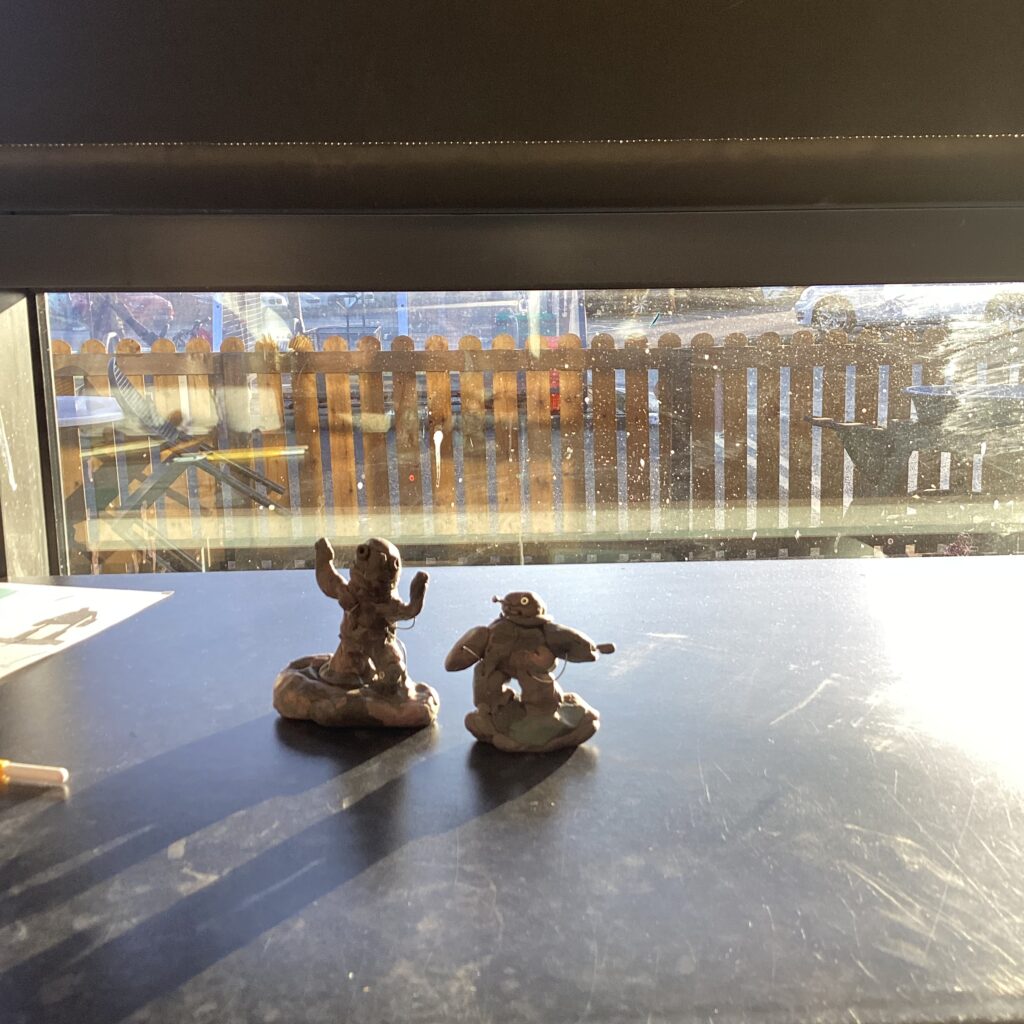
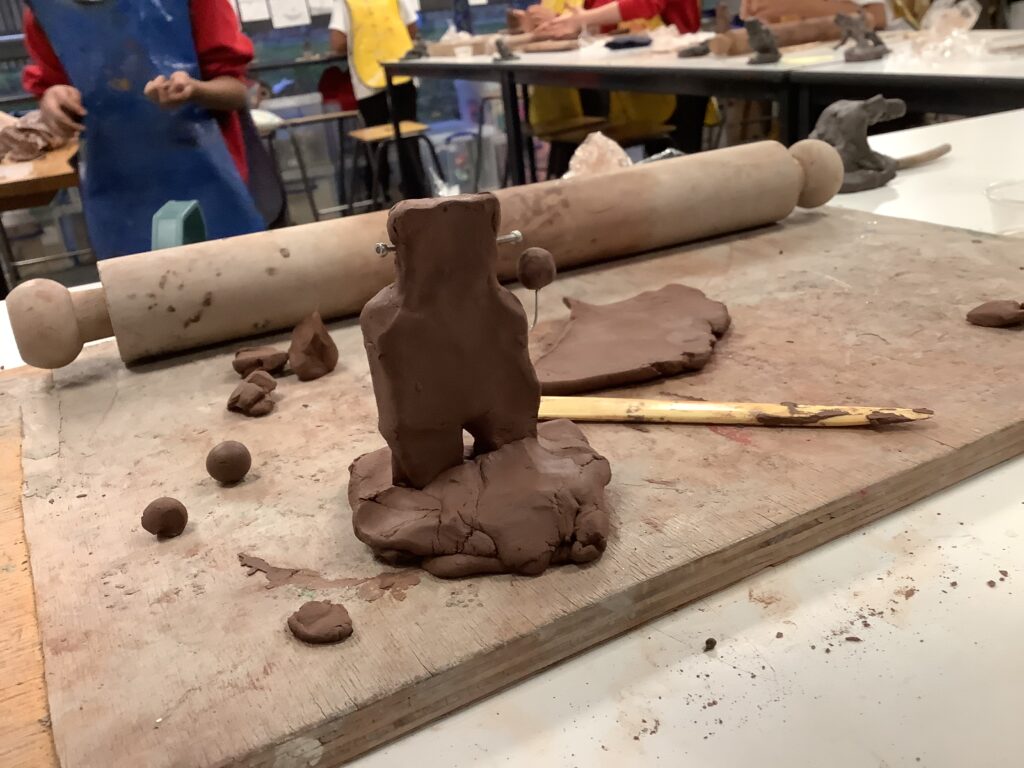
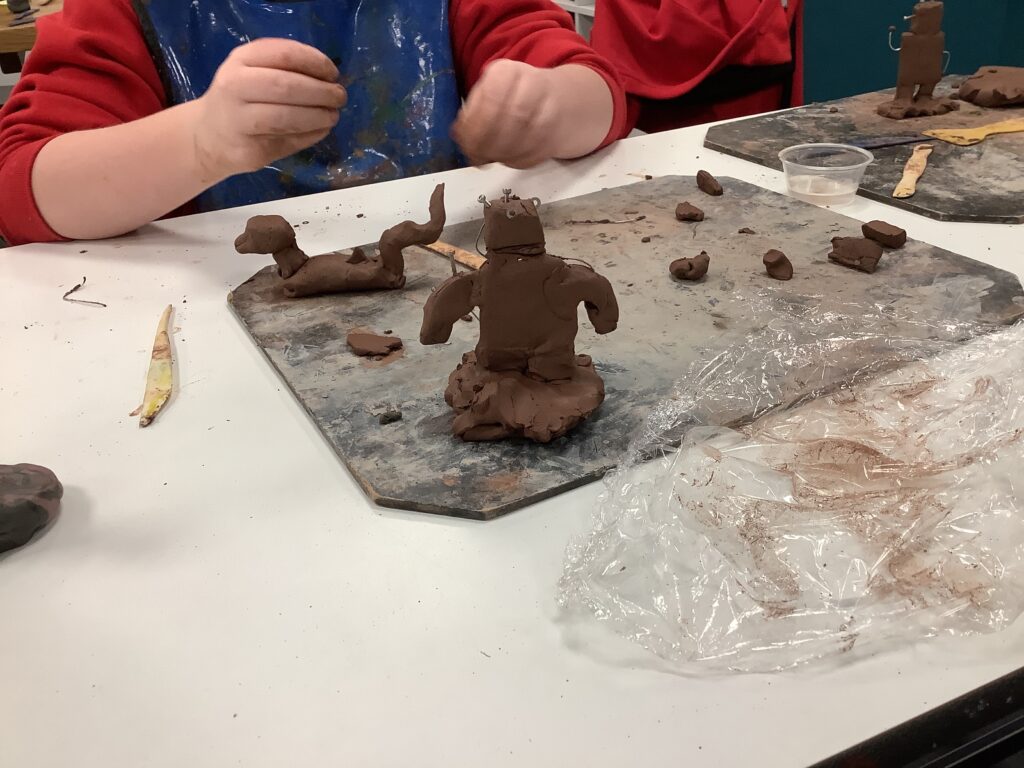
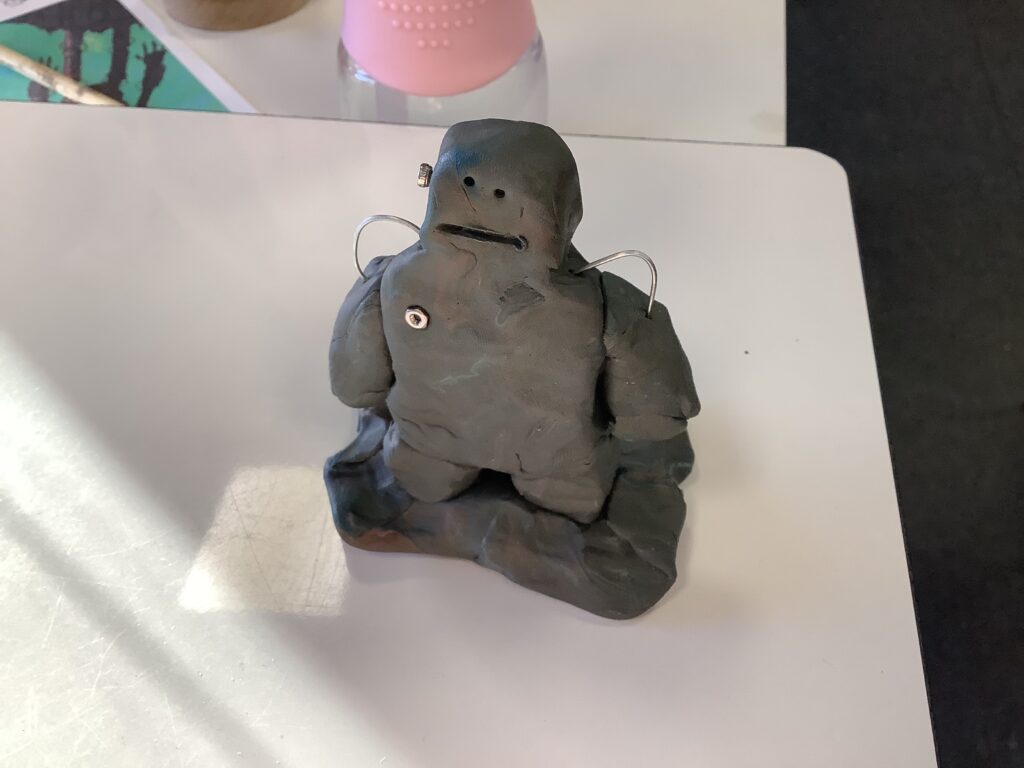
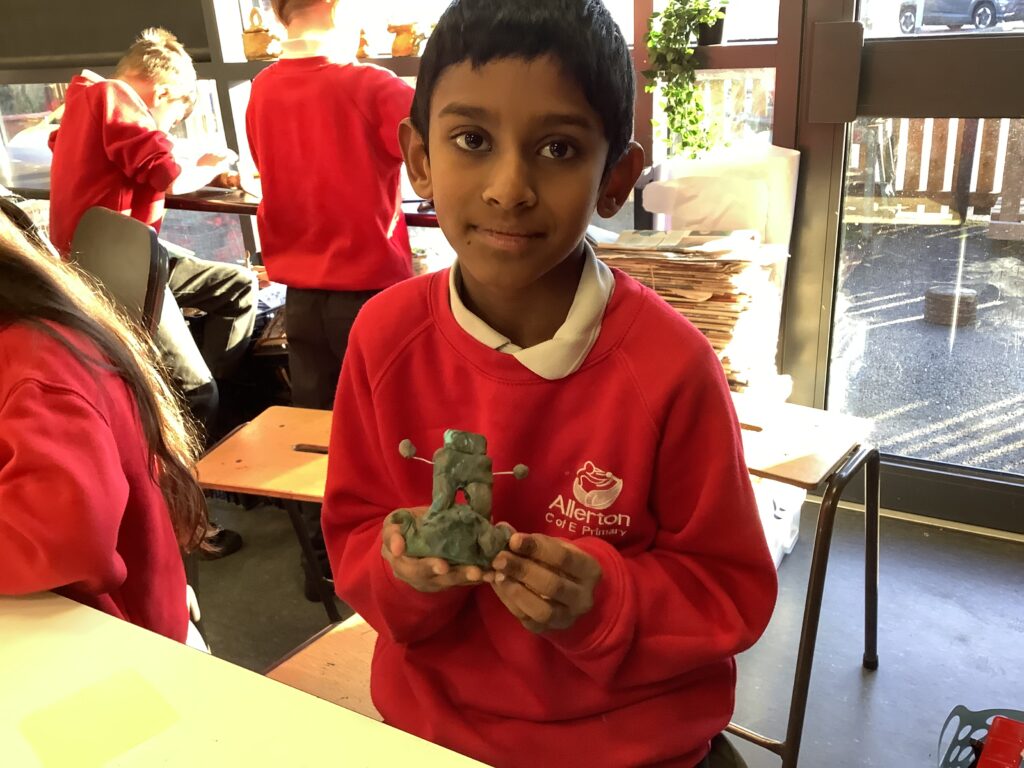
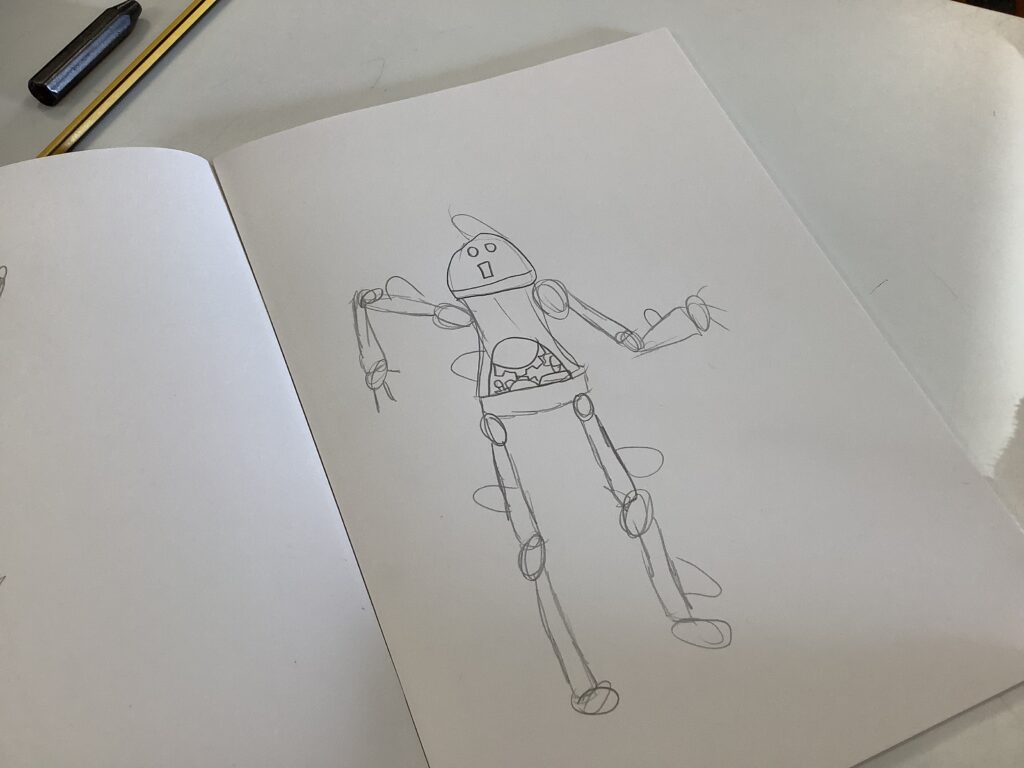
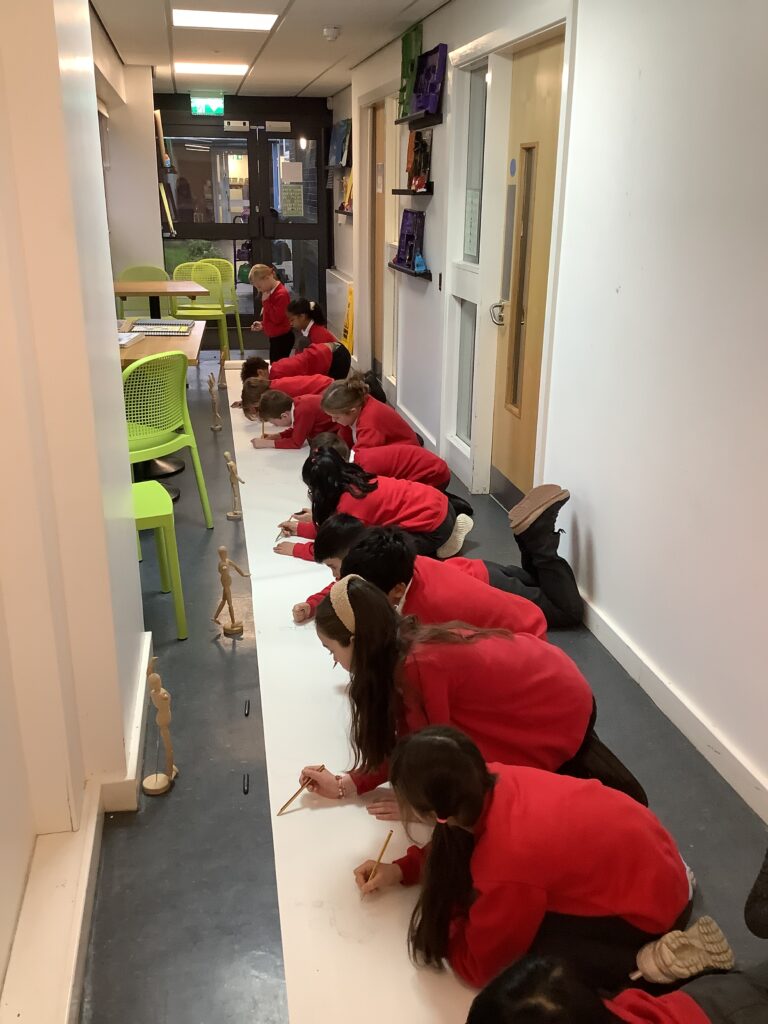
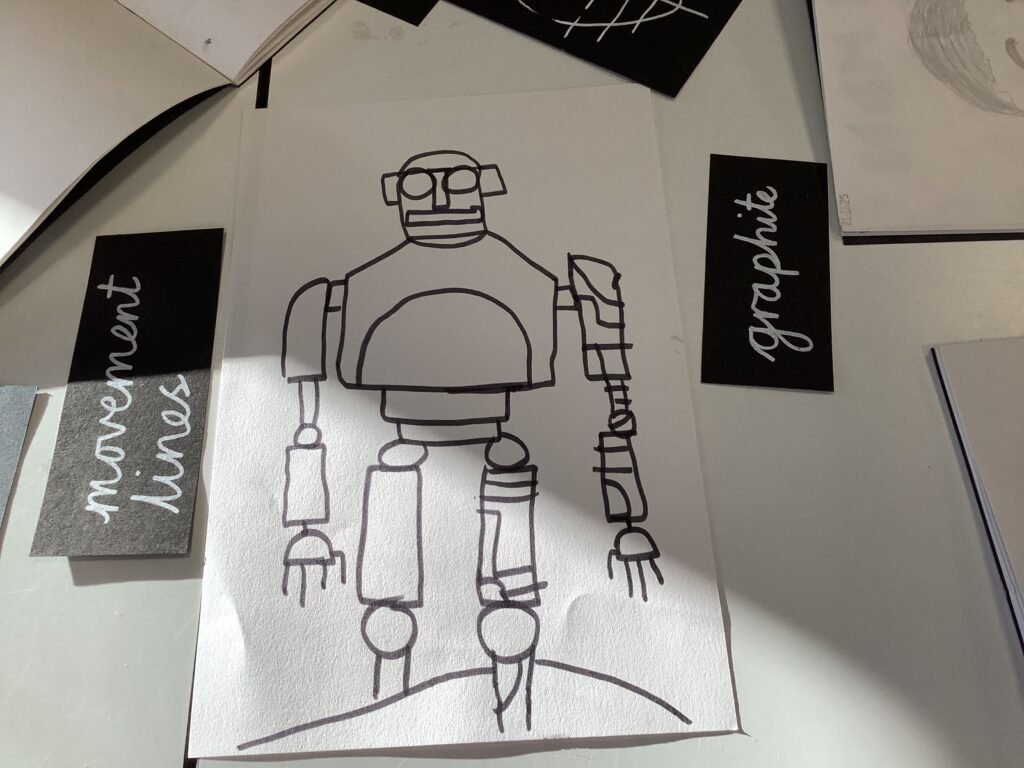
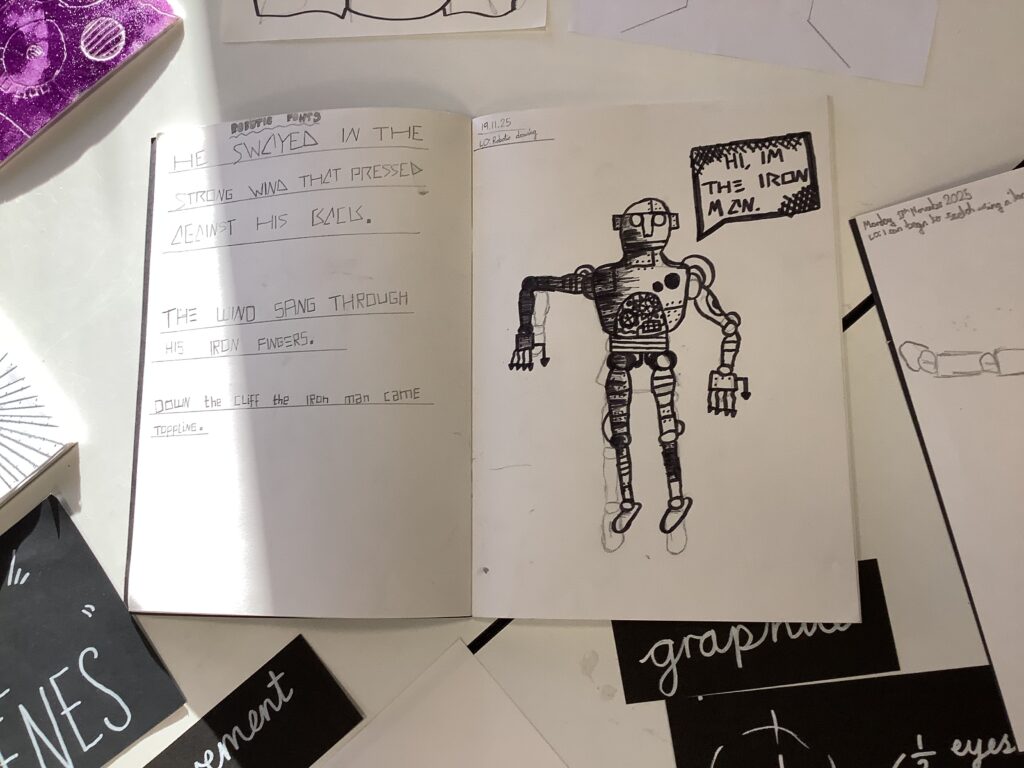
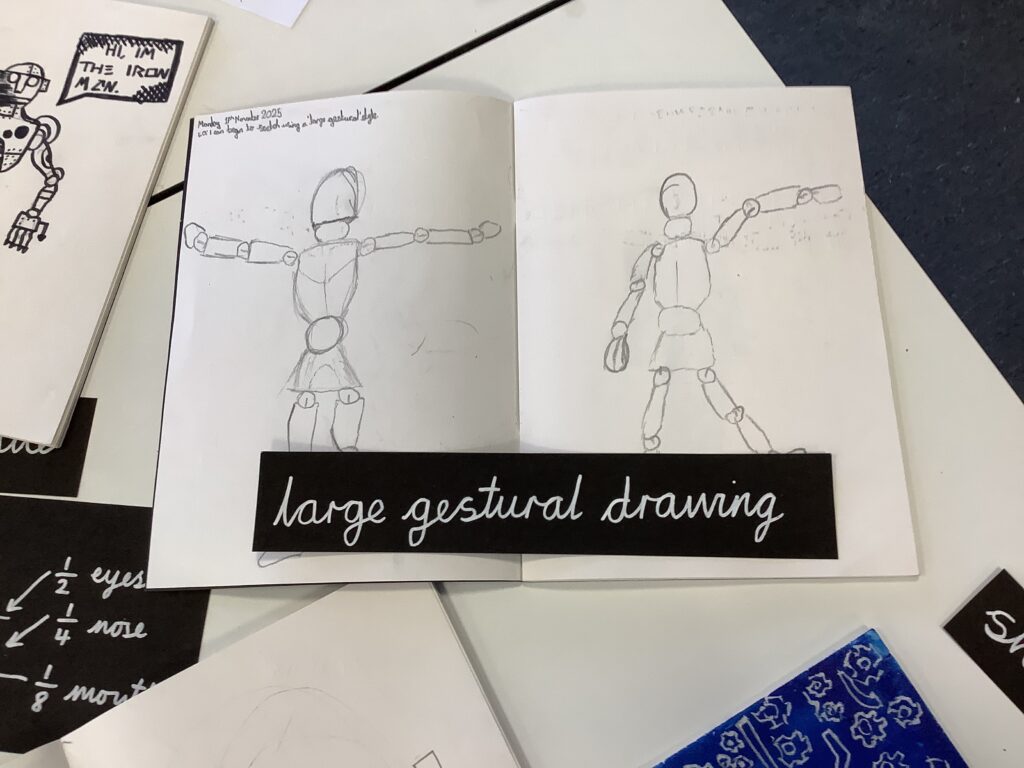
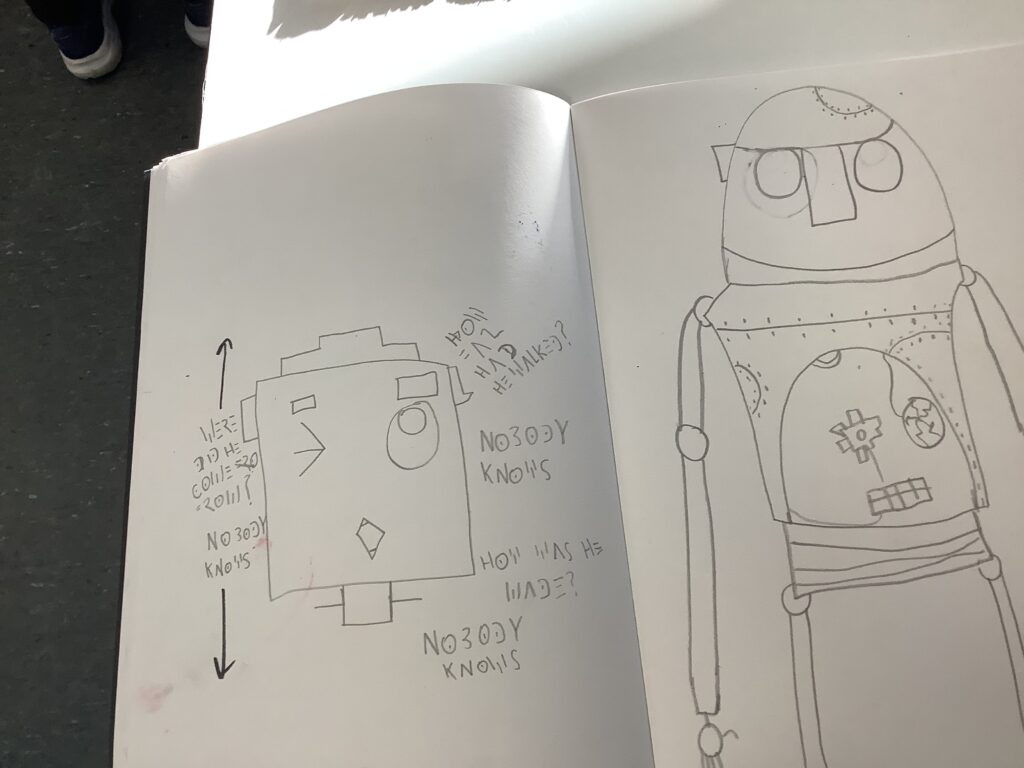
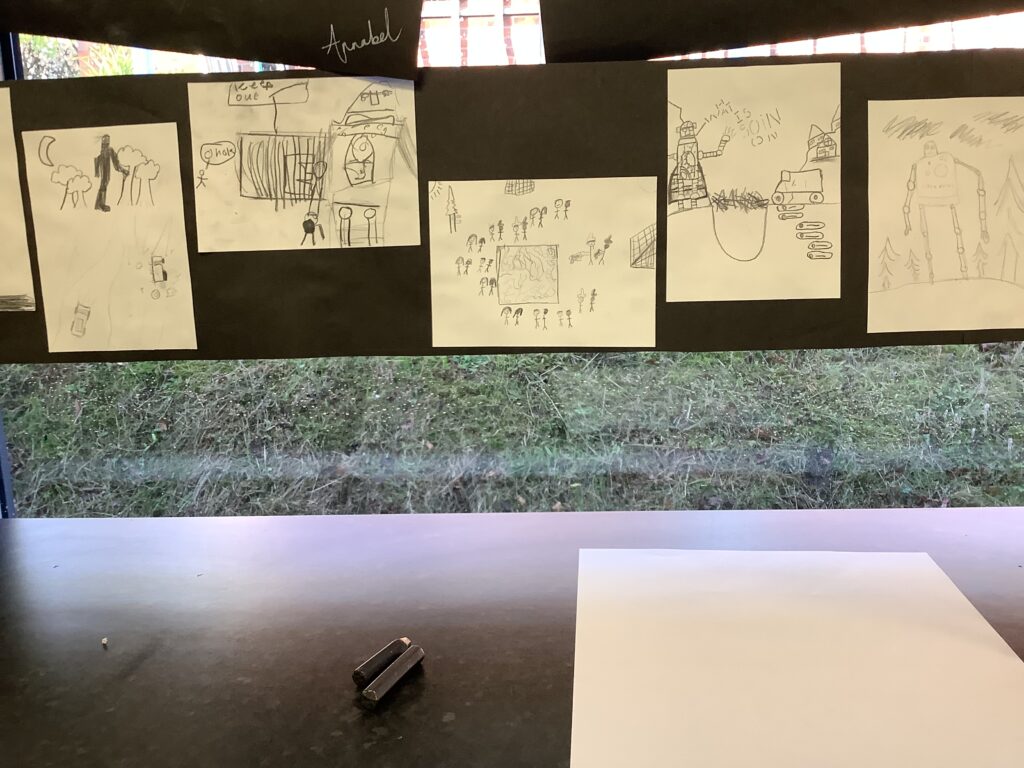
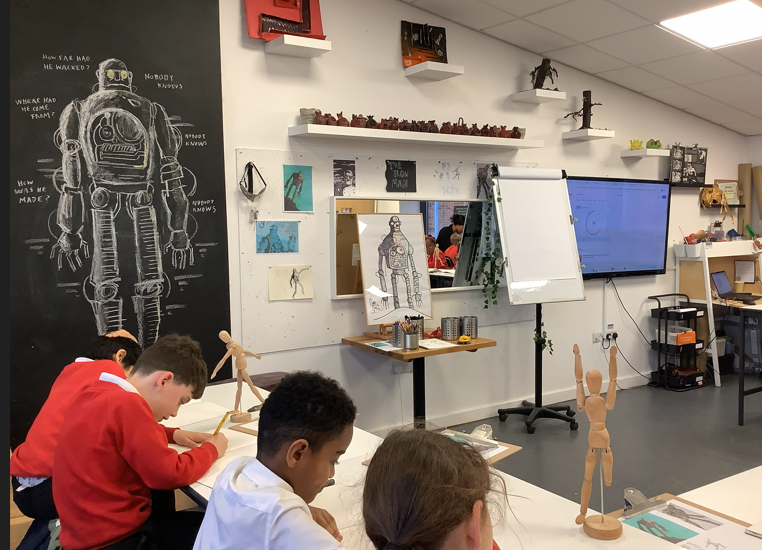
What a special fortnight we had to end the term in 4C. The children’s enthusiasm was unparalleled – they threw themselves into every part of the process, took risks and helped one another throughout the two weeks. One of the highlights of the fortnight was the designing of the Iron Man sculptures. First, we practised sketching the human form through proportion work, large gestural drawing and considering movement. We translated this into a more robotic form, thinking about Chris Mould’s iconic design of the Iron Man. After, we manipulated plasticine to replicate the 2D forms we had designed. This process was vital as it took many attempts and reflectiveness to consider the bulkiness of the base, holding the figure in place. There was a lot of discussion around the depth and height of the different limbs to ensure stability and, afterwards, evaluation of ‘What could we do EVEN better next time?’. We used nuts, bolts and wire to fuse into the Iron Man’s form, finally sponge painting it with metallic acrylic. The final installation of the cliff and sea shows that pivotal point:
‘CRASH
CRASH
CRASH
Down the cliff
The Iron Man came —
Toppling head over heels.’

Thank you 4C for your passion and curiosity.

4DA – The Iron Man Stood at the Top of the Cliff

Over two lively weeks, 4DA embraced a burst of studio creativity filled with drawing, printing, dancing and even cooking. Here’s a short look at their fantastic journey.

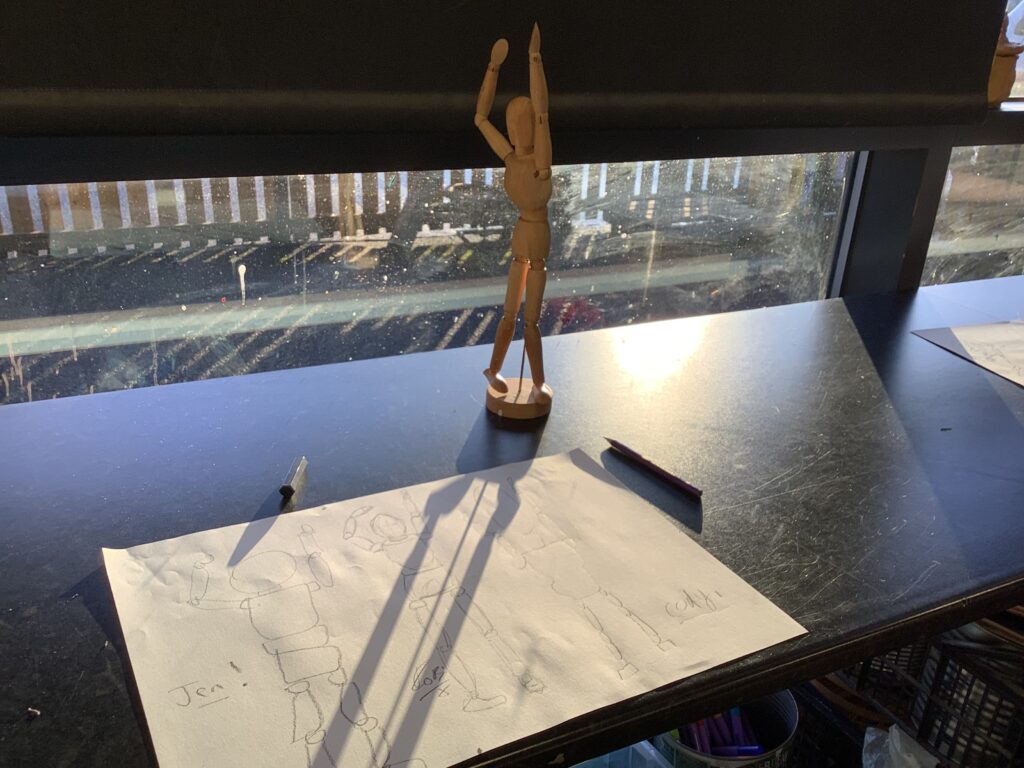
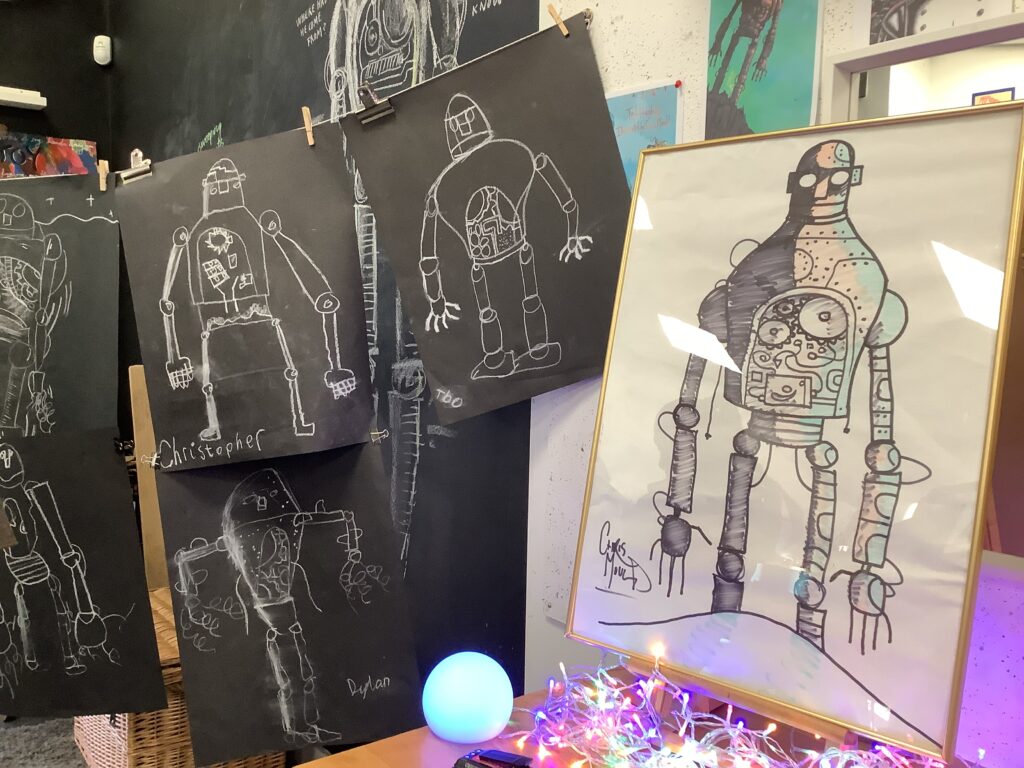
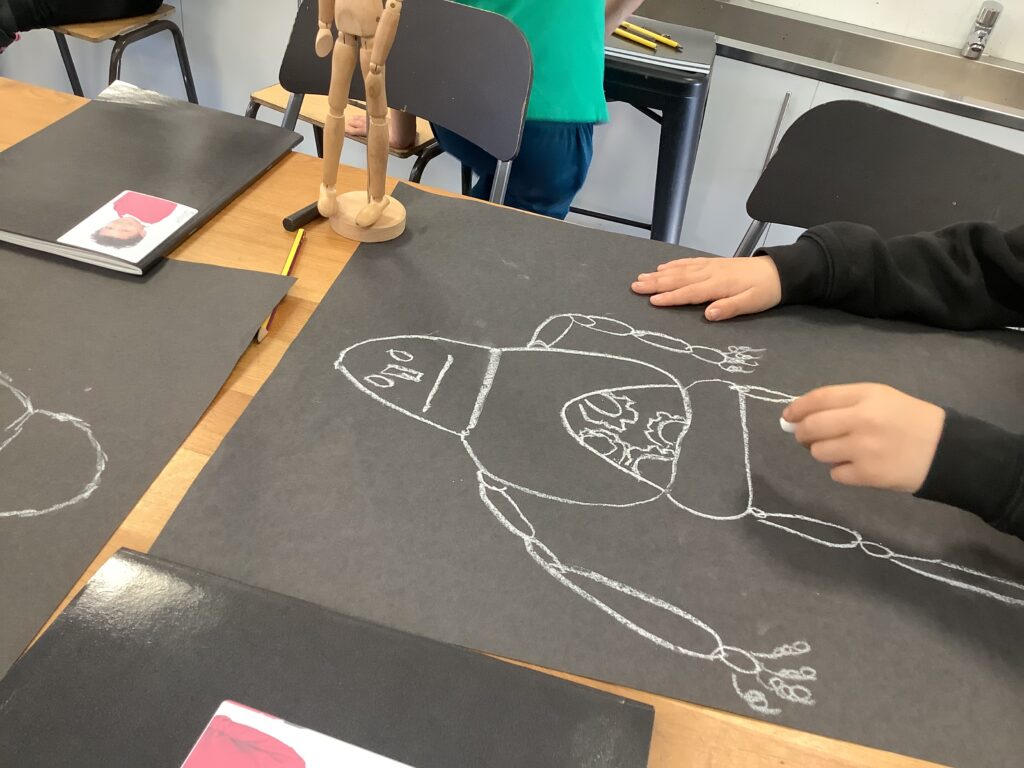
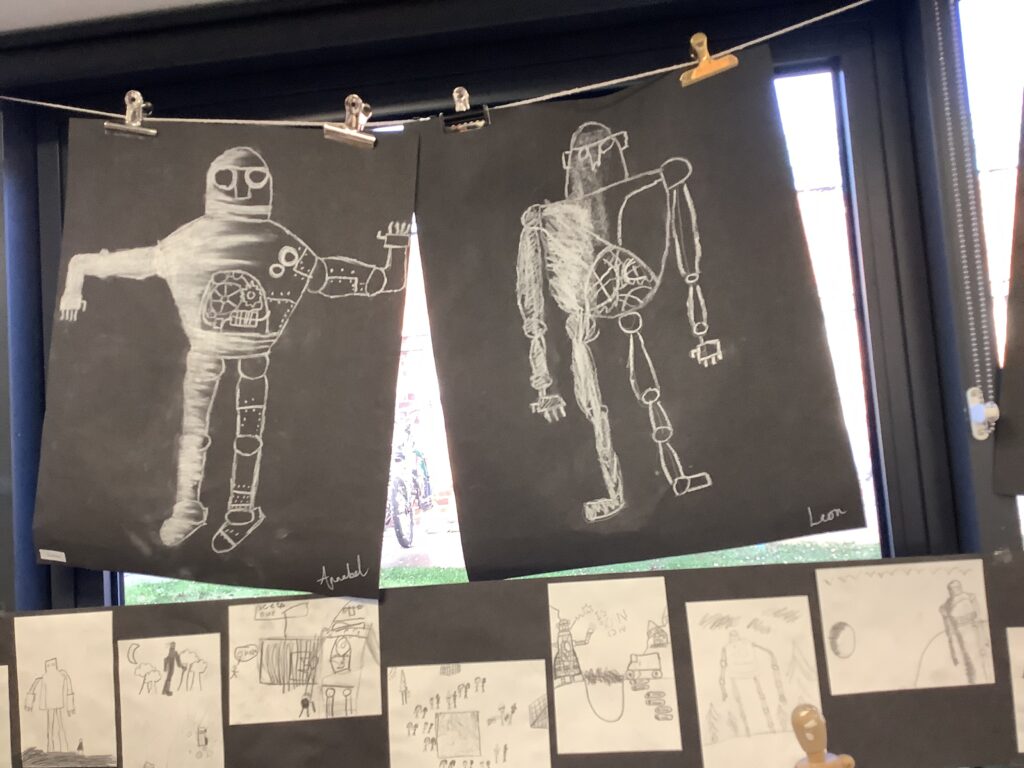
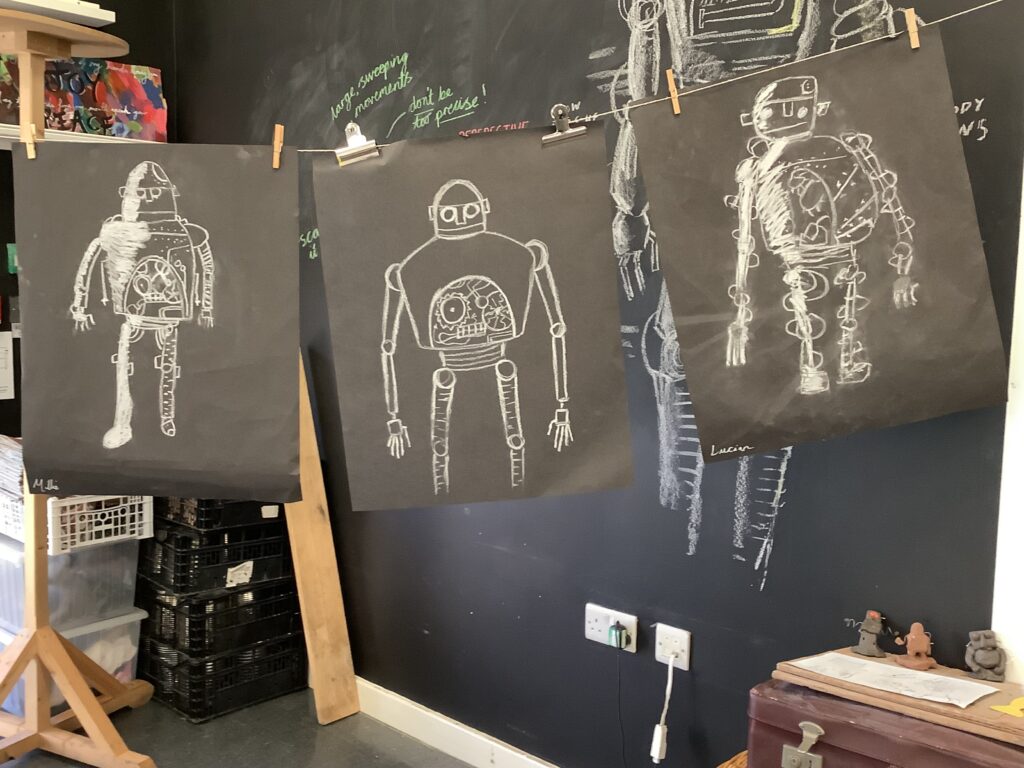
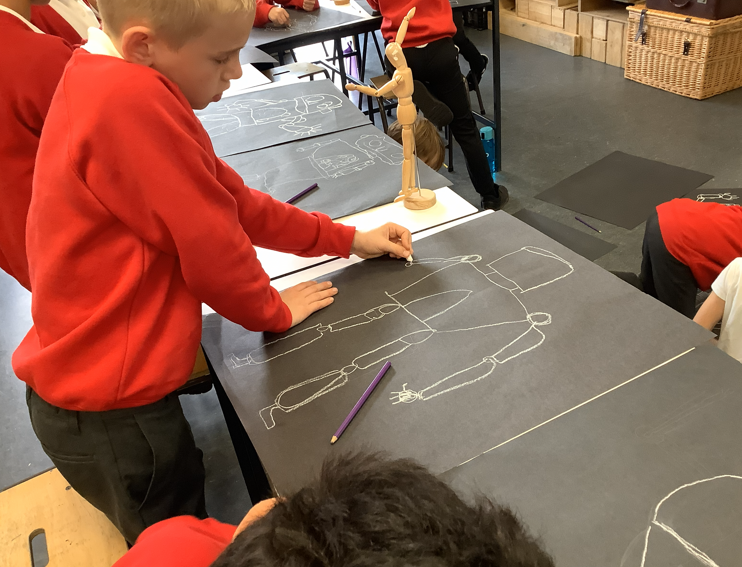
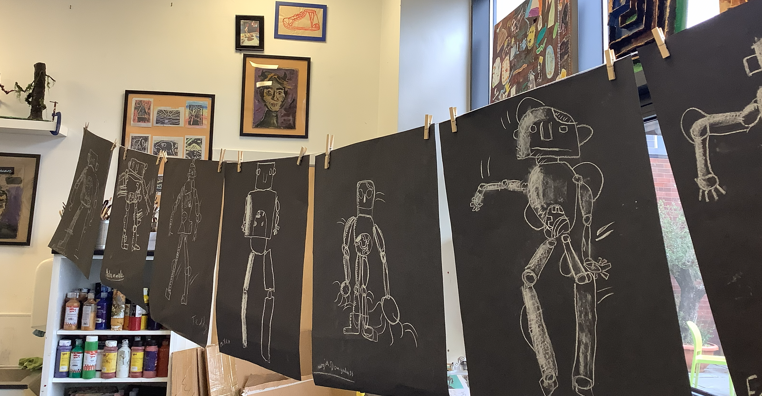
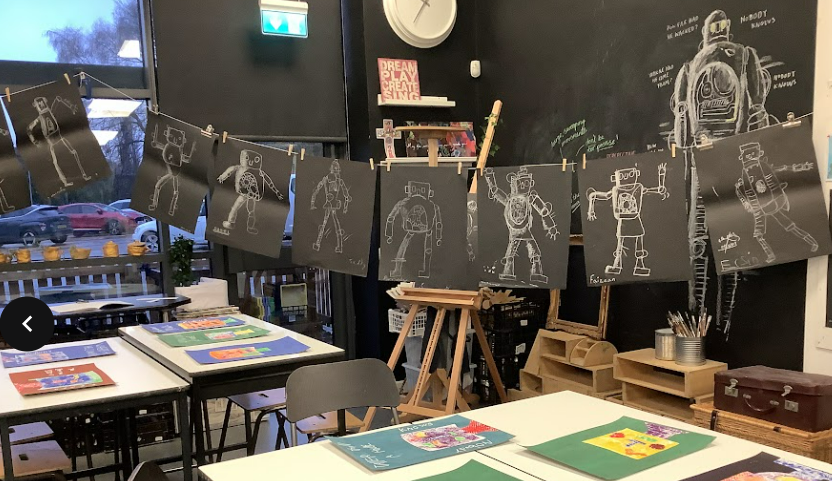
We began with figure drawing to explore how bodies move. Pupils used large, gestural drawing to capture action quickly then applied their understanding of proportions as they shifted into designing Iron Man–style robots. They practised scaling up and sizing up and finished their bold robot artworks in chalk on black paper adding expressive shading and energetic movement lines.

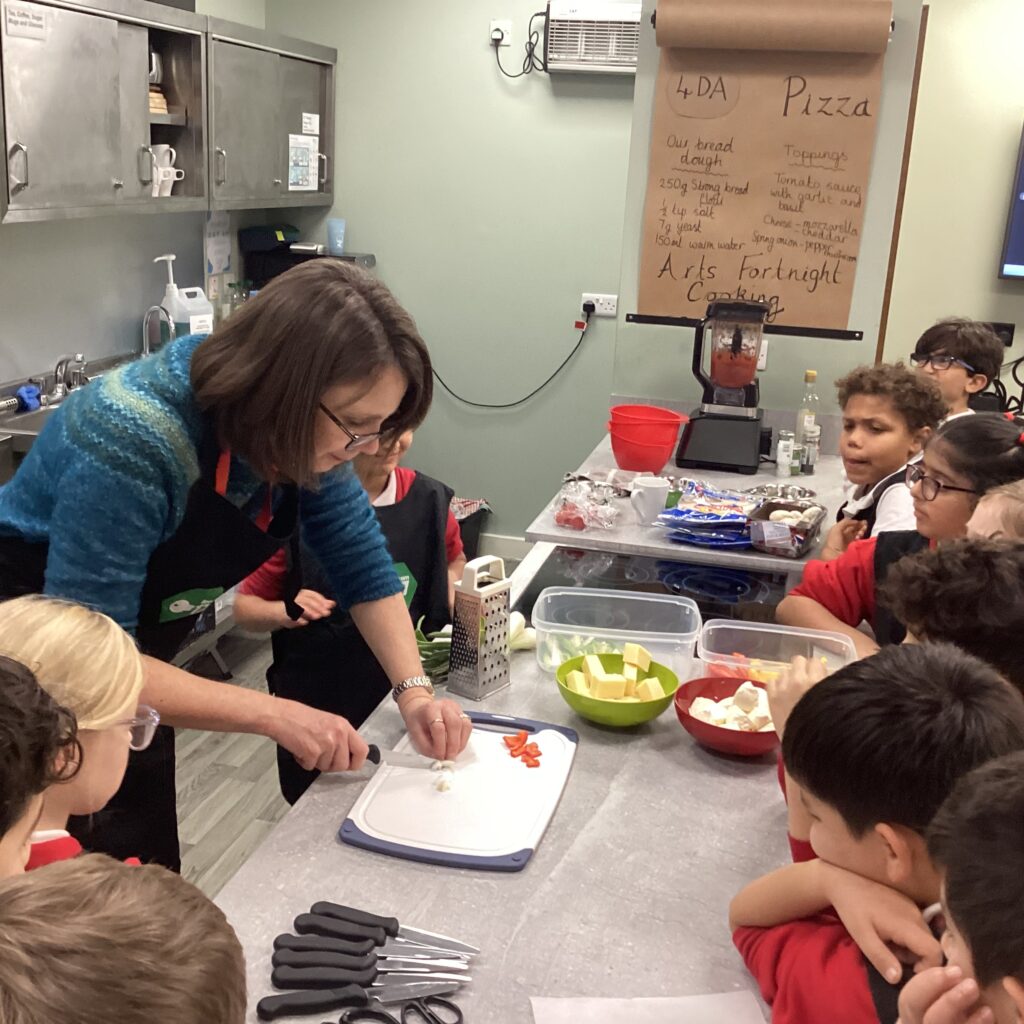
At the same time, the class developed a dance piece to a Coldplay song which matched the Iron Man theme perfectly. There was also time to join Mrs Elliott for some delicious pizza making.

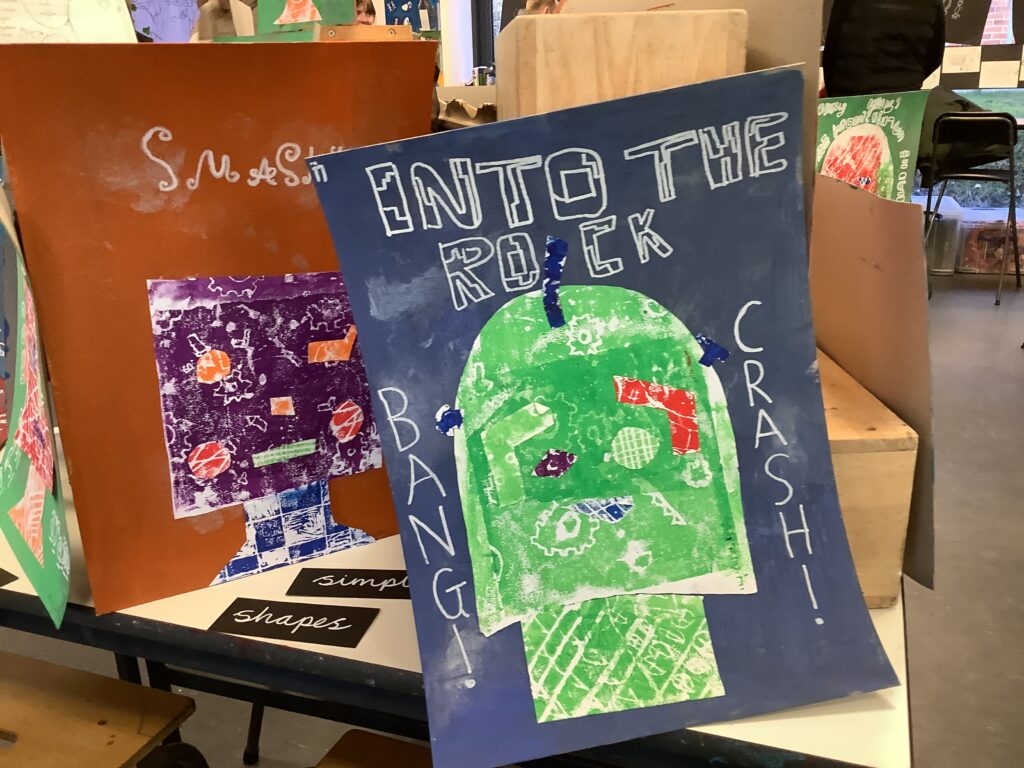
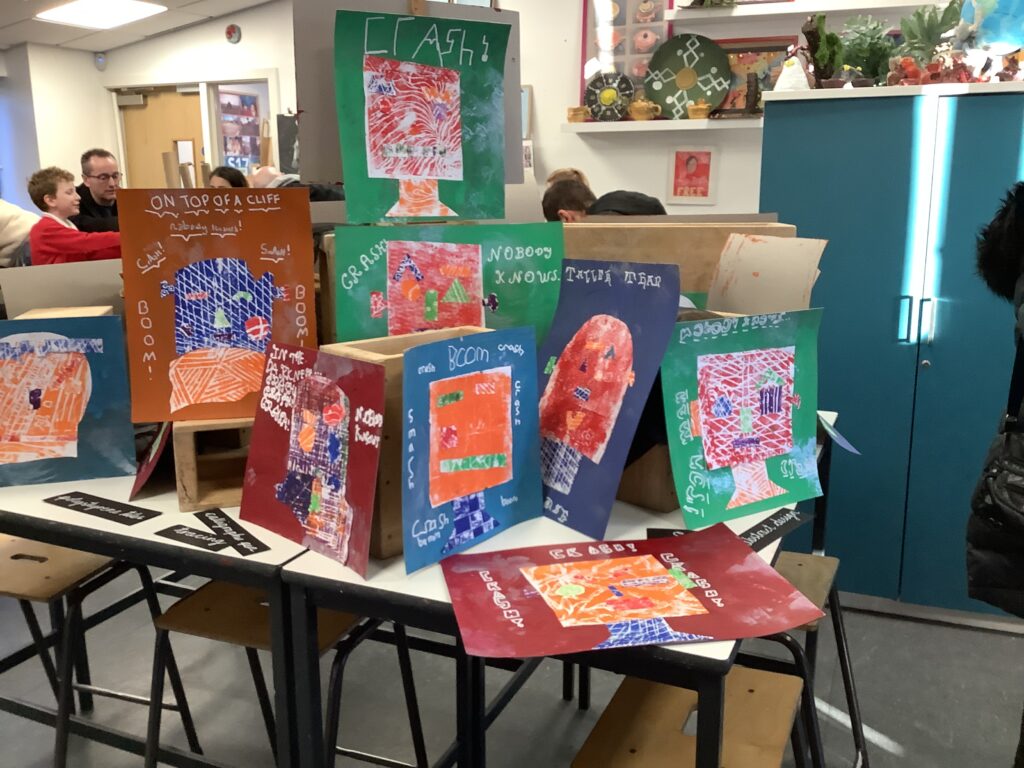
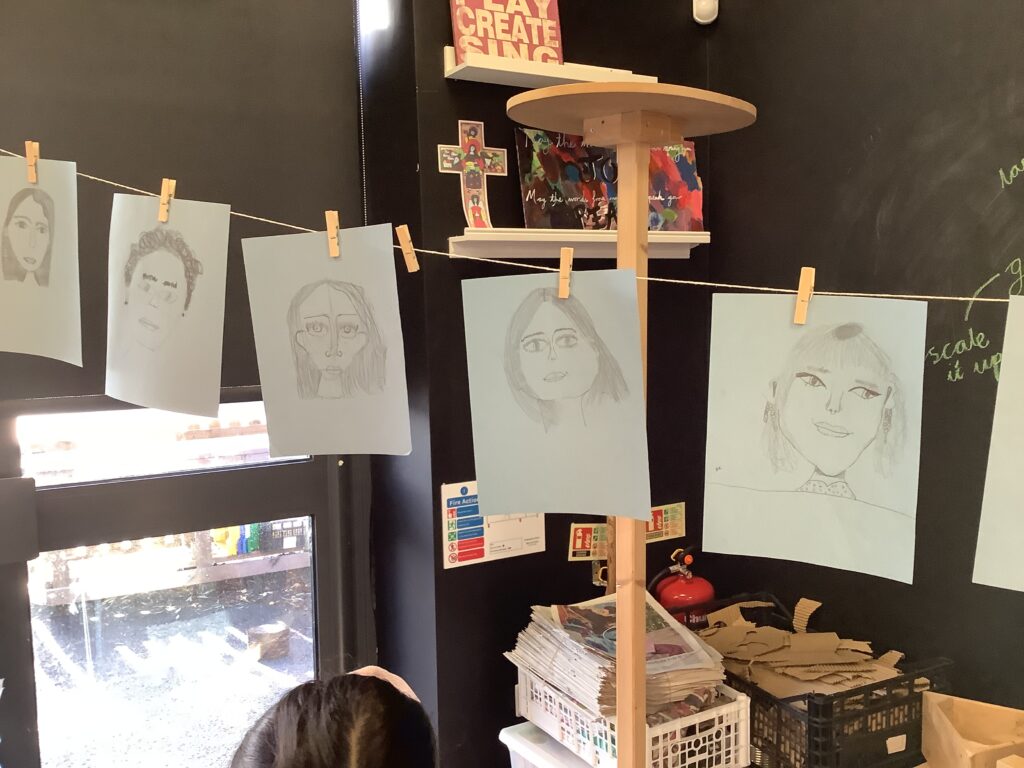
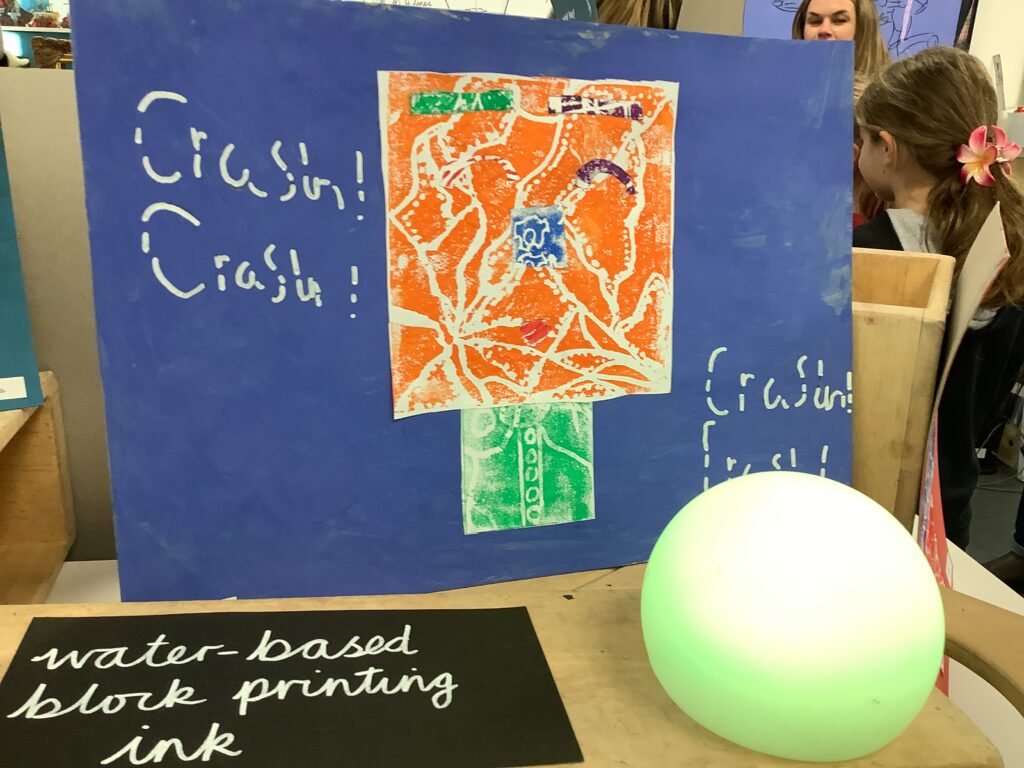
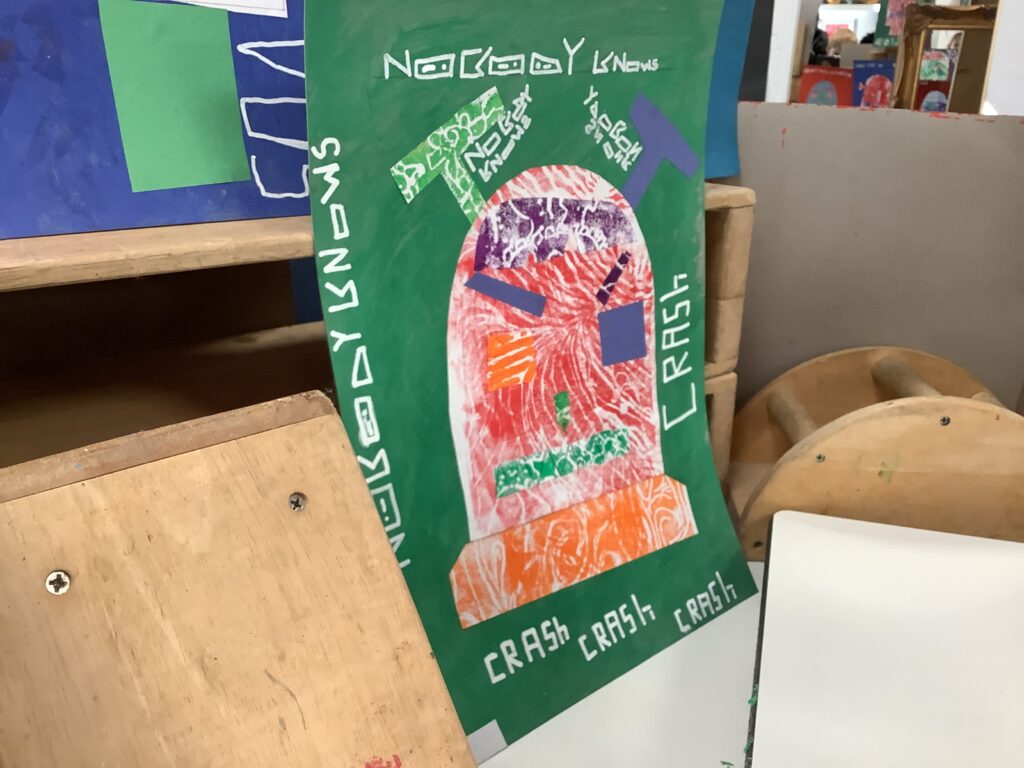
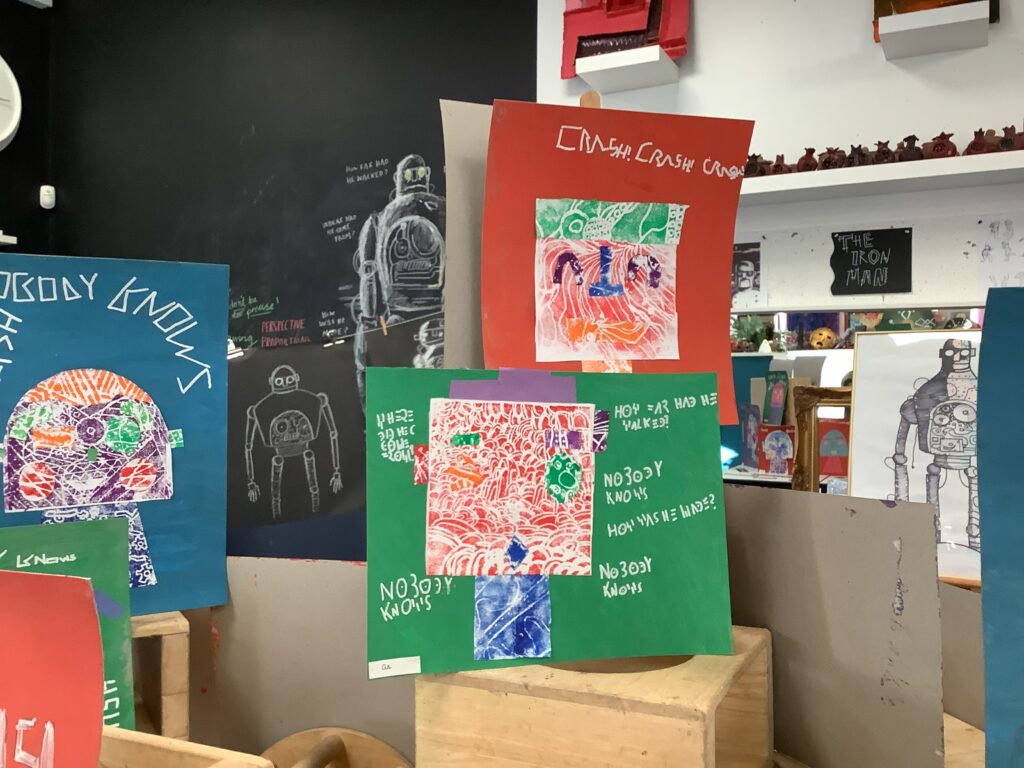
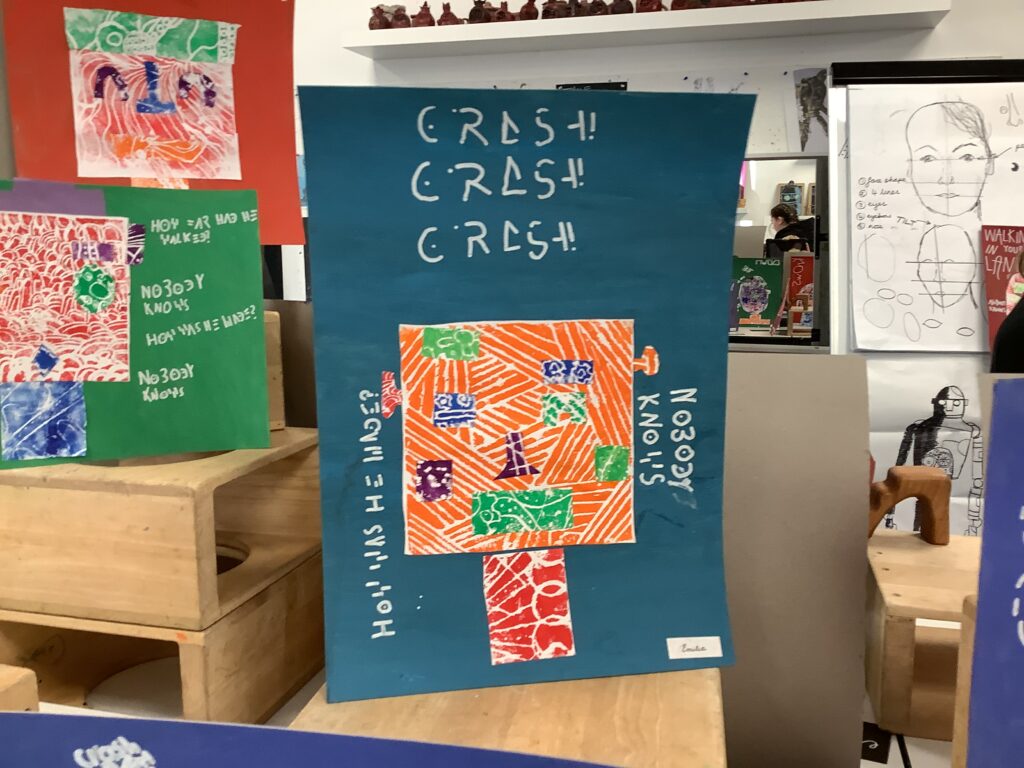
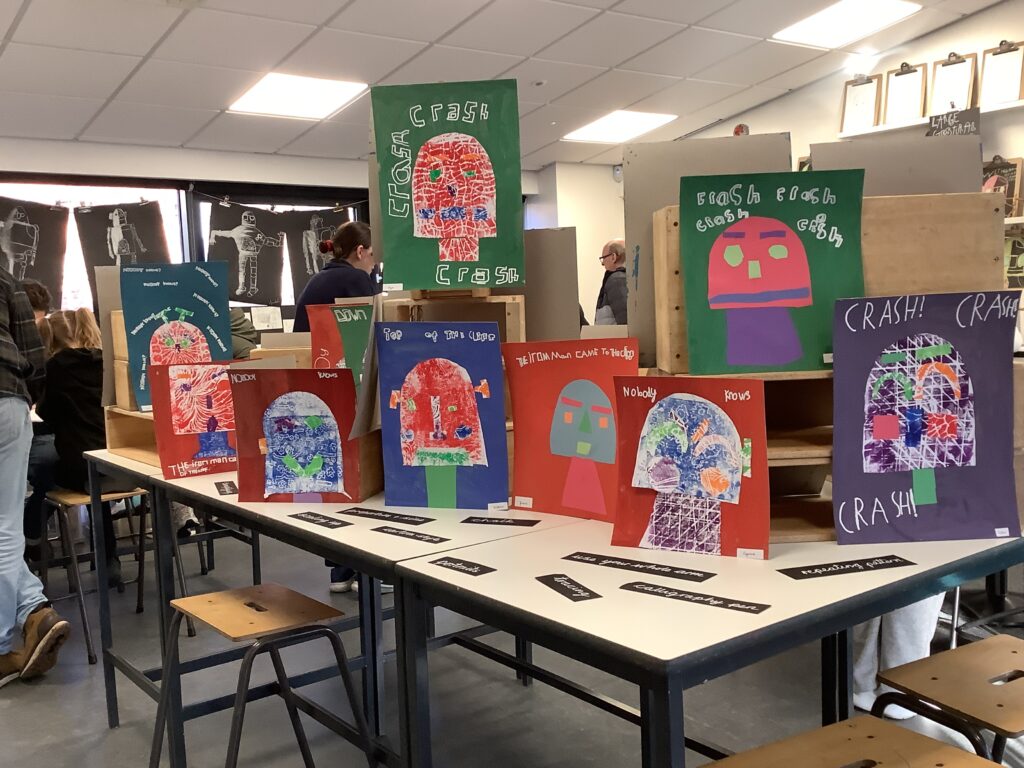
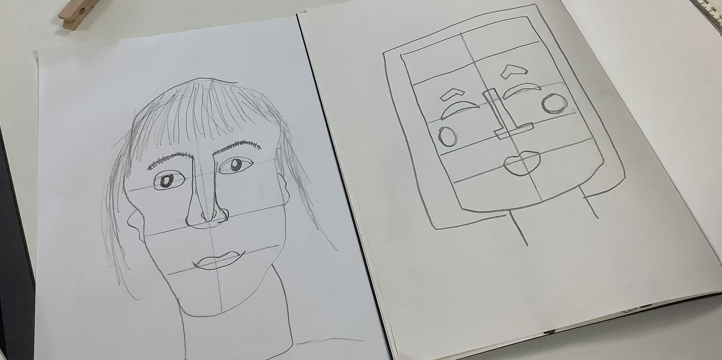
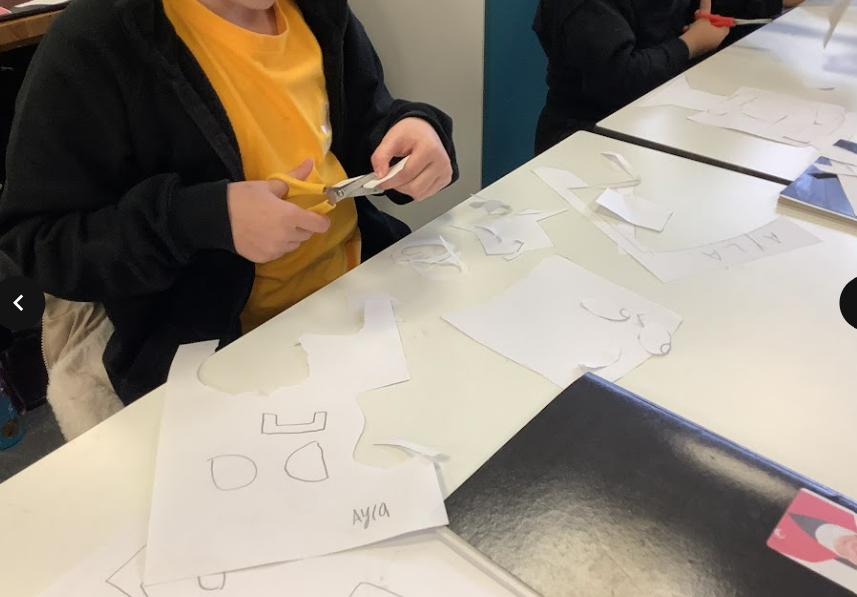
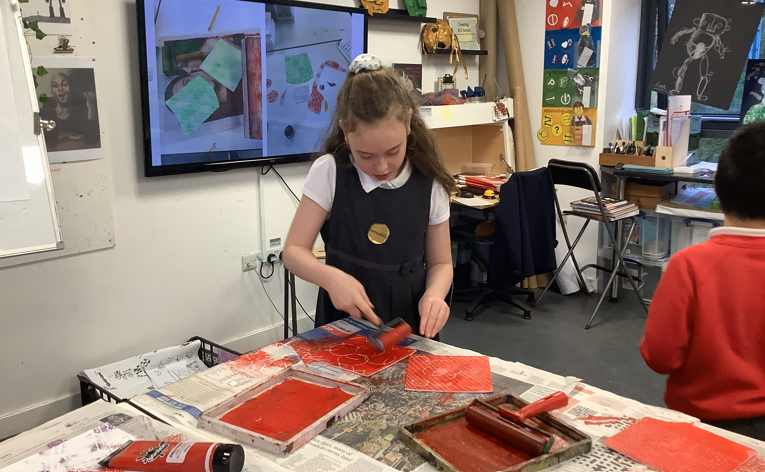
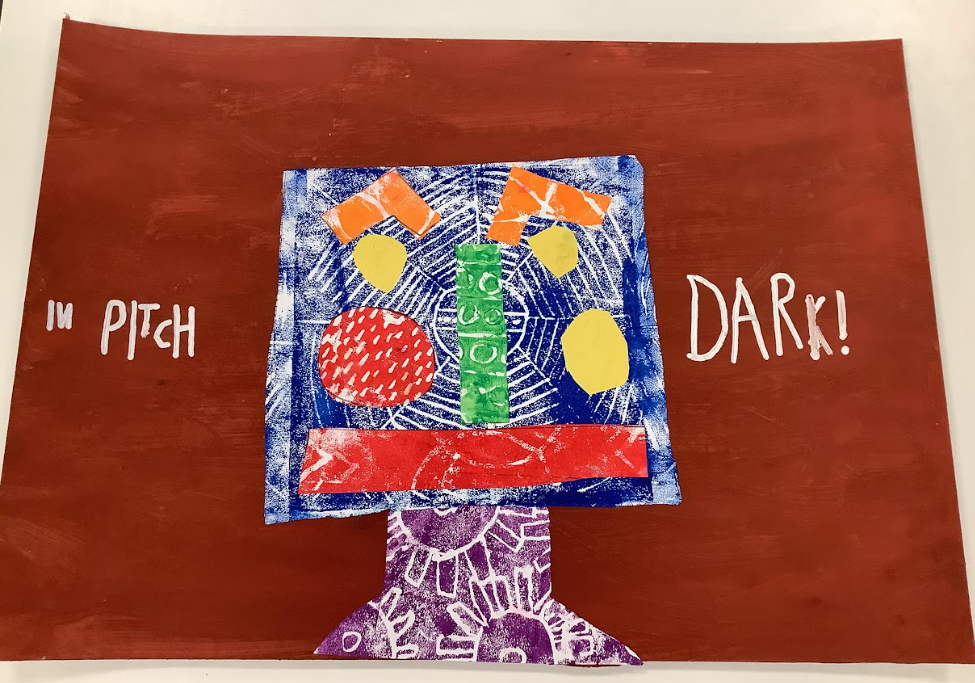
Later on pupils moved into portrait drawing and adapted these skills to invent cartoon robot faces. They cut out the different features then etched patterns into tiles and printed with water based ink printing to add texture and detail. These printed pieces were assembled on backing boards with carefully chosen lines from The Iron Man supported by the typography practice they had done earlier.

A big well done 4DA for your imagination teamwork and brilliant effort throughout Arts Fortnight!
Check out Sam’s shared-writing from the Wasteland unit of Writing during this fortnight:

“I’ll be right there!” Sasha shouted as she blazed into the dense forest. She’d always wondered what it would be like to go to the Treasuring Scrapyard because she heard there was armour for her collection. Navigating through the impenetrable forest, she knew she was there. On top of the gate, she spotted a security camera. TODAY WAS THE DAY!

Sasha suddenly had an idea. She started to burrow under the electric fence but she got zapped twice though. After that, she hunted for the armour, which she heard about. Moments later, the police came barging through the gate. Quickly, she sprinted into a broken place. Then, a lightning bolt hit the gate. In a flash, some abandoned cars toppled onto the broken plane while Sasha quickly peaked outside to check on the police. She felt regret hit her.

It was then that she spotted something a bit unusual. A music box hidden in a pile of broken car parts. It looked a lot like a treasure chest but it had indecipherable patterns on the head of the box. Sasha quickly snatched it from the pile of broken car parts. She started to turn the nob of the music box but it started to play a reversed tune. When it stopped, she was gone…

4A – The Scrapyard

4A’s Arts Fortnight: Creativity, Robots and Radiohead in the Studio

Over the past two weeks, 4A have thrown themselves into an exciting high-energy Arts Fortnight filled with drawing, dancing, printing, cooking, designing and collaborating. The studio buzzed with curiosity, focus and wonderfully messy hands-on making. Here’s a look at what they got up to…

Starting with the Human Figure

The fortnight began with figure drawing exploring how bodies bend, balance and move. Pupils experimented with large, gestural drawing using their whole arms to capture the flow and structure of the human form. This early work helped them understand proportions and observe how heads, torsos and limbs relate to one another.

From Humans to Iron Man–Style Robots

With these fundamentals learned, 4A shifted to designing Iron Man–inspired robots. They applied their knowledge of proportions to mechanical forms and practised scaling up and sizing up their sketches. This project finished with bold drawings in chalk on black paper where pupils added depth through careful shading and dynamic movement lines that made their robotic designs feel alive.

Meanwhile in the hall the children developed a dance piece set to a Radiohead track which matched the story of Iron Man beautifully. The choreography grew alongside the artwork building a wonderful cross-arts connection.

A Tasty Interlude

In between creative sessions pupils also visited Mrs Elliott to make their own pizzas which filled the corridor with delicious smells and happy faces!
Portrait Work and Robot Transformations

Next pupils moved into portrait drawing learning about facial features, angles and expression. They then cleverly transformed this knowledge into simplified cartoon-like robot portraits. Each child cut out the different parts of their robot face and prepared a tile to etched patterns into.

Printing With Shared Designs

Patterns were swapped and shared across the class creating a collaborative bank of textures and motifs. Pupils then used water based ink printing to print onto the various facial features experimenting with layers, contrast and repetition. These prints were assembled onto backing boards to form striking final robot portraits.

To complete their compositions each student selected a resonant lyric from the Radiohead song or a line from the opening of The Iron Man. Earlier typography practice helped them design and letter their chosen words thoughtfully and artistically.

A huge well done 4A your creativity, teamwork and adventurous making have been inspiring. What an incredible Arts Fortnight!
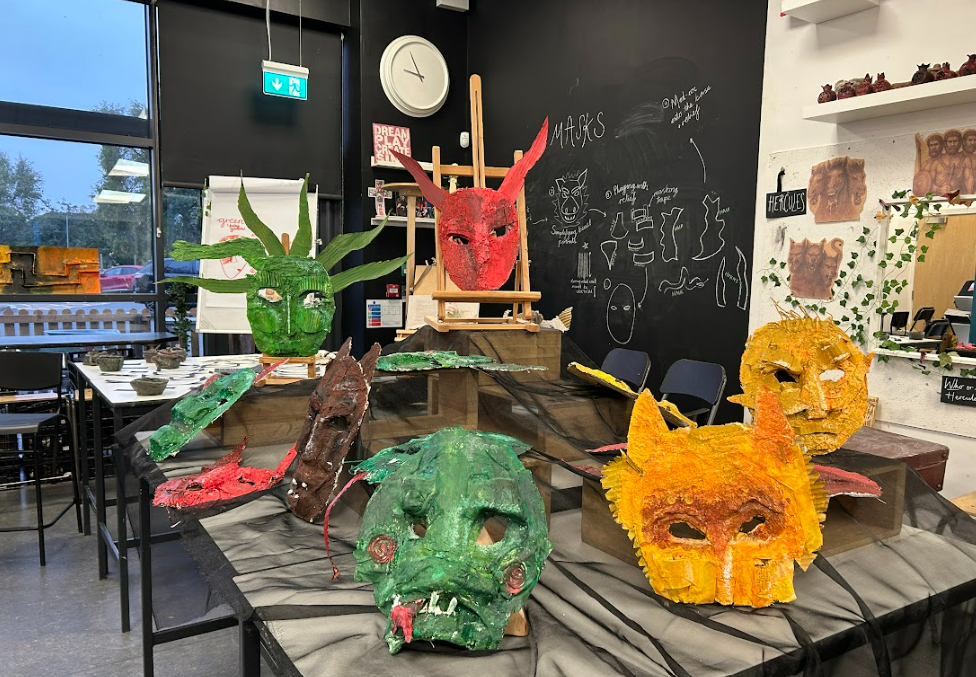
5A – The Twelve Beasts of Hercules

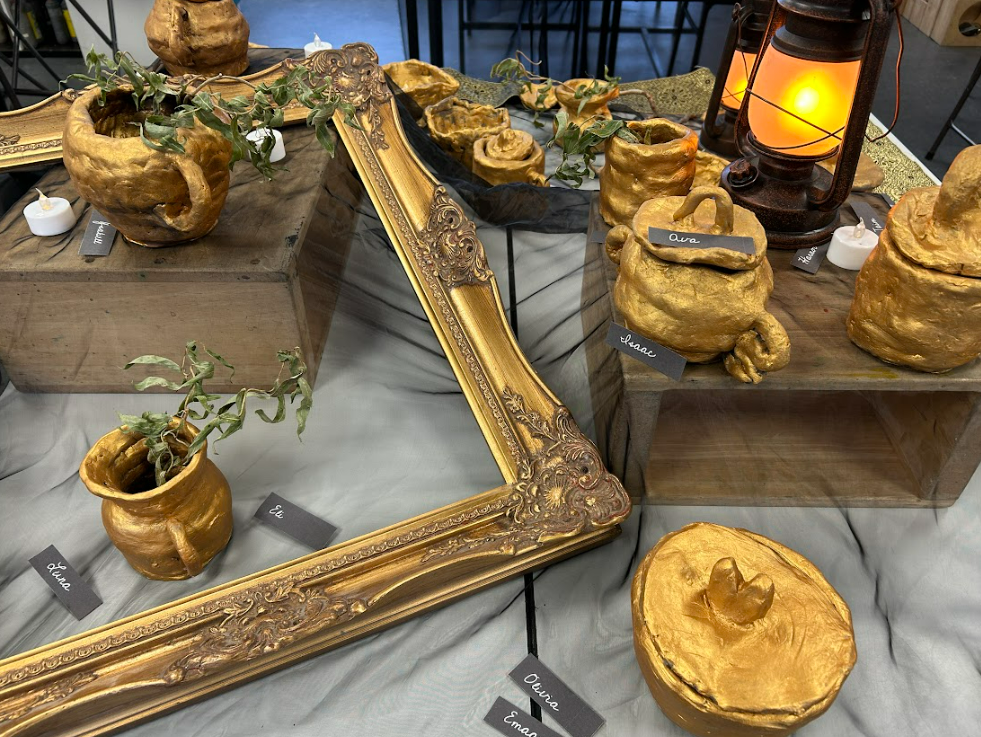
Ancient Greek vessels – reminiscent of King Midas’s ‘golden touch’
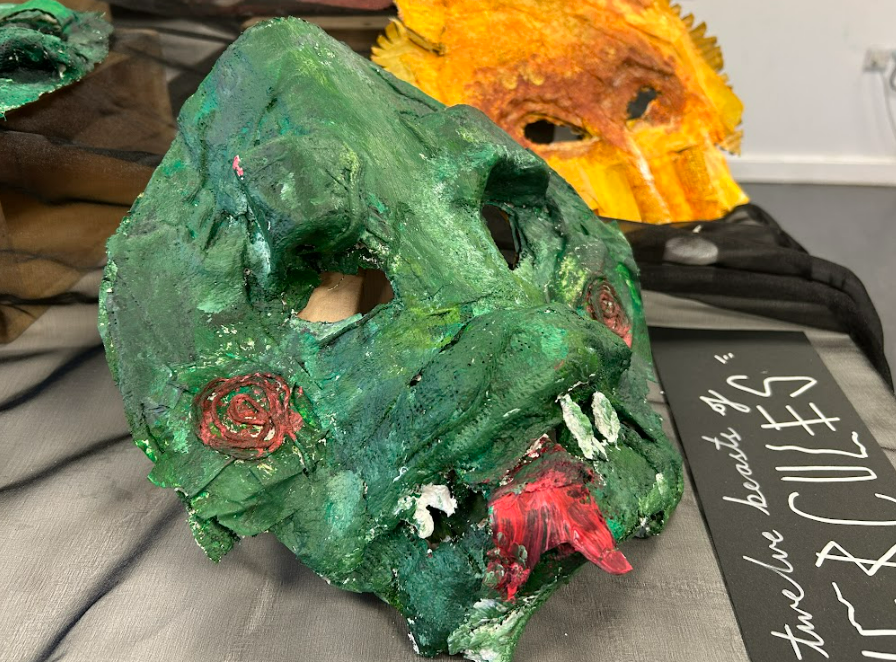
The Lernaean Hydra
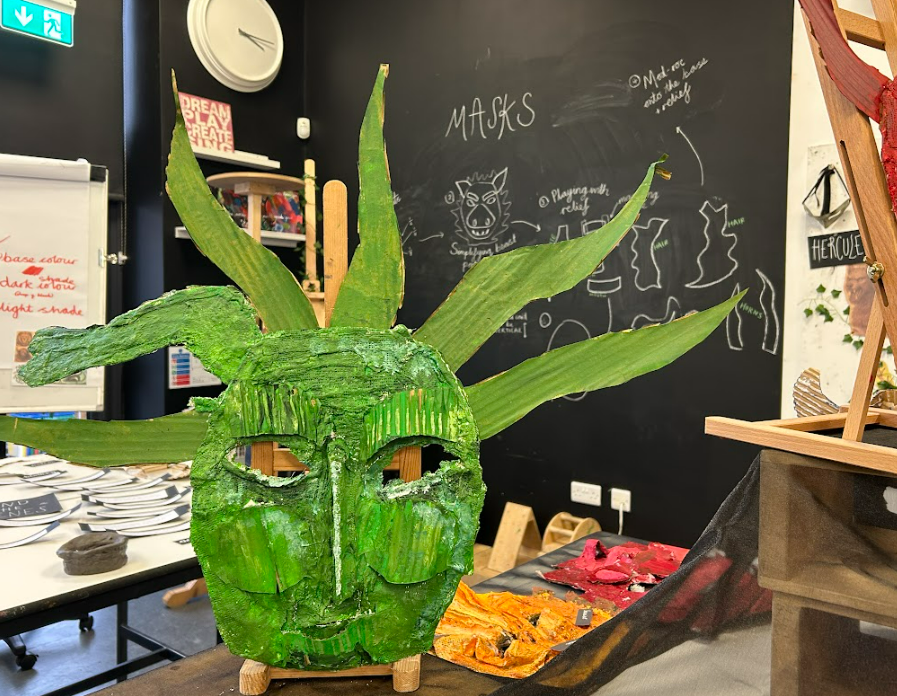
Medusa – one of the ferocious Gorgon Sisters

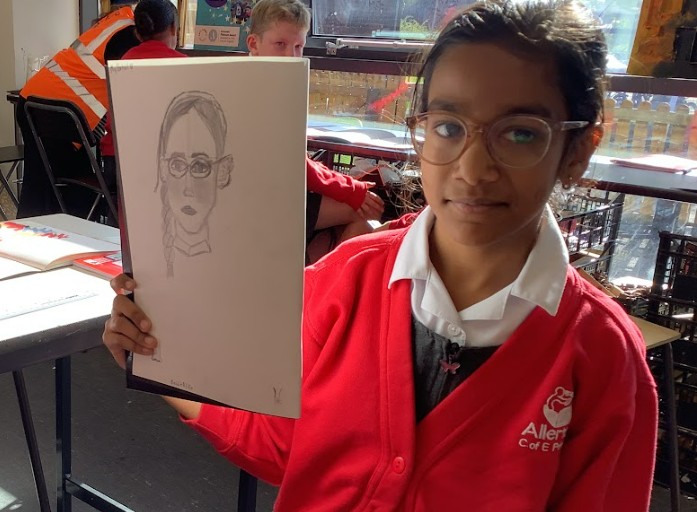
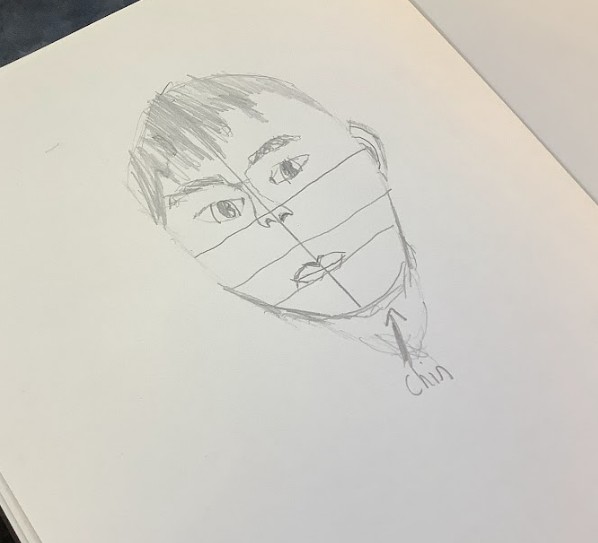
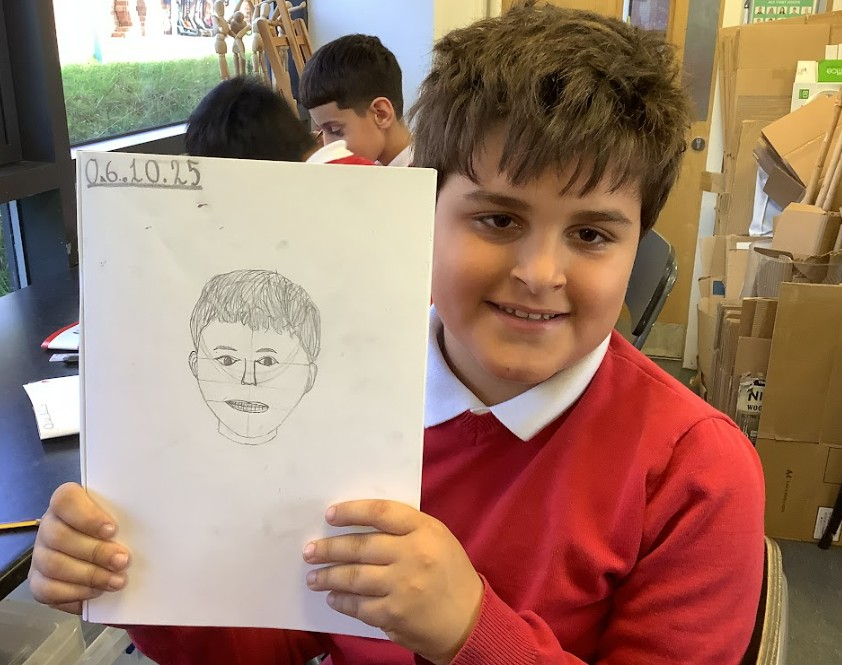
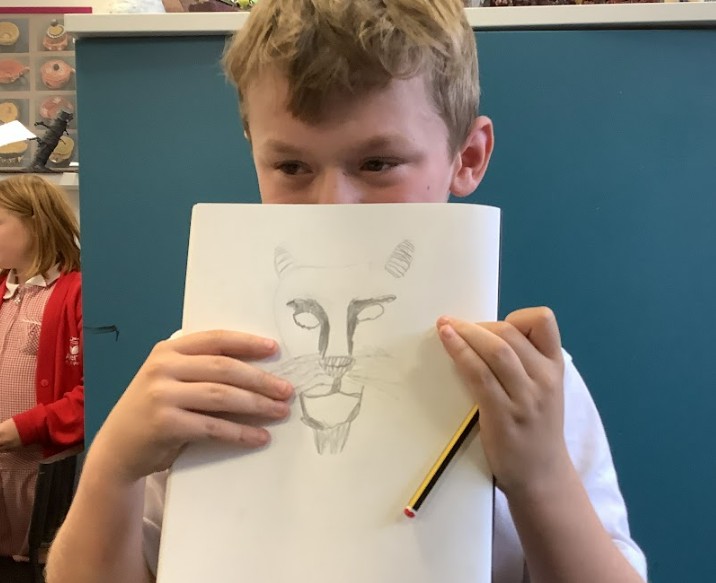
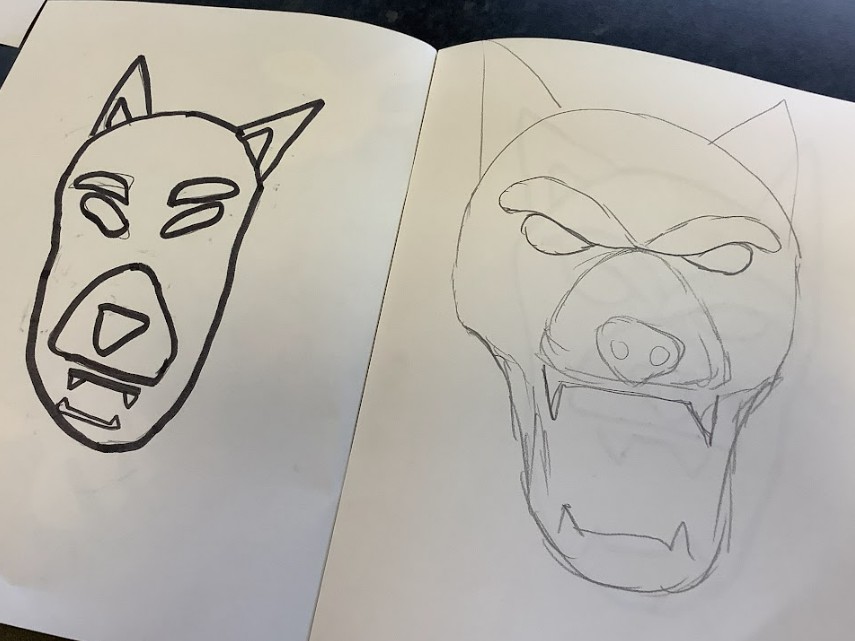
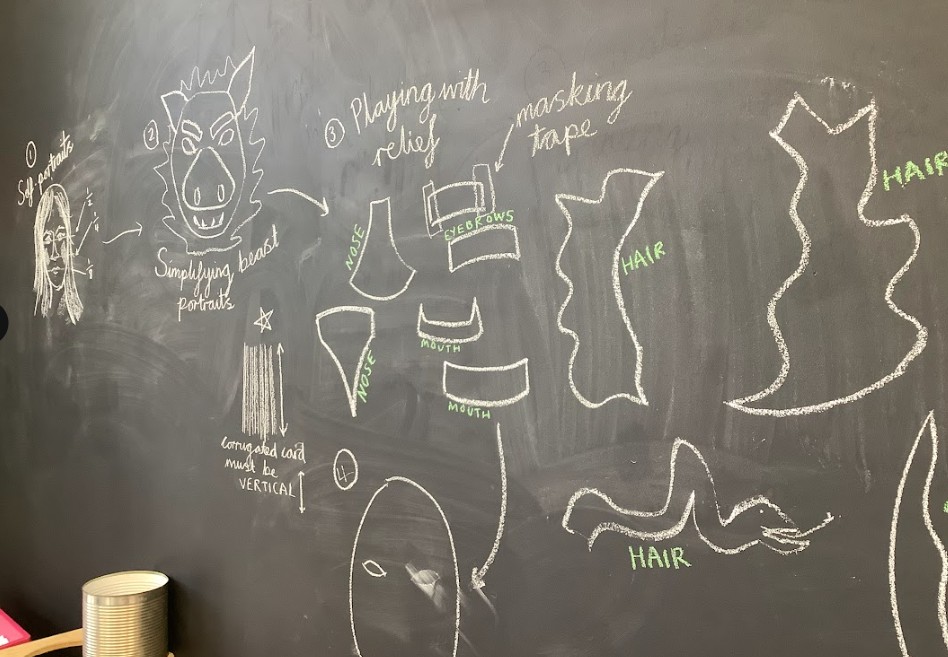
First, we explored self-portraits, learning about perspective and angles to help us understand how to draw faces accurately. We studied where features like eyes, noses and mouths are positioned, using the “halving, halving, and halving again” rule to guide us. Then, we moved on to the twelve beasts of Hercules, thinking about what made each creature human or animal. We experimented with combining features and asked ourselves whether the same facial proportions we used for humans could also work for these imaginative beast forms.

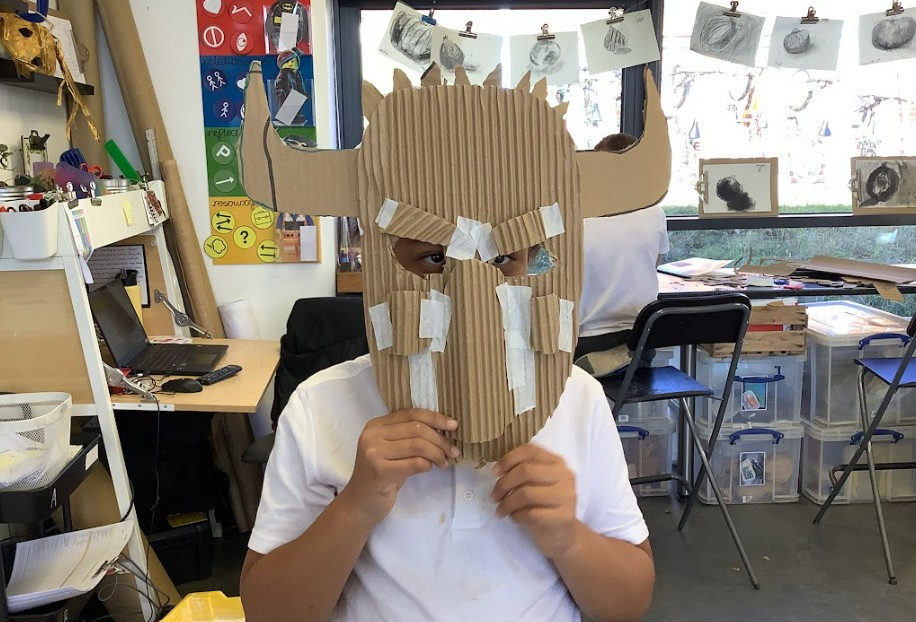
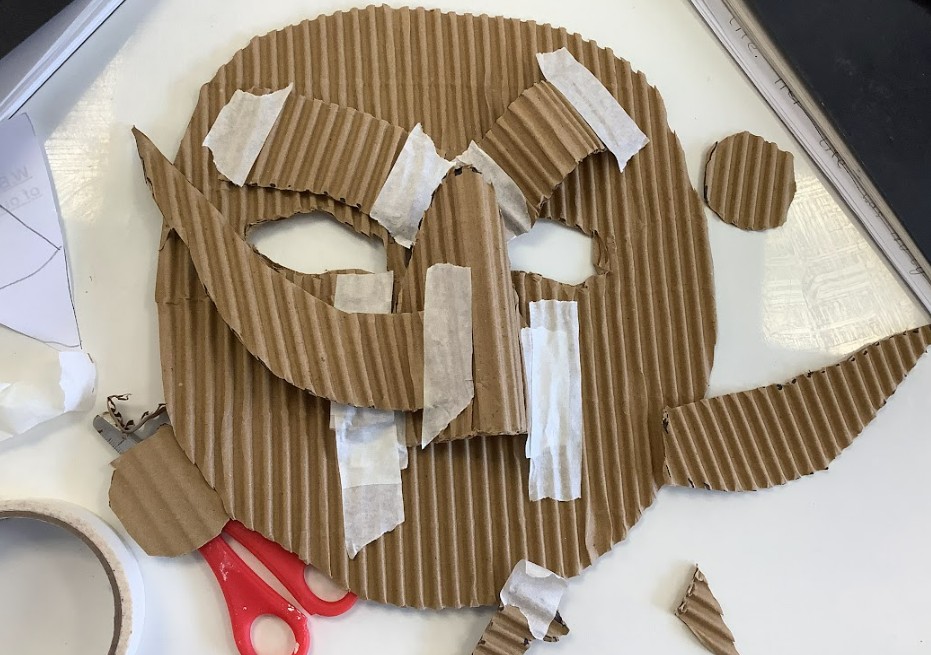
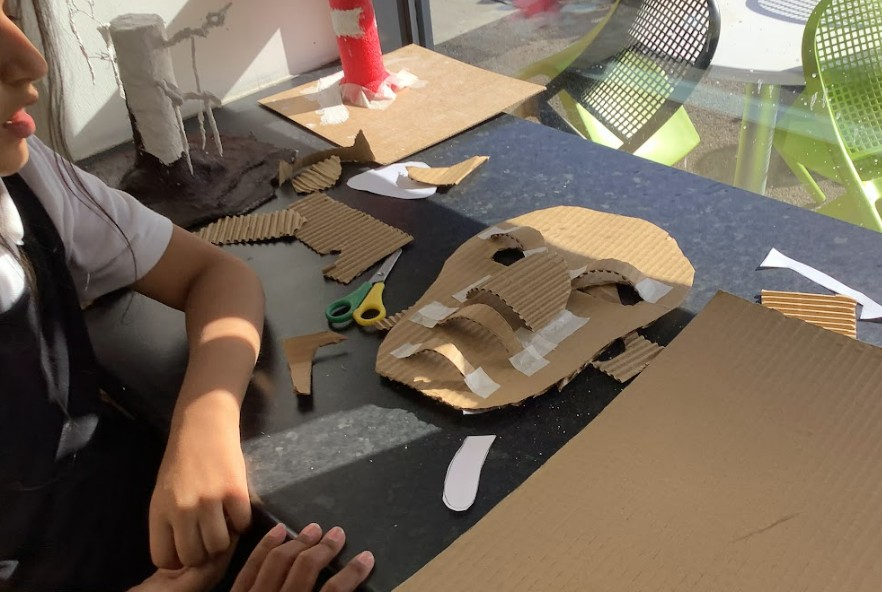
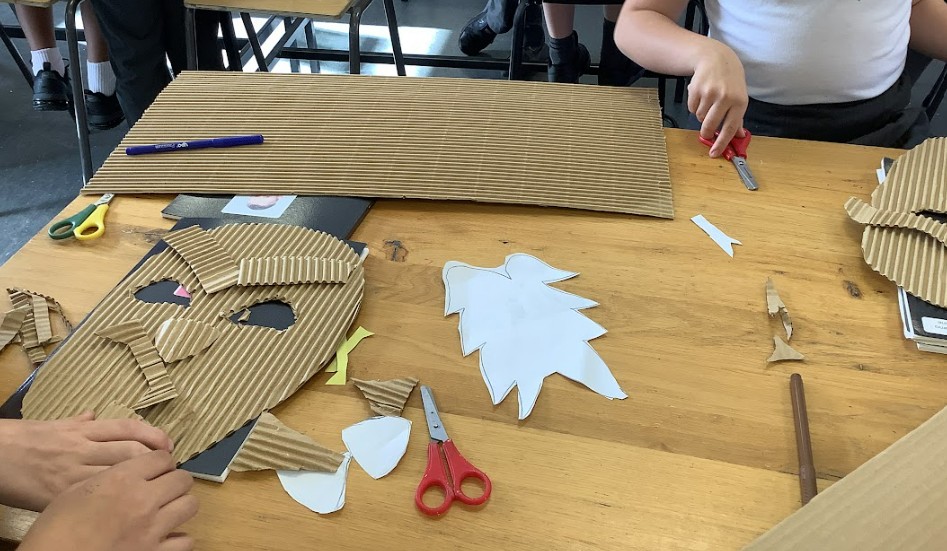
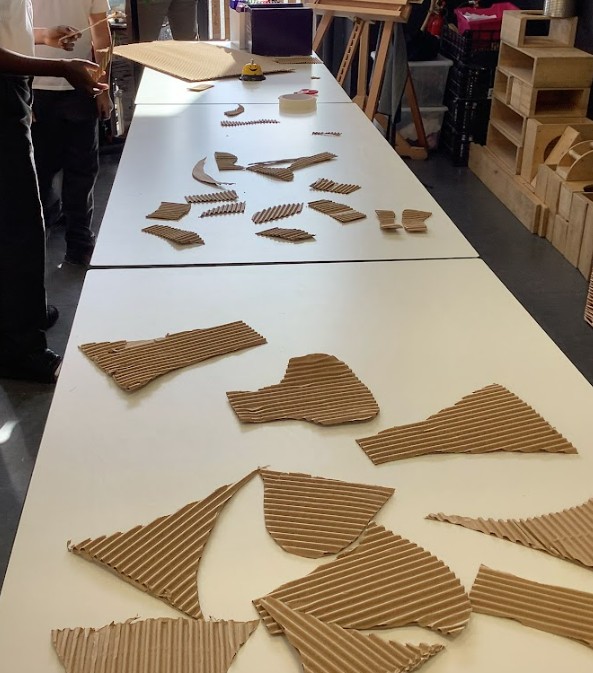
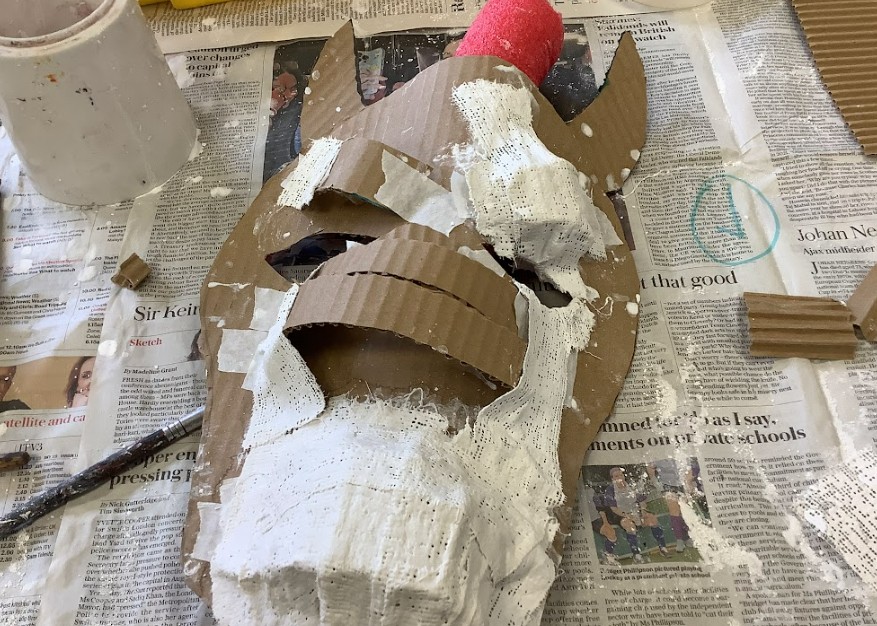
Next, we brought our 2D beast designs to life by transferring them onto corrugated card with a sturdy base. We began to build up the facial features in relief, carefully layering pieces of card and using masking tape to hold everything in place. This stage was all about experimenting with size, shape, and position, as we explored how to make the creatures’ faces look more three-dimensional and expressive.

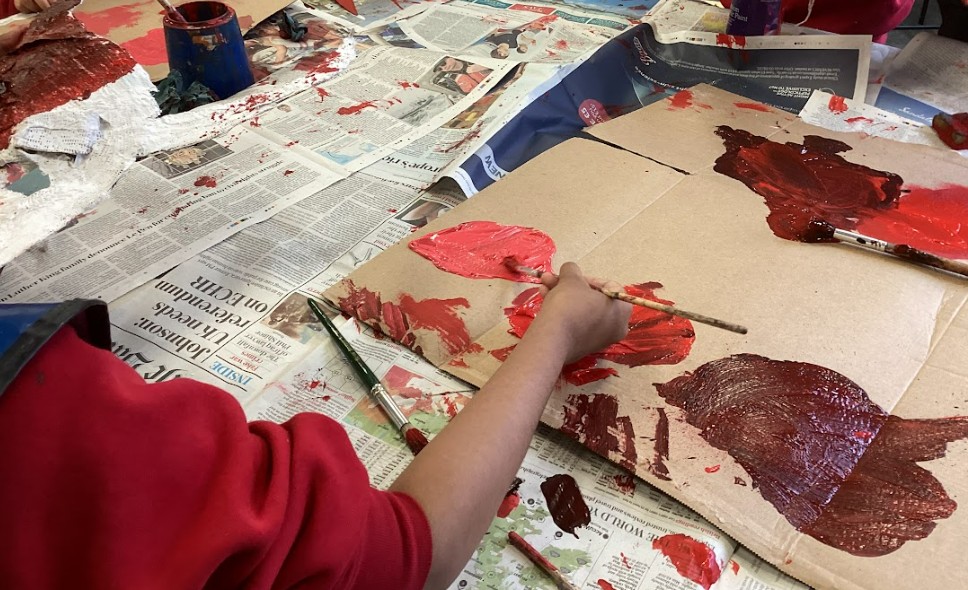
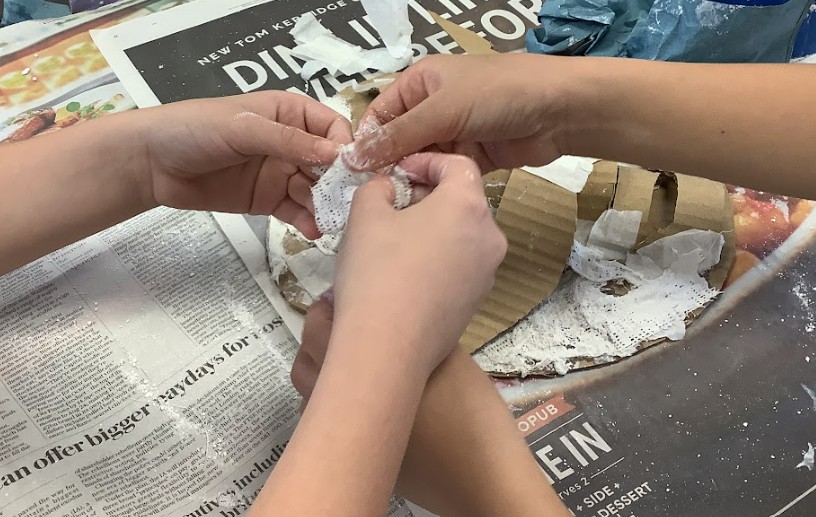
After constructing the relief forms, we applied Modroc to cover and strengthen our sculptures, learning how to layer it smoothly and evenly over the card. This was quite challenging, especially when working over areas where the relief was more pronounced. Once dry, we mixed acrylic paints to create a gradient of tones – a base shade, a lighter tone for highlights, and a darker one for shadows – to bring out the light and shade on our beast masks, giving them depth and character.

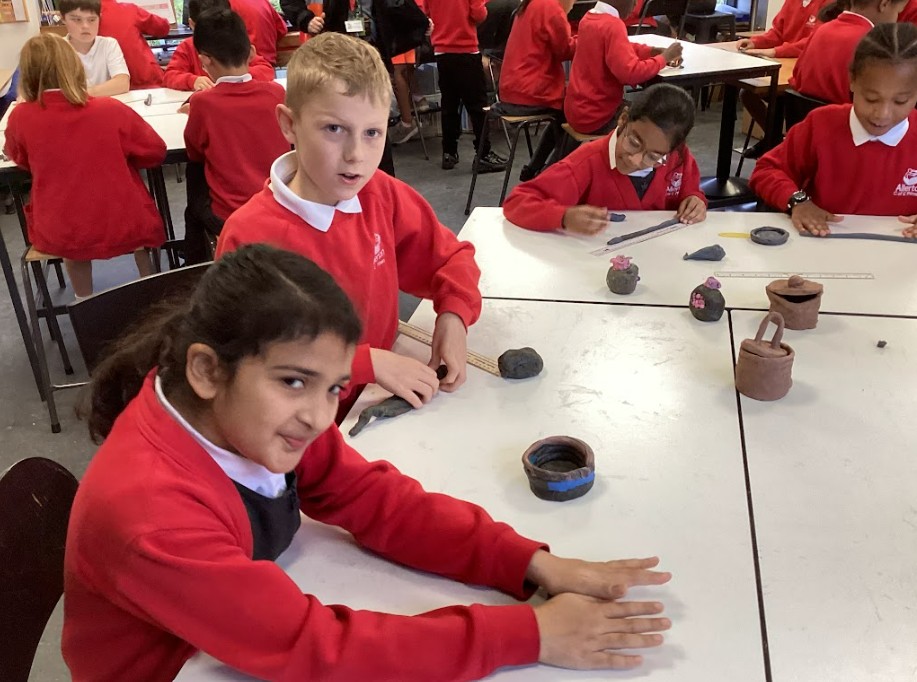
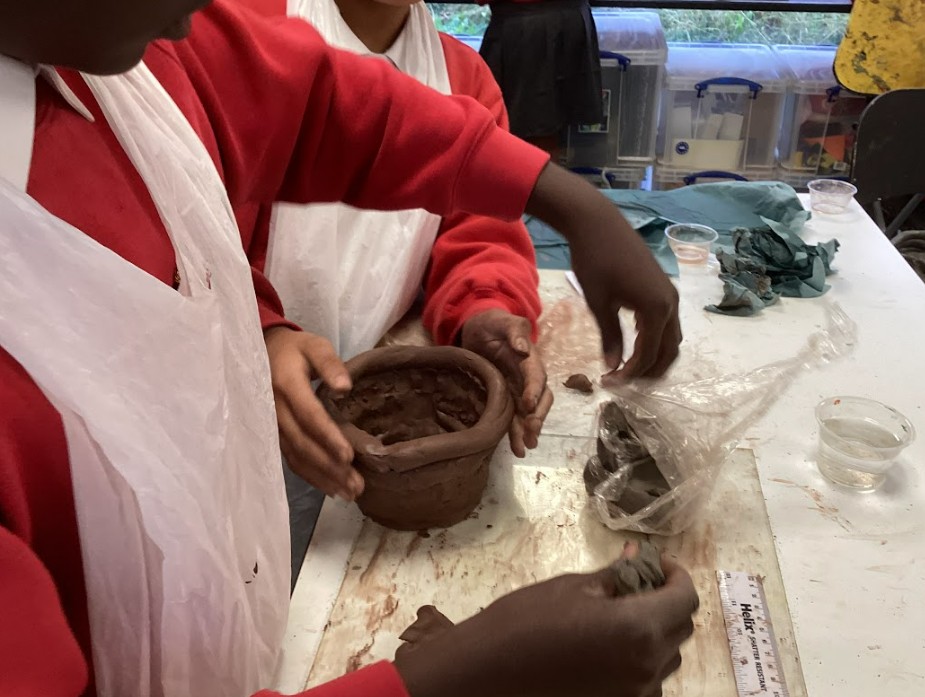
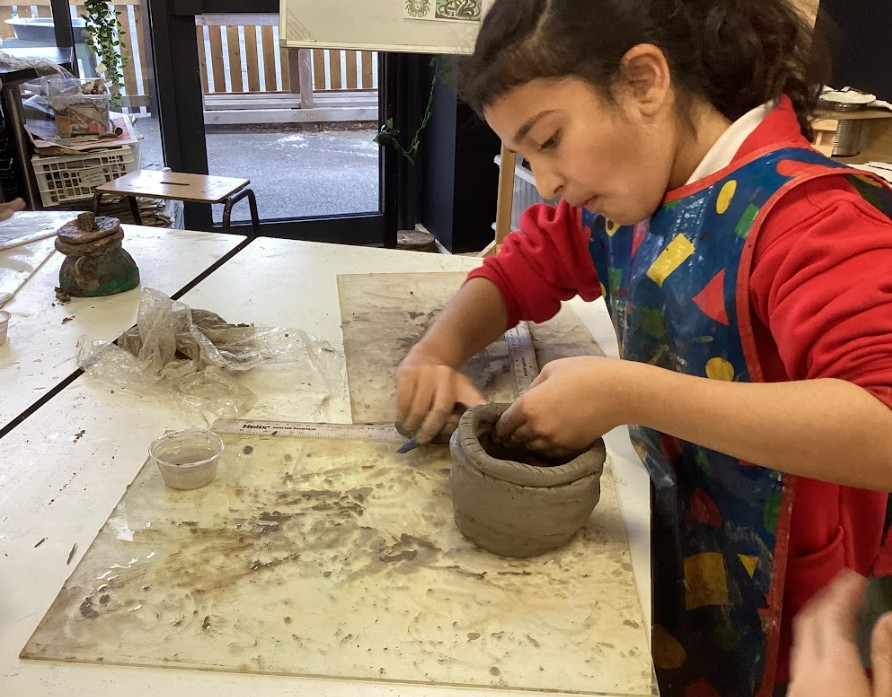
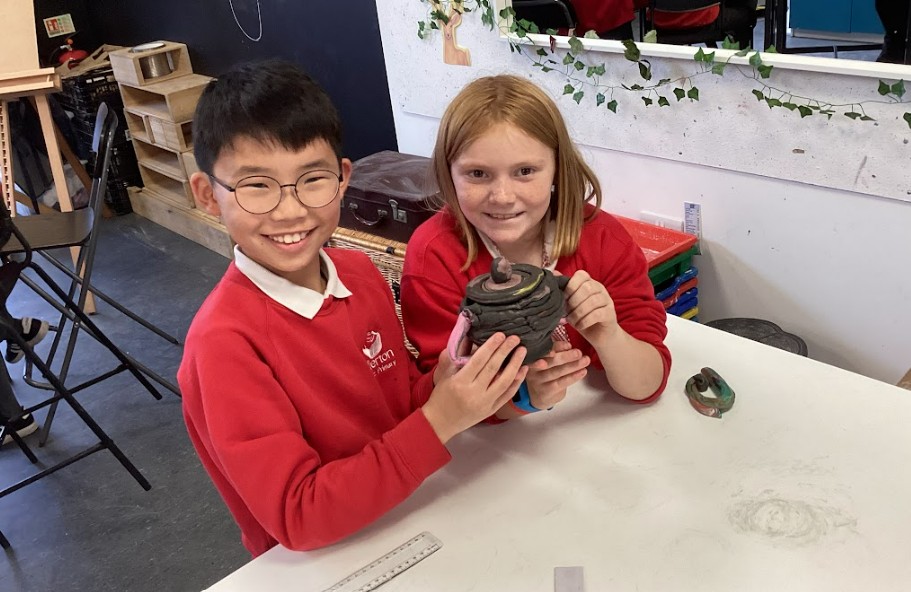
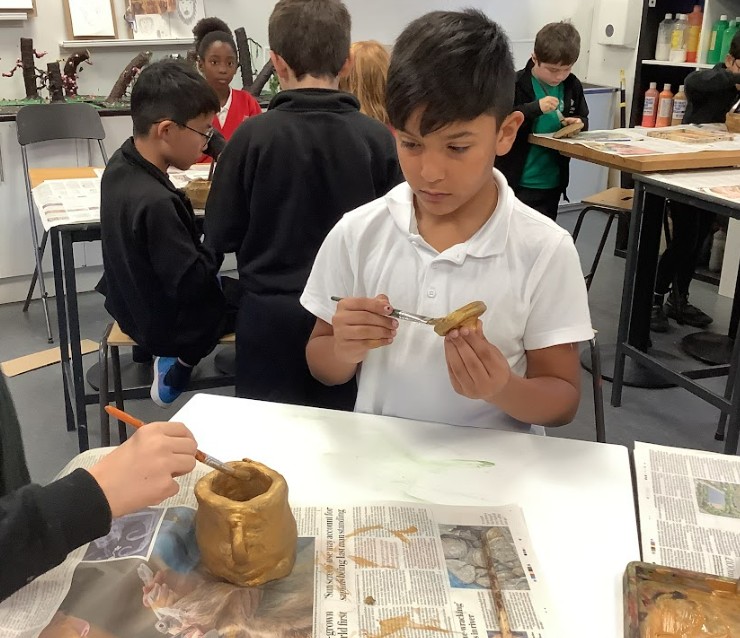
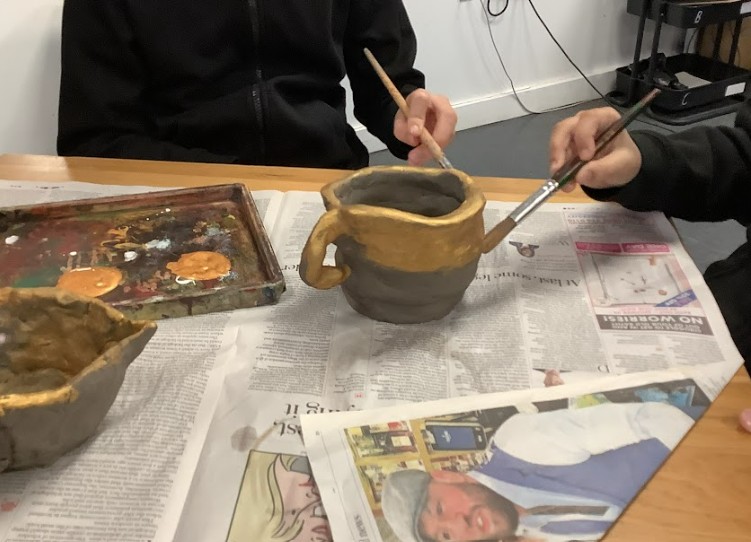
Finally, we created plasticine pots to experiment with making coiled cylindrical vessels. These were prototypes, allowing us to reflect on our techniques before working with real clay. Once we were confident, we scaled up our designs using air-dried clay, applying cross-hatching and slip to join pieces securely and reduce breakage. After the pots had dried, we painted them gold to represent King Midas and his golden touch, linking our work back to the mythical themes we explored throughout the project.

Well done 5A! You overcame many challenges, worked collaboratively and flourished in your Arts Fortnight.